Key Takeaway
Polarized training (80% Zone 2, 20% high intensity) improves VO2peak better than other intensity distributions, especially in highly trained athletes and shorter interventions under 12 weeks.
Summary
This systematic review and meta-analysis evaluated whether polarized training intensity distribution (POL) - characterized by approximately 80% low-intensity (Zone 2) training and 20% high-intensity work - is superior to other training approaches for endurance performance. The analysis included 17 studies with 437 subjects.
The pooled results showed POL was superior for improving VO2peak (SMD = 0.24, p = 0.040) with high certainty of evidence. However, this superiority was most pronounced in shorter interventions under 12 weeks (SMD = 0.40, p = 0.01) and in highly trained athletes (SMD = 0.46, p = 0.01). For other performance metrics including time-trial performance, time to exhaustion, and power at lactate threshold, POL showed similar effects to other training intensity distributions.
The findings suggest that polarized training more effectively improves aerobic power (VO2peak) compared to threshold-focused or pyramidal training approaches, but the effects on aerobic capacity and race-like performance measures are similar. This supports the value of including substantial Zone 2 volume while maintaining some high-intensity work, rather than spending excessive time at moderate "threshold" intensities.
Methods
Systematic review following PRISMA guidelines. Protocol registered at PROSPERO (CRD42022365117). Searched PubMed, Scopus, and Web of Science for studies in adults lasting 4+ weeks comparing POL with other training intensity distributions. Outcomes included VO2peak, time-trial (TT), time to exhaustion (TTE), and power at ventilatory/lactate threshold (VT2/LT2). Risk of bias assessed with RoB-2 (RCTs) and ROBINS-I (non-randomized). Random effects meta-analysis using standardized mean differences.
Key Results
- VO2peak: POL superior (SMD = 0.24, 95% CI 0.01-0.48, p = 0.040; I2 = 0%; high certainty)
- Effect stronger in <12 week interventions (SMD = 0.40, p = 0.01)
- Effect stronger in highly trained athletes (SMD = 0.46, p = 0.01)
- Time-trial: No difference (SMD = -0.01, 95% CI -0.28-0.25, p = 0.92)
- Time to exhaustion: No difference (SMD = 0.30, 95% CI -0.20-0.79, p = 0.24)
- Power at VT2/LT2: No difference (SMD = 0.04, 95% CI -0.21-0.29, p = 0.75)
Figures
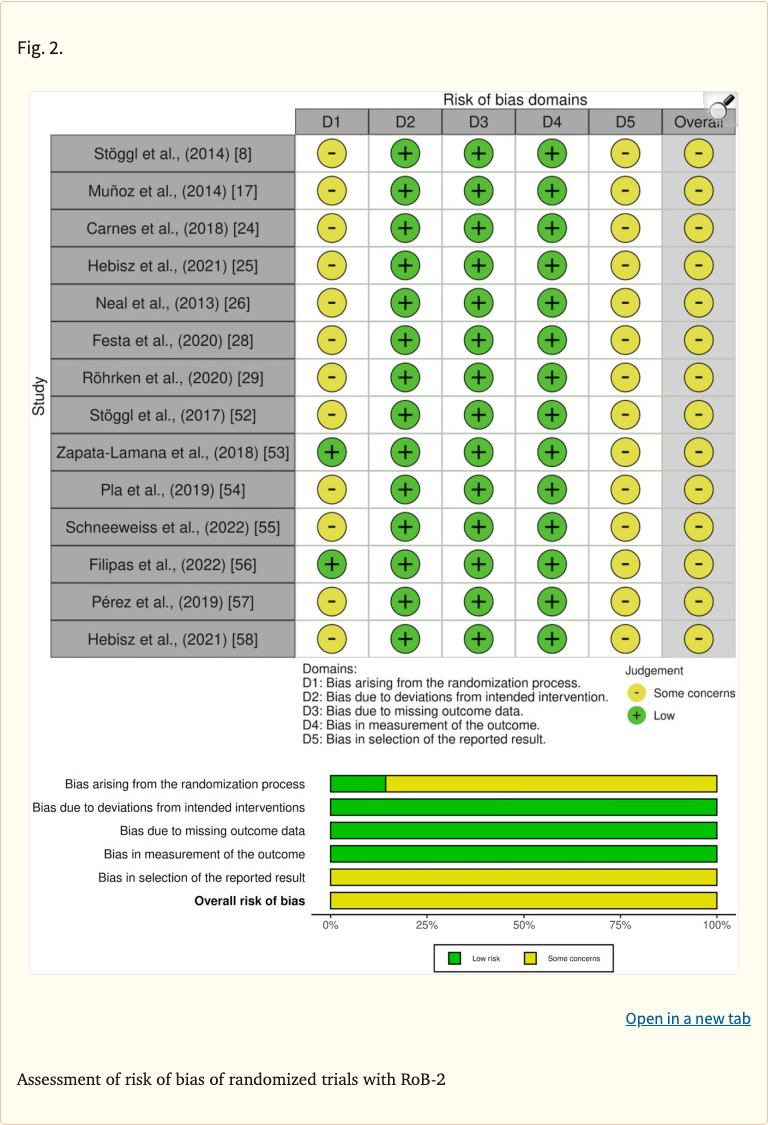 Figure 1
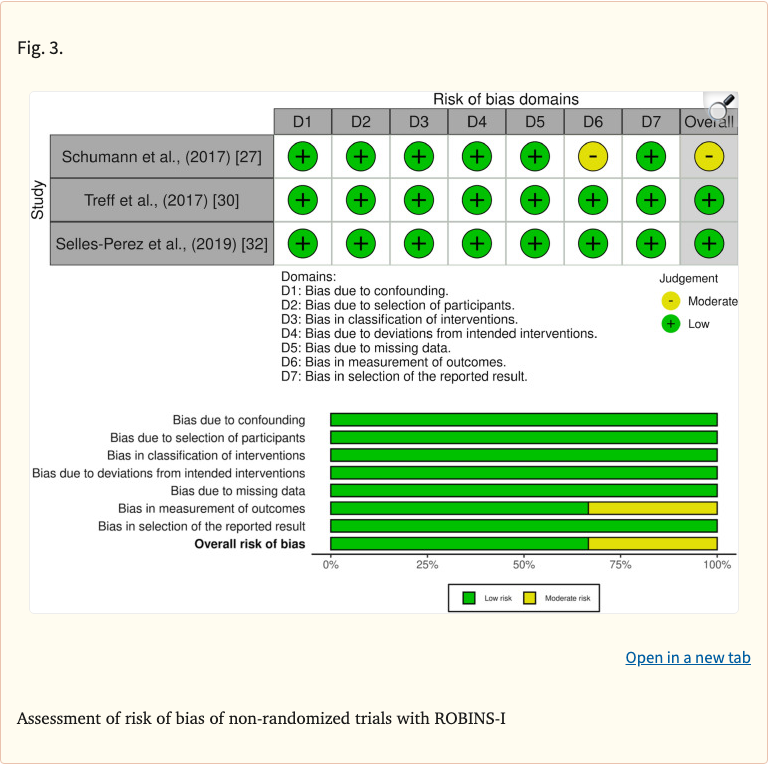 Figure 2
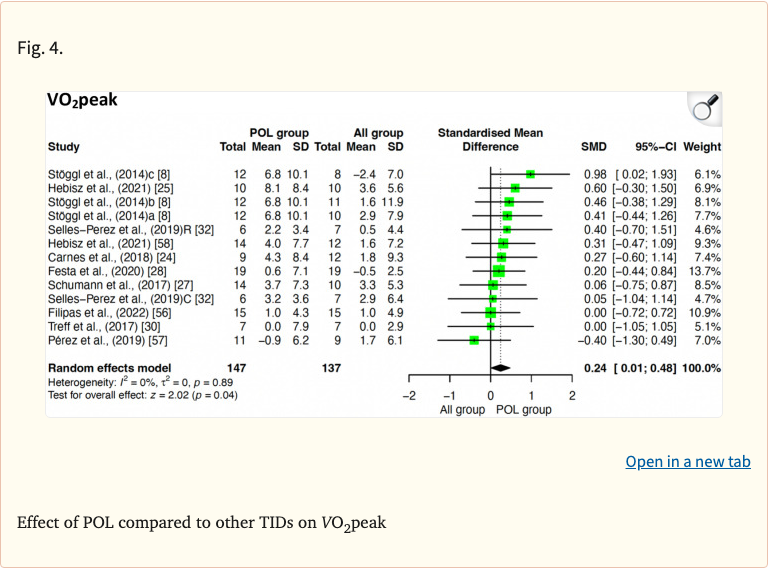 Figure 3
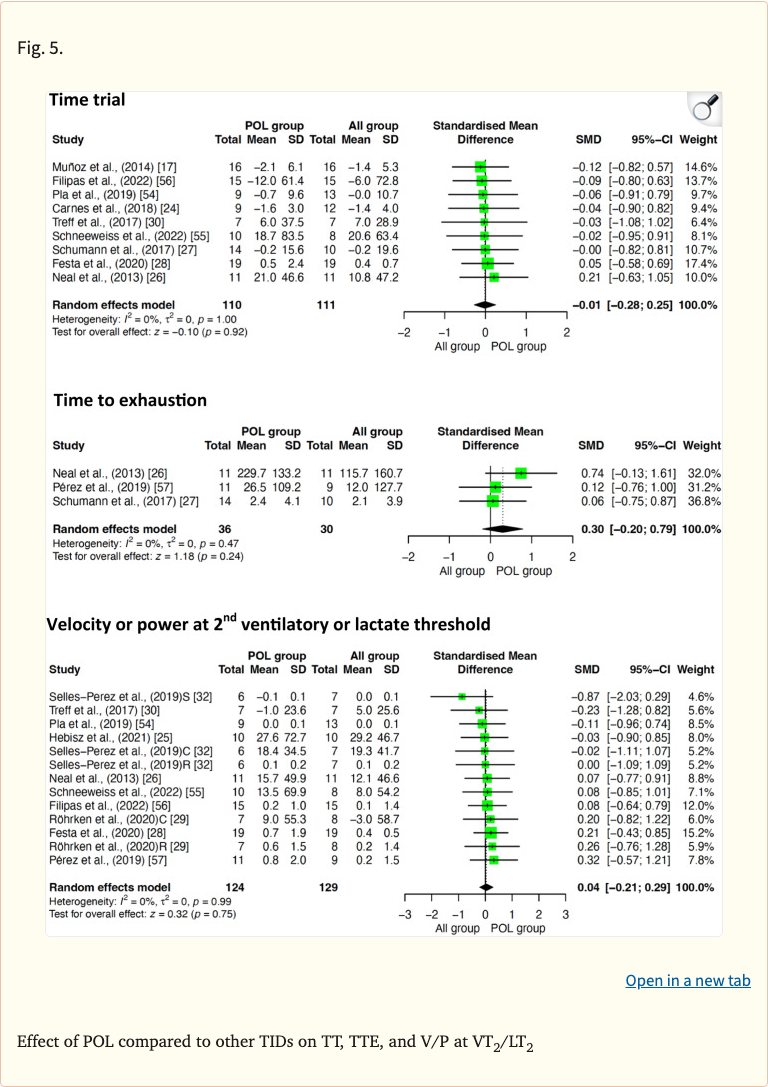 Figure 4
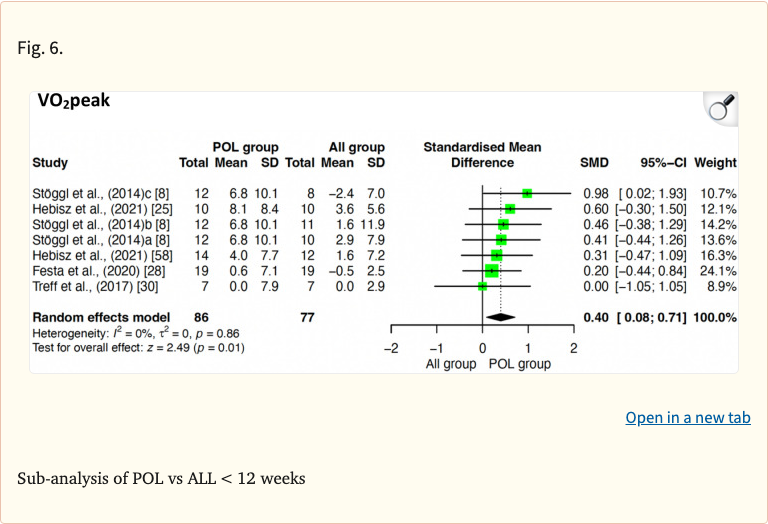 Figure 5
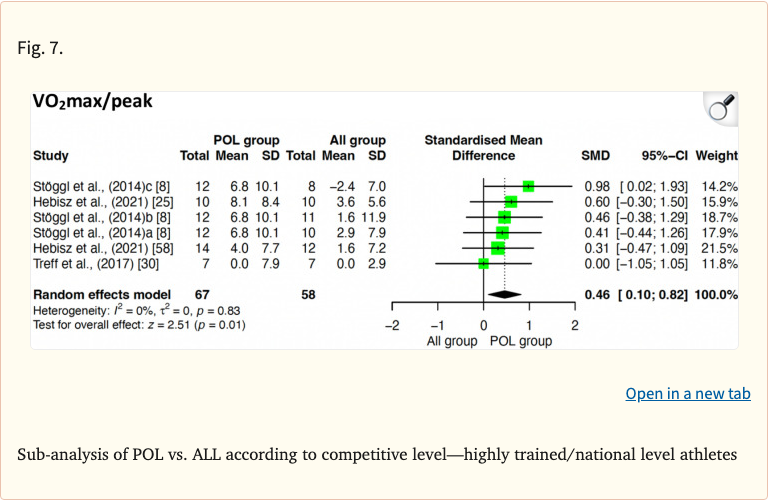 Figure 6
Limitations
- Heterogeneity in how "polarized training" was defined and implemented across studies
- Most studies were relatively short duration (<12 weeks)
- Limited data on recreational athletes
- Risk of bias rated as "some concerns" for most randomized controlled trials
- Cannot determine optimal ratio of low:high intensity within polarized approach