
Key Takeaway
Systematic review of 50 human studies found glycine most consistently benefits the nervous system, improving sleep quality in healthy adults and psychiatric symptoms in clinical populations.
Summary
This systematic review comprehensively evaluated the effects of glycine supplementation across multiple physiological systems in human adults, analyzing 50 studies including 42 randomized controlled trials. The review organized findings by physiological system: nervous, musculoskeletal, cardiovascular, digestive, metabolic/endocrine, and immune.
The nervous system showed the most consistent positive results. In healthy populations, glycine (typically 3g before bed) improved subjective sleep quality, reduced sleep onset latency, and decreased next-day fatigue, though sample sizes were generally small. In psychiatric populations, glycine showed benefits for schizophrenia symptoms (as an adjunct to antipsychotics) and treatment-resistant OCD, with some evidence for improved cognitive function.
Results for other physiological systems were more mixed. Musculoskeletal studies showed some benefits for joint health and exercise recovery. Metabolic studies suggested modest improvements in glucose metabolism and insulin sensitivity. The authors concluded that while glycine shows promise across multiple domains, larger and more rigorous trials are needed to confirm benefits, particularly for non-neurological outcomes.
Methods
Systematic literature search across PubMed, Embase, Web of Science, and Cochrane databases. Included human studies administering glycine as a single supplement to adults. Studies were categorized by physiological system affected. Risk of bias assessed using Cochrane RoB 2 tool for RCTs and ROBINS-I for non-randomized studies. 50 studies met inclusion criteria (42 RCTs, 8 non-randomized).
Key Results
- Nervous system: Most consistent benefits. Sleep quality improved in healthy adults (3g glycine before bed). Psychiatric symptoms improved in schizophrenia and OCD patients.
- Musculoskeletal: Some evidence for improved joint health and exercise recovery, but inconsistent results.
- Metabolic/endocrine: Modest improvements in glucose metabolism and insulin sensitivity in some studies.
- Cardiovascular: Limited evidence, some studies showed improvements in vascular function.
- Immune system: Few studies, preliminary positive signals for anti-inflammatory effects.
- Overall, 42 of 50 studies were RCTs, but many had small sample sizes and short durations.
Figures
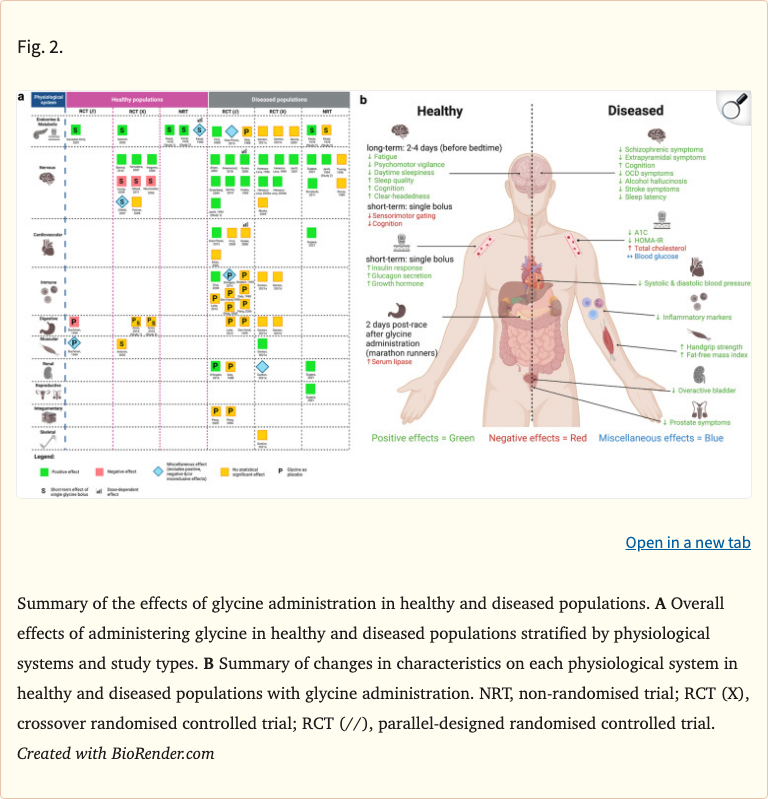 Figure 1
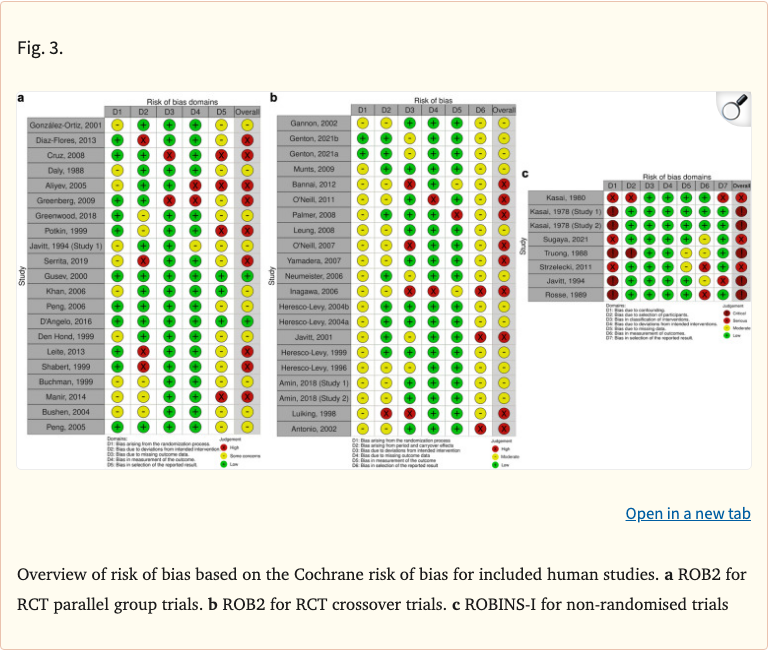 Figure 2
Limitations
Most included studies had small sample sizes (often <30 participants). Heterogeneity in dosing protocols (1g to 60g daily), treatment duration, and outcome measures limited meta-analysis. Many studies had moderate to high risk of bias. Publication bias could not be fully assessed. Some physiological systems (immune, cardiovascular) had very few studies. Most sleep studies relied on subjective measures rather than polysomnography.
