
Key Takeaway
Glycine shows promise for physical performance and recovery through modulation of oxidative stress, inflammation, and muscle protein synthesis, but most evidence comes from animal studies and human ergogenic evidence remains insufficient.
Summary
This review evaluates the potential of glycine supplementation as an ergogenic aid for physical performance and exercise recovery. The authors examine glycine's multiple physiological roles relevant to exercise: its involvement in creatine synthesis, collagen formation, antioxidant defense (as a glutathione precursor), anti-inflammatory signaling, and muscle protein synthesis.
The mechanistic rationale is compelling. Glycine modulates oxidative stress by serving as a precursor to glutathione, the body's primary intracellular antioxidant. It reduces exercise-induced inflammation through NF-κB inhibition and cytokine modulation. Glycine also stimulates muscle protein synthesis via mTOR pathway activation and is essential for collagen synthesis, supporting connective tissue repair after exercise. Some evidence suggests glycine may enhance peak power output and reduce blood lactic acid accumulation during high-intensity exercise.
However, the authors are transparent about the evidence gaps. The majority of studies demonstrating performance and recovery benefits come from animal models and cell culture experiments. Human clinical trials specifically testing glycine as an ergogenic aid are scarce and generally small. The review concludes that while the biological plausibility is strong, there is currently insufficient human evidence to recommend glycine specifically as a performance-enhancing supplement, and calls for larger, well-designed human trials.
Methods
Narrative review of published literature on glycine's effects related to physical performance and exercise recovery. Examined evidence from cell culture, animal models, and human studies. Organized findings by mechanism: antioxidant defense, anti-inflammatory effects, muscle protein synthesis, collagen synthesis, creatine metabolism, and direct performance outcomes.
Key Results
- Glycine serves as a glutathione precursor, supporting antioxidant defense against exercise-induced oxidative stress.
- Anti-inflammatory effects via NF-κB inhibition may reduce exercise-induced muscle damage and accelerate recovery.
- Glycine stimulates muscle protein synthesis through mTOR signaling pathway activation.
- Essential for collagen synthesis (every third amino acid in collagen), supporting tendon and joint recovery.
- Some animal studies show improved peak power output and reduced blood lactic acid accumulation.
- Glycine is a precursor to creatine (along with arginine and methionine), indirectly supporting phosphocreatine energy systems.
- Human ergogenic evidence is limited: few controlled trials, small sample sizes, inconsistent protocols.
Figures
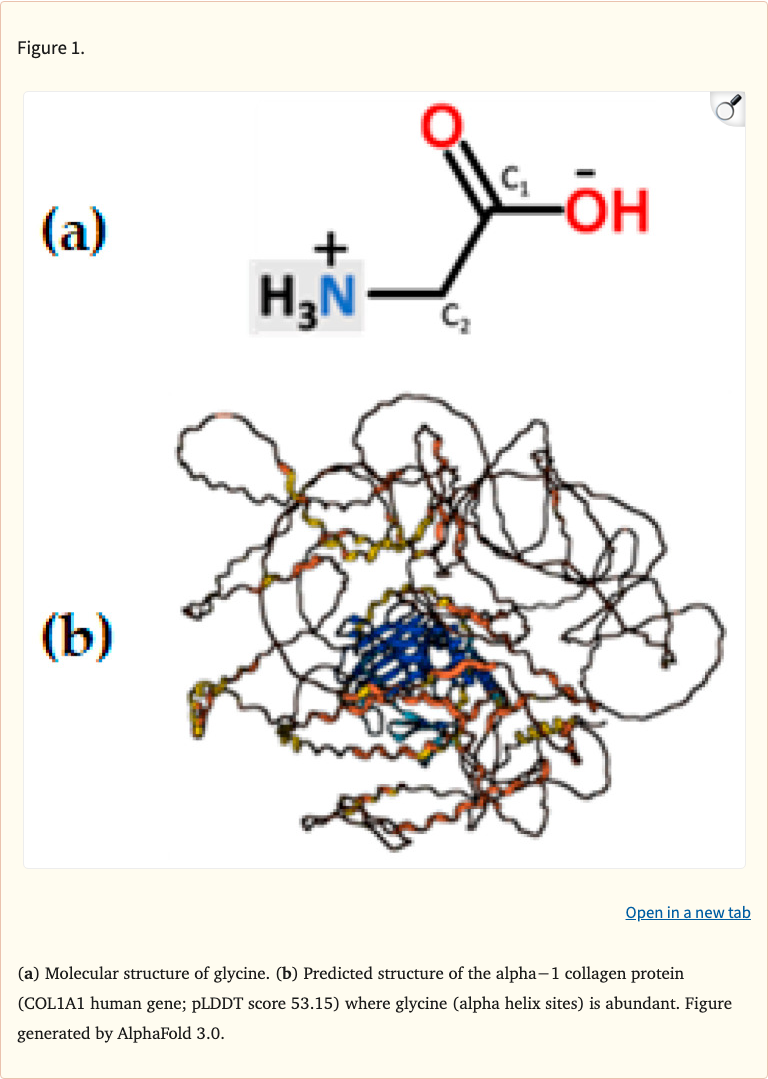 Figure 1
Limitations
Most performance and recovery evidence derives from animal and in vitro studies with uncertain translation to humans. Very few human RCTs have specifically tested glycine as an ergogenic aid. Existing human studies generally have small sample sizes and short intervention periods. Optimal dosing, timing, and duration for performance benefits are not established. The review is narrative rather than systematic, introducing potential selection bias. Difficult to separate glycine's direct effects from its indirect effects via creatine and glutathione synthesis.