
Key Takeaway
Glycine exerts broad anti-inflammatory effects by inhibiting NF-κB signaling, reducing pro-inflammatory cytokines (TNF-α, IL-6, IL-1β), increasing anti-inflammatory IL-10, and suppressing cell death pathways across multiple tissue types.
Summary
This comprehensive review examines the molecular mechanisms underlying glycine's anti-inflammatory properties, positioning it as the smallest amino acid with outsized immunomodulatory effects. The authors systematically detail how glycine acts on multiple inflammatory pathways, making a case for its therapeutic potential across a range of inflammatory conditions.
At the molecular level, glycine inhibits NF-κB activation, the master transcription factor driving inflammatory gene expression. This leads to reduced production of pro-inflammatory cytokines including TNF-α, IL-6, and IL-1β, while simultaneously increasing the anti-inflammatory cytokine IL-10. Glycine also provides cytoprotection by suppressing necrosis and pyroptosis (inflammatory cell death), which are key drivers of tissue damage in chronic inflammatory conditions.
The review highlights glycine's effects across diverse cell types and tissues, including macrophages, neutrophils, hepatocytes, endothelial cells, and adipocytes. The authors discuss evidence from both animal models and human studies showing benefits in conditions involving chronic low-grade inflammation such as metabolic syndrome, obesity, liver disease, and cardiovascular disease. They emphasize glycine's excellent safety profile and low cost as practical advantages for clinical application.
Methods
Narrative review synthesizing evidence from cell culture studies, animal models, and human clinical trials. Focused on glycine's mechanisms of action on inflammatory signaling pathways (NF-κB, NLRP3 inflammasome, cytokine networks) and cytoprotective effects. Organized findings by molecular target and cell/tissue type.
Key Results
- Glycine inhibits NF-κB activation, reducing transcription of pro-inflammatory genes.
- Reduces production of TNF-α, IL-6, and IL-1β across multiple cell types.
- Increases anti-inflammatory IL-10 production.
- Suppresses NLRP3 inflammasome activation, reducing pyroptosis.
- Provides cytoprotection by inhibiting necrotic cell death pathways.
- Anti-inflammatory effects demonstrated in macrophages, neutrophils, hepatocytes, endothelial cells, and adipocytes.
- Animal models show benefits in metabolic syndrome, liver inflammation, obesity, and ischemia-reperfusion injury.
- Human evidence supports glycine's role in reducing inflammatory markers, though clinical trials are limited.
Figures
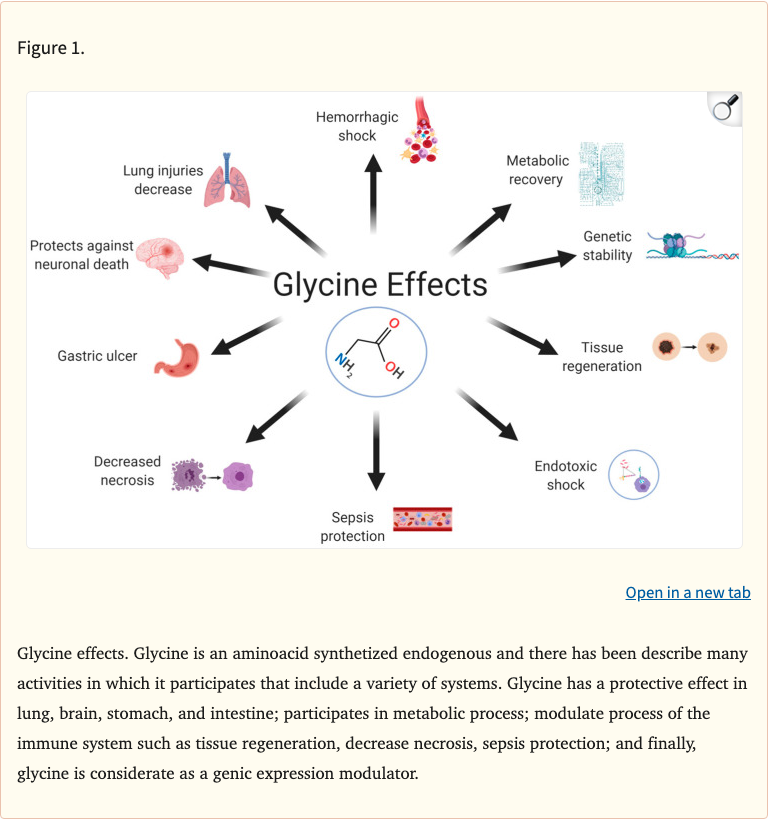 Figure 1
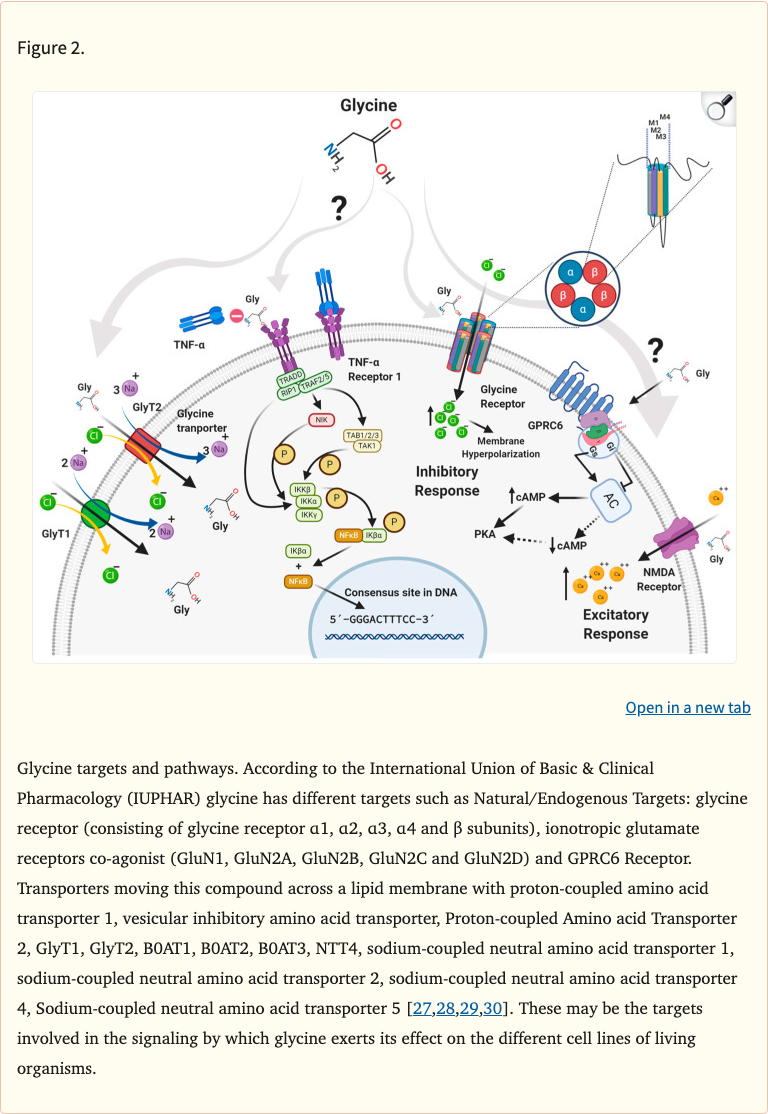 Figure 2
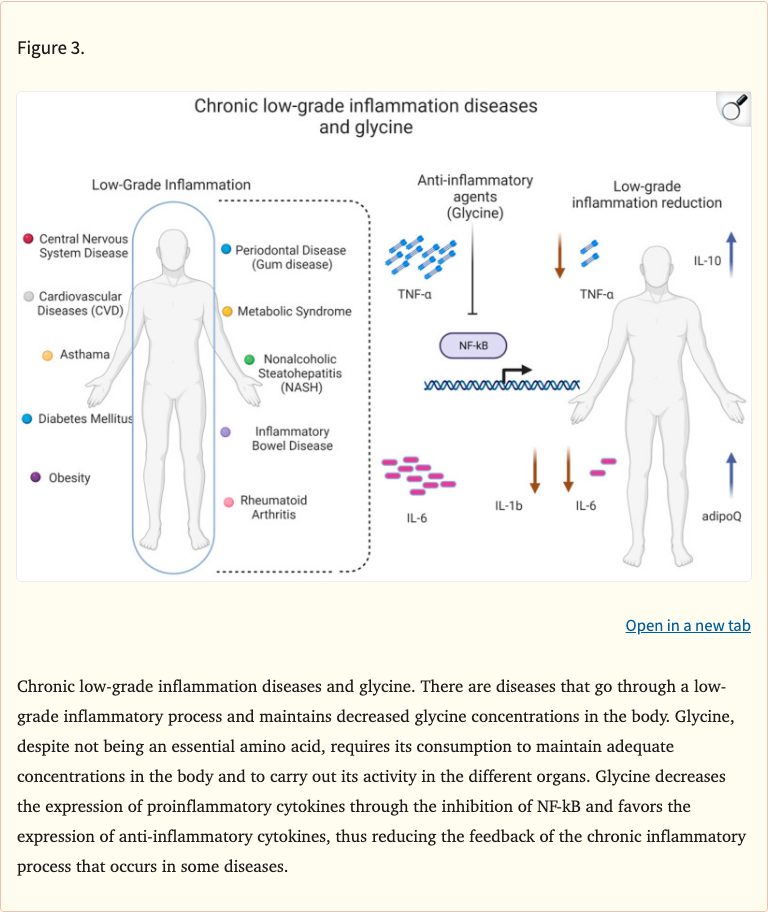 Figure 3
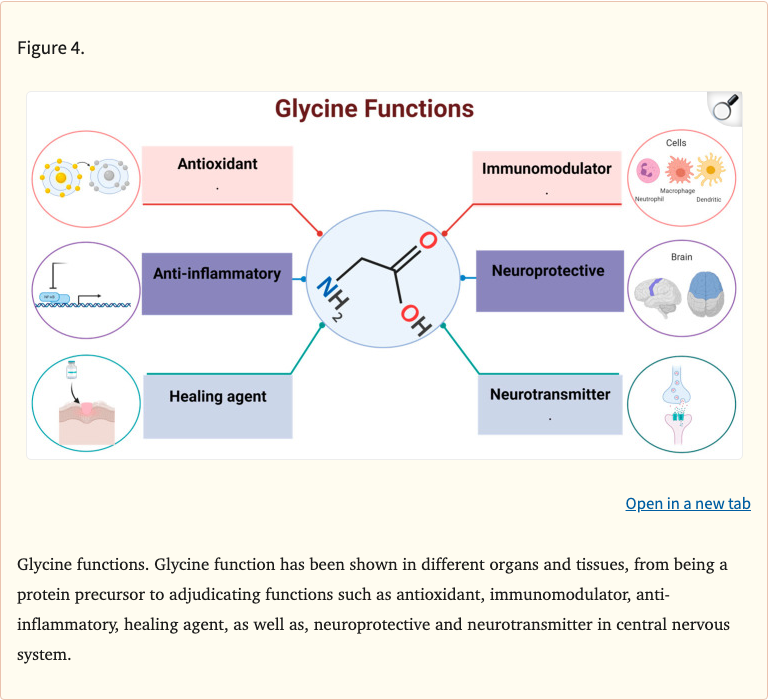 Figure 4
Limitations
As a narrative review, the study did not follow systematic review methodology and may be subject to selection bias in cited studies. Much of the mechanistic evidence comes from cell culture and animal models, with limited translation to human clinical outcomes. Optimal dosing for anti-inflammatory effects in humans is not well established. Long-term human trials specifically targeting inflammatory endpoints are lacking. The review does not quantitatively assess effect sizes across studies.