
Key Takeaway
WHO-informing systematic review found needling therapies provide modest benefits for chronic low back pain, supporting their inclusion in clinical practice guidelines.
Summary
This systematic review was commissioned to inform the World Health Organization's clinical practice guideline on the management of chronic primary low back pain in adults. The authors evaluated the benefits and harms of needling therapies, including both acupuncture and dry needling, for this common condition.
The review followed rigorous methodology consistent with WHO guideline development standards. The authors searched multiple databases and assessed the certainty of evidence using established frameworks. Studies comparing needling therapies to no intervention, sham/placebo, or other active treatments in adults with chronic primary low back pain were included.
The findings indicated that needling therapies provide modest benefits for pain and function in adults with chronic low back pain compared to no intervention and sham treatments. The evidence supported including needling therapies as a treatment option in the WHO clinical practice guideline. However, the certainty of evidence varied across outcomes and comparisons, and the review noted that more high-quality research is needed, particularly regarding long-term outcomes and specific needling techniques.
Methods
Systematic review conducted to inform WHO clinical practice guidelines. Comprehensive database search for trials of needling therapies (acupuncture and dry needling) for chronic primary low back pain in adults. Assessed benefits and harms across multiple comparators including no intervention, sham/placebo, and active treatments. Evidence certainty evaluated using standardized frameworks aligned with WHO guideline development methodology. Published in J Occup Rehabil 2023;33(4):661-672.
Key Results
- Needling therapies showed modest benefits for pain reduction compared to no intervention and sham treatments
- Functional improvements were also observed favoring needling therapies
- Evidence supported inclusion of needling therapies in WHO clinical practice guidelines for chronic low back pain
- Harms were generally minor and transient (soreness, bruising)
- Certainty of evidence varied from low to moderate across different comparisons and outcomes
Figures
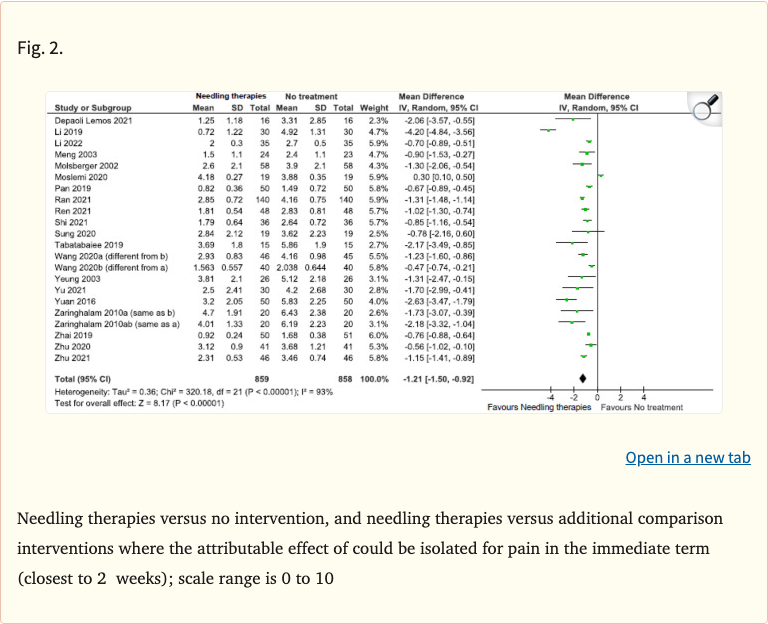 Figure 1
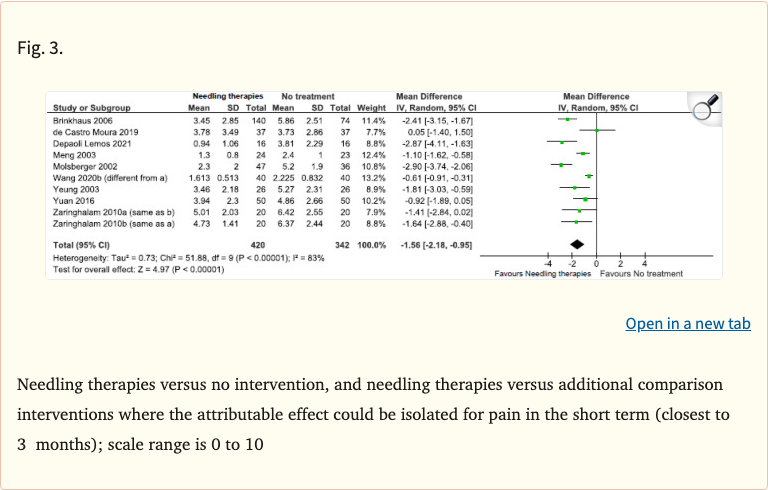 Figure 2
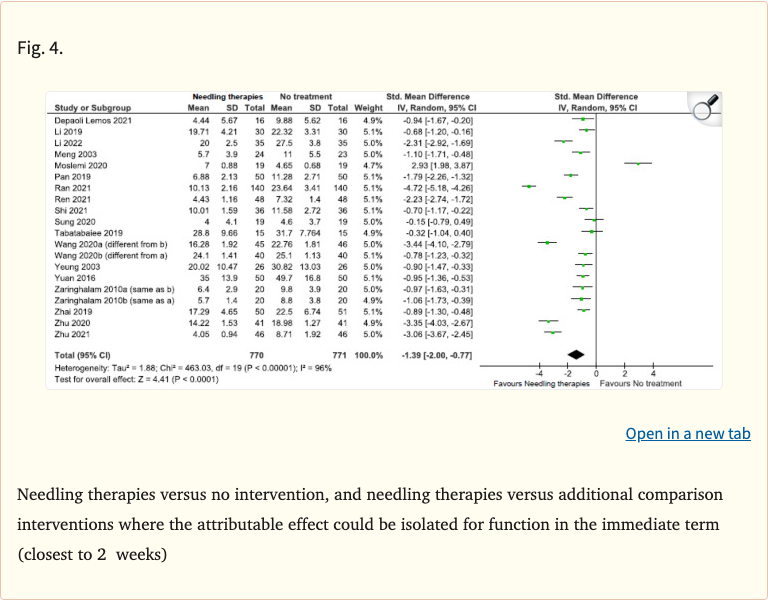 Figure 3
Limitations
- Heterogeneity in needling techniques (acupuncture vs dry needling) pooled together
- Variable certainty of evidence across outcomes and comparisons
- Limited long-term follow-up data in most included studies
- Difficulty blinding participants and practitioners to needling interventions
- Some included studies had small sample sizes
- Geographic and cultural variation in needling practice may limit generalizability