
Key Takeaway
EFT significantly reduces anxiety and depression in cancer patients, with moderate-to-large effect sizes, supporting its use as a complementary psychosocial intervention in oncology.
Summary
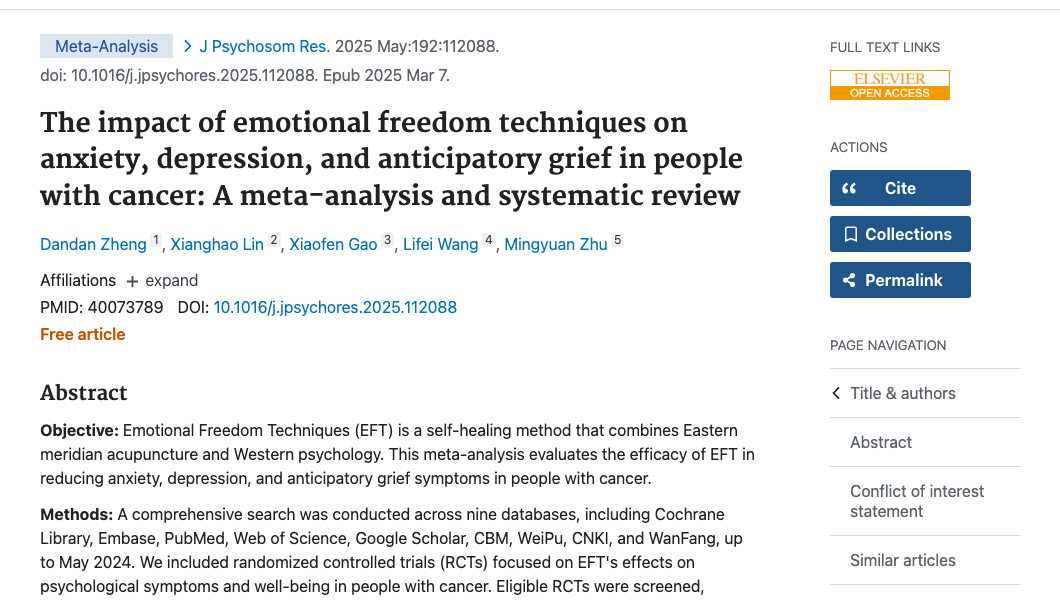
This meta-analysis and systematic review examined the effectiveness of Emotional Freedom Techniques (EFT) for managing psychological distress in people with cancer. The authors focused specifically on three common psychological burdens in oncology patients: anxiety, depression, and anticipatory grief. These conditions are prevalent in cancer populations and often undertreated.
The review systematically searched major databases for randomized controlled trials evaluating EFT interventions in cancer patients compared to standard care or active control conditions. Studies across various cancer types and stages were included, reflecting the diverse psychological challenges faced throughout the cancer journey from diagnosis through treatment and survivorship.
The pooled analysis demonstrated that EFT produced statistically significant improvements in both anxiety and depression outcomes compared to control conditions, with moderate-to-large effect sizes. The authors concluded that EFT shows promise as a feasible, low-cost complementary intervention for psychological support in oncology care, though they noted the need for larger, higher-quality trials.
Methods
Systematic search of PubMed, CINAHL, Cochrane Library, Embase, Web of Science, and PsycINFO for RCTs evaluating EFT in cancer patients. Studies were assessed using Cochrane risk of bias tool. Meta-analysis used random-effects models with standardized mean differences. PRISMA guidelines were followed for reporting.
Key Results
- Significant reduction in anxiety scores in EFT groups vs. control (moderate-to-large effect size)
- Significant reduction in depression scores with EFT intervention
- Improvements in anticipatory grief symptoms, though fewer studies addressed this outcome
- Benefits observed across multiple cancer types
- Effects were consistent across different EFT delivery formats (individual vs. group)
Limitations
- Relatively small number of included RCTs specific to cancer populations
- Heterogeneity in cancer types, stages, and treatment phases
- Most studies had small sample sizes
- Limited long-term follow-up data
- Blinding not possible for participants in EFT interventions
- Some studies lacked active control groups (compared only to usual care)
- Anticipatory grief was measured in only a subset of studies