
Club Training (Indian Clubs & Mace)
Episodes covering club training (indian clubs & mace) — protocols, research, and expert discussions.
Swinging weighted clubs through circular patterns to build shoulder mobility, rotator cuff strength, and grip - an ancient training method experiencing modern revival
Club training is one of the oldest forms of exercise, used by Persian wrestlers, Victorian-era athletes, and now rediscovered by the functional fitness community. The appeal: nothing else moves your shoulders through the same range of motion with resistance.
The mechanism is compelling. Traditional training works in straight lines (push, pull). Clubs force circular, rotational movement through all three planes. This targets the rotator cuff and shoulder stabilizers in ways that bench press and rows never will.
Research is limited but promising - one study showed significant shoulder flexibility improvements in just two sessions. The anecdotal evidence from rehab specialists and movement coaches is strong. Many report resolving chronic shoulder issues that didn't respond to conventional PT.
Best for: desk workers with stiff shoulders, athletes needing rotational power (golf, baseball, martial arts), anyone doing shoulder prehab/rehab, and those bored with traditional training. Start light (1-2 lb clubs) - the movements are deceptively challenging.
Science & Mechanisms
Why Circular Training Matters:
- Traditional exercises work in sagittal plane (forward/back)
- Clubs work all three planes simultaneously:
- Sagittal (forward/back)
- Frontal (side to side)
- Transverse (rotation)
- Shoulders are ball-and-socket joints designed for multi-planar movement
- Modern life restricts most shoulder movement to typing and phone use
Rotator Cuff Engagement:
- The four rotator cuff muscles (supraspinatus, infraspinatus, teres minor, subscapularis) stabilize the shoulder
- Club swinging creates constant rotational torque
- Stabilizers must fire continuously to control the weight
- Eccentric loading as club decelerates builds tendon resilience
- Different from isolation exercises - functional, integrated movement
The Offset Loading Effect:
- Steel mace has weight at one end (offset)
- This creates leverage that amplifies the challenge
- A 10 lb mace can feel like 30+ lbs at arm's length
- Forces grip, forearm, and shoulder to work as unit
- Builds "real world" strength for unbalanced loads
Mobility Through Movement:
- Active mobility (moving through range) vs passive (stretching)
- Club circles take shoulders through full ROM under load
- Proprioceptive feedback improves body awareness
- Joint capsule and connective tissue adapt to full range
- "Motion is lotion" - synovial fluid distribution improves
Research:
- Mills et al. (2016): Short-term Indian club swinging significantly improved shoulder flexibility
- Biomechanical analysis shows rotator cuff activation throughout swing
- No large RCTs exist, but mechanistic case is strong
Episodes
Brett McKay interviews Dr. Conor Heffernan, a lecturer in the sociology of sport at Ulster University and author of The History of Physical Culture. They trace exercise culture ...
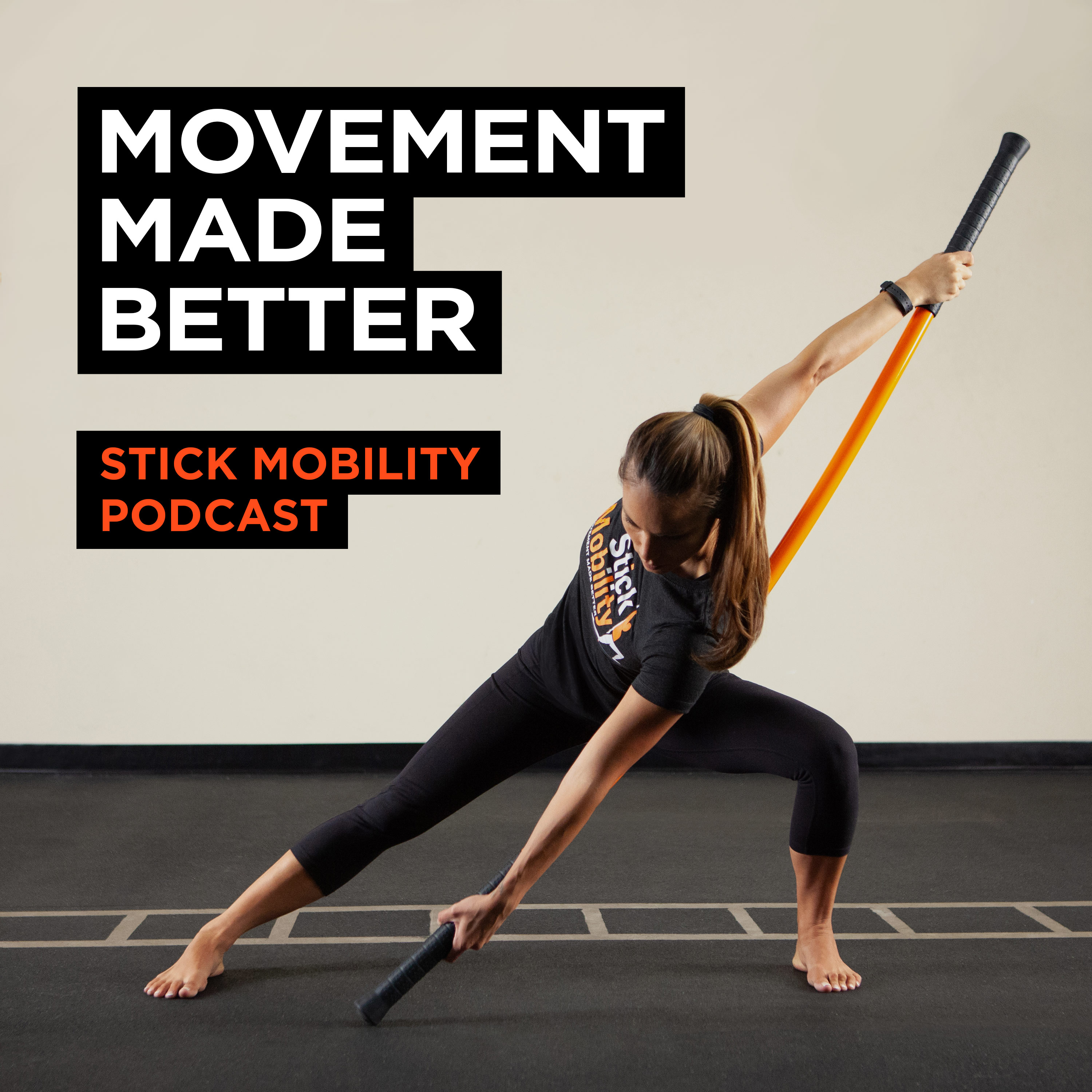
Dennis Dunphy and Neil Valera of the Stick Mobility podcast interview personal trainer Monica Boldt about her approach to functional training using Indian clubs, steel mace, sti...