



Sprint Interval Training (SIT)
Episodes covering sprint interval training (sit) — protocols, research, and expert discussions.
All-out maximal sprints with full recovery for rapid VO2max gains, anaerobic power, and metabolic adaptation in minimal time
Sprint Interval Training is the most time-efficient way to improve VO2max and anaerobic capacity. Just 4-6 all-out sprints of 20-30 seconds, 2-3 times per week, produces remarkable cardiovascular and metabolic adaptations. It's harder than HIIT but takes even less time.
If you can handle true maximal effort, SIT delivers elite-level cardiovascular adaptations in under 10 minutes of actual work per week. Best combined with Zone 2 for complete fitness.
Science & Mechanisms
Mechanisms:
- Rapidly depletes muscle glycogen, triggering adaptation
- Activates AMPK and PGC-1α for mitochondrial biogenesis
- Improves both aerobic (VO2max) and anaerobic capacity
- Enhances glucose transporter (GLUT4) expression
- Increases stroke volume and cardiac output
- Stimulates growth hormone and catecholamine release
Key studies:
- Burgomaster et al. (2005): 6 weeks of SIT doubled endurance capacity
- Hazell et al. (2010): SIT improved body composition and aerobic fitness
- Gillen et al. (2016): 1 minute of sprints matched 45 min of moderate cycling
Effect sizes:
- VO2max improvement: Large (comparable to much longer training)
- Anaerobic power: Very large
- Insulin sensitivity: Large
- Time efficiency: Exceptional (~90% less time than traditional cardio)
Limitations:
- Requires true maximal effort (uncomfortable)
- Not suitable for beginners
- Needs adequate recovery between sessions
- May not build same aerobic base as Zone 2
Episodes
Andrew Huberman sits down with elite sprint coach Stuart McMillan, who has coached over 70 Olympians across nine Olympic Games. McMillan explains why sprinting is the ultimate t...
Complete 25+ controlled micro-tasks before coffee to build momentum and mental clarity. Compartmentalize work and family with hard boundaries and deliberate transition rituals. ...
Andrew Huberman explains the neuroscience of fat loss, focusing on how the nervous system — not just calories in versus calories out — governs fat mobilization and oxidation. He...
Lynn, a menopause fitness coach, breaks down sprint interval training (SIT) and why it's particularly beneficial for women in perimenopause and menopause. She explains how decli...
Julie Lohre demonstrates exactly how to perform sprint interval training (SIT), walking through a real-time workout with heart rate monitoring. She explains the protocol: 20-30 ...
Nikki Harris, a nutrition and fitness coach, explains why sprinting beats long-distance running for body composition goals. She compares SIT to HIIT and steady-state cardio, cit...
Host Michael answers a listener question about using sprint interval training during the triathlon off-season. He describes the standard SIT protocol: 4-7 repetitions of 30-seco...

Personal trainer Kim Eagle does a detailed side-by-side comparison of sprint interval training (SIT) and high-intensity interval training (HIIT) for women navigating perimenopau...
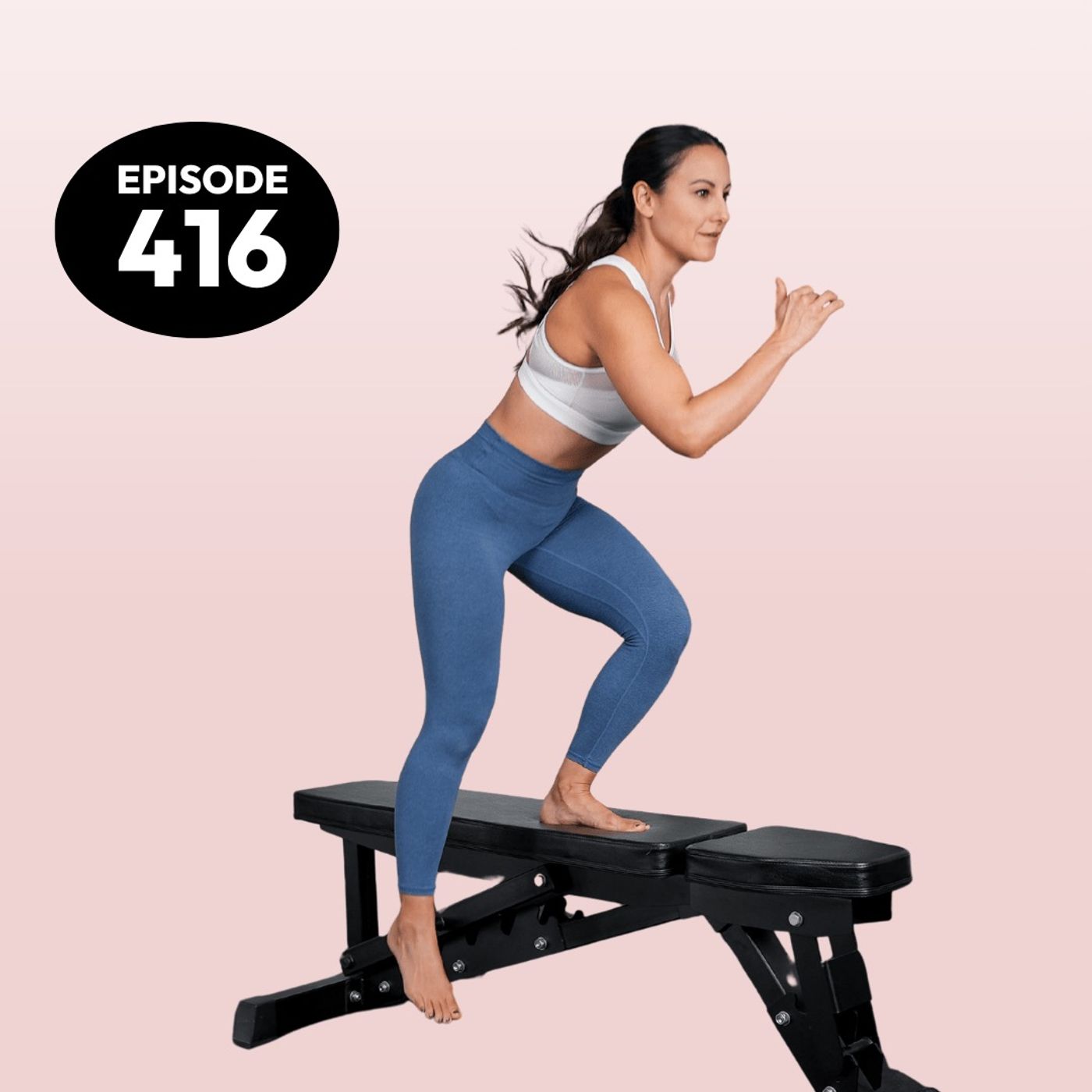
Physical therapists Dr. Jen and Dr. Dom compare SIT and HIIT training specifically for women in perimenopause and menopause. They define SIT as 20-30 seconds of near-maximum eff...

Peter Attia breaks down the distinction between HIIT (high-intensity interval training) and SIT (sprint interval training) in this AMA episode preview. He defines HIIT as sub-ma...

Dr. Martin Gibala, author of The One Minute Workout, explains his research on sprint interval training at McMaster University. His landmark protocol uses three 20-second all-out...

Researcher Michael Rosenblat presents findings from his meta-analysis comparing high-intensity interval training (HIIT) versus sprint interval training (SIT) on time trial perfo...
Part 2 of the interval training Q&A with researcher Michael Rosenblat, covering practical application of HIIT and SIT for endurance athletes. They discuss how aging athletes sho...