Key Takeaway
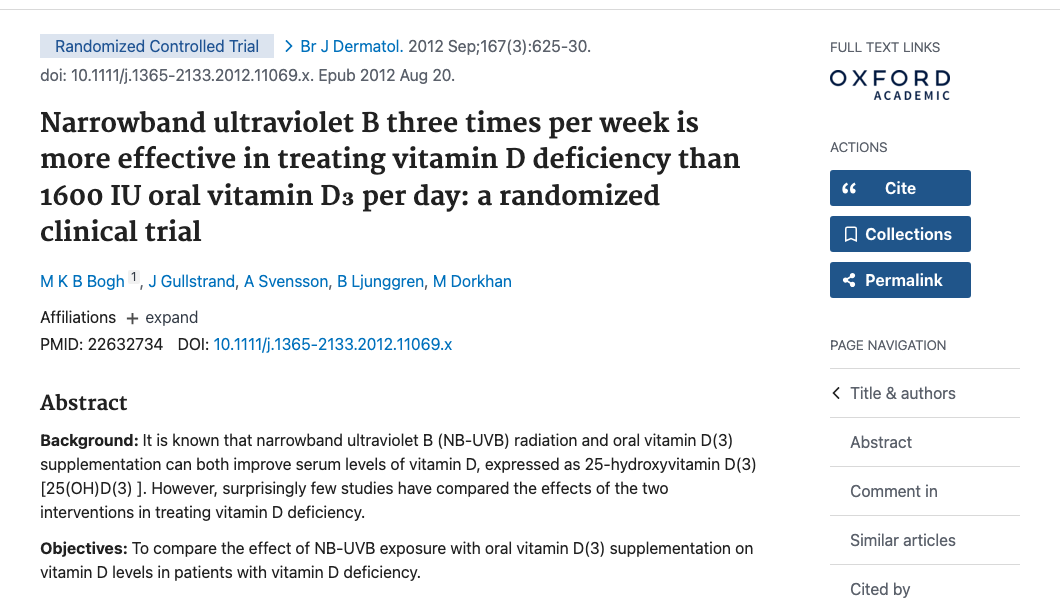
UVB exposure effectively raises vitamin D levels and produces a broader spectrum of vitamin D metabolites compared to oral supplementation.
Summary
This study compared different methods of raising vitamin D levels, including UVB exposure and oral supplementation.
Key findings:
- UVB exposure effectively raised 25(OH)D levels
- Produced natural vitamin D3 in skin
- Broader spectrum of vitamin D metabolites vs oral
- Dose-dependent response to UVB
UVB advantages observed:
- Natural production pathway
- Self-limiting (skin stops producing at high levels)
- Additional photoproducts generated
- Sustained levels after exposure ends
Clinical implications:
- UVB is viable alternative to oral supplementation
- May be preferred for those with absorption issues
- Requires careful dosing to avoid burns
- Both methods effective for raising 25(OH)D
Clinical significance:
Validates UVB exposure as an effective method for vitamin D optimization, supporting the use of UVB lamps for those unable to get adequate sun exposure.