Key Takeaway
Home UVB devices effectively increase vitamin D levels with proper dosing protocols, offering a practical alternative to sun exposure in vitamin D-deficient populations.
Summary
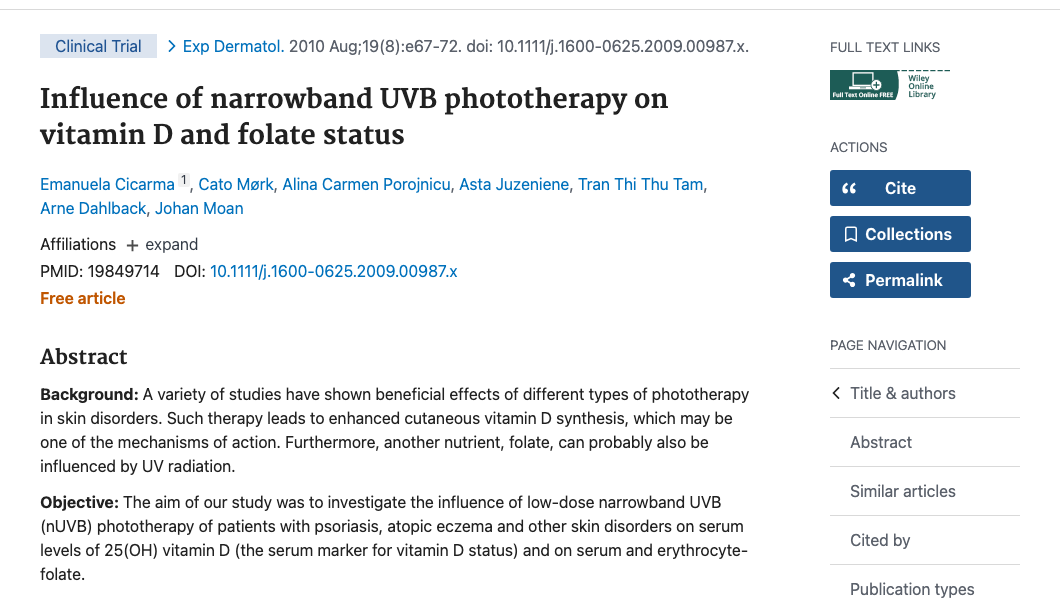
This systematic review examined the efficacy of home UVB phototherapy devices for increasing vitamin D status.
Key findings:
- Home UVB devices effectively raise serum 25(OH)D
- Results comparable to monitored sun exposure
- Dose-response relationship confirmed
- Safe when used according to guidelines
Device efficacy:
- Commercial UVB lamps produced measurable vitamin D increases
- 2-4 weeks needed for significant level changes
- Maintenance sessions sustain levels
- More skin exposure = faster results
Optimal protocols identified:
- Sub-erythemal doses (below sunburn threshold)
- 2-3 sessions per week
- Gradual increase in exposure time
- Torso exposure more efficient than limbs
Safety findings:
- No serious adverse events with proper use
- Minor erythema (redness) if overdone
- Eye protection essential
- Contraindicated in photosensitive conditions
Clinical significance:
Supports home UVB devices as practical tools for vitamin D optimization, particularly for populations with limited sun access.