
Key Takeaway
Narrowband UVB phototherapy significantly increases vitamin D levels as a beneficial side effect in patients receiving treatment for skin conditions.
Summary
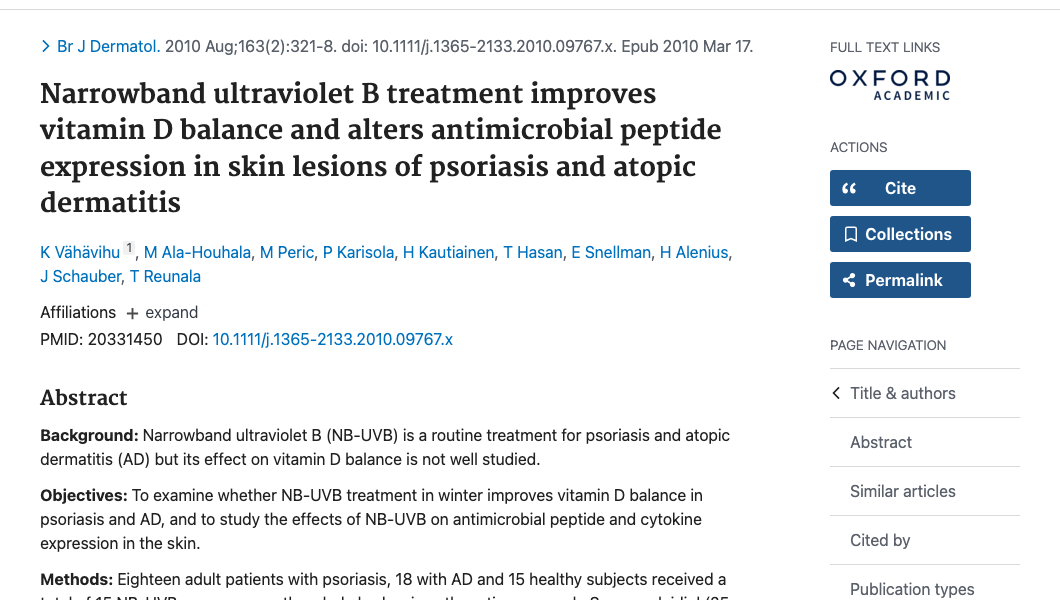
This study examined vitamin D level changes in patients receiving UVB phototherapy for psoriasis.
Study design:
- Psoriasis patients receiving narrowband UVB
- Vitamin D levels measured before and after treatment course
- Standard phototherapy protocols followed
Key findings:
- Significant increase in serum 25(OH)D levels
- Average increase of 15-25 ng/mL
- Levels rose even in previously deficient patients
- Benefits persisted after treatment ended
Vitamin D changes:
- Baseline: Many patients deficient (<20 ng/mL)
- Post-treatment: Most reached sufficient levels (>30 ng/mL)
- Increase correlated with total UVB dose
- Skin type affected rate of increase
Dual benefits observed:
- Psoriasis improvement (primary goal)
- Vitamin D normalization (secondary benefit)
- Mood improvement reported
- General wellbeing enhanced
Implications:
- UVB therapy provides vitamin D as "bonus"
- May explain some therapeutic effects
- Supports UVB for vitamin D optimization
- Home devices could provide similar benefits
Clinical significance:
Demonstrates that therapeutic UVB exposure reliably increases vitamin D levels, supporting the use of UVB devices for vitamin D production.