
Key Takeaway
Respiratory muscle training significantly reduces AHI and improves oxygen saturation in obstructive sleep apnea patients.
Summary
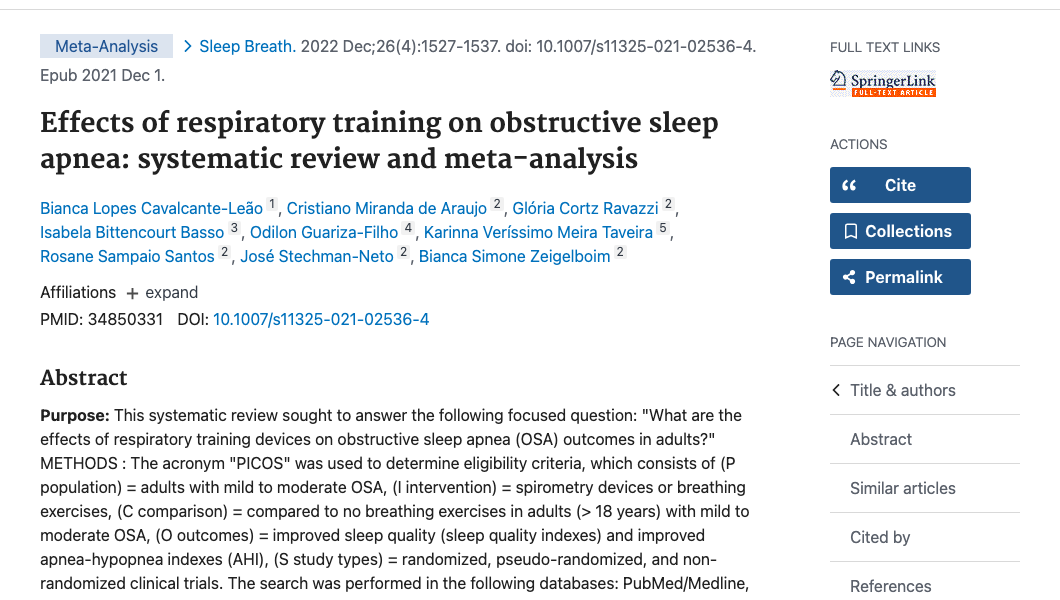
This systematic review and meta-analysis evaluated the effects of respiratory muscle training on obstructive sleep apnea (OSA). The authors searched multiple databases including PubMed, Scopus, Web of Science, and Cochrane Library to identify randomized controlled trials and quasi-experimental studies examining respiratory training interventions in adults with OSA.
The analysis included studies that used various forms of respiratory muscle training, including inspiratory muscle training, expiratory muscle training, and oropharyngeal exercises. The primary outcomes assessed were the apnea-hypopnea index (AHI), oxygen saturation, and respiratory muscle strength.
Results demonstrated that respiratory training significantly reduced AHI scores and improved minimum oxygen saturation levels in OSA patients. The findings support respiratory muscle training as a complementary therapeutic approach for managing obstructive sleep apnea, particularly for patients who struggle with CPAP adherence or seek adjunctive therapies.
Methods
Systematic review and meta-analysis following PRISMA guidelines. The authors searched PubMed, Scopus, Web of Science, Cochrane Library, and LILACS databases for randomized controlled trials and quasi-experimental studies. Included studies examined respiratory muscle training in adult OSA patients. Risk of bias was assessed, and random-effects meta-analysis was performed on pooled outcomes.
Key Results
Respiratory muscle training significantly reduced the apnea-hypopnea index (AHI) in OSA patients compared to controls. Minimum oxygen saturation levels improved significantly with training. Respiratory muscle strength (measured by maximal inspiratory and expiratory pressures) also showed significant improvements. The effects were consistent across different modalities of respiratory training.
Limitations
The included studies had relatively small sample sizes and varied in training protocols, making direct comparisons difficult. There was heterogeneity in study designs and intervention types. Long-term follow-up data were limited, so the durability of benefits remains unclear. Publication bias may have influenced results given the small number of eligible studies.