
Key Takeaway
Core stability training significantly improves balance and gait parameters in people with multiple sclerosis, supporting its inclusion in MS rehabilitation programs.
Summary
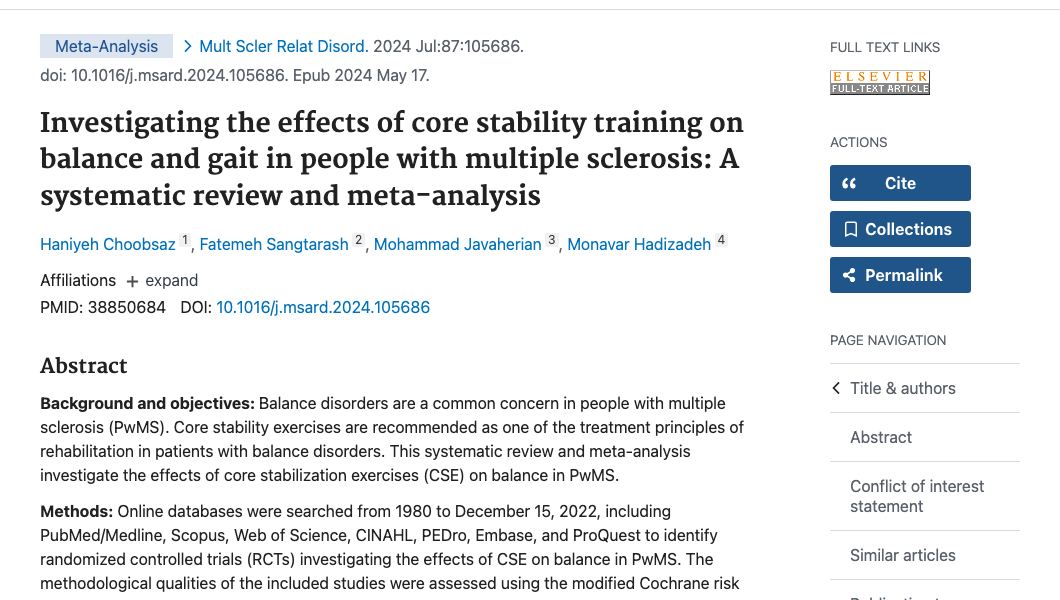
This systematic review and meta-analysis examined whether core stability training (CST) improves balance and gait outcomes in people with multiple sclerosis (MS). MS commonly causes impairments in postural control and walking ability due to central nervous system demyelination, making fall prevention and mobility maintenance critical rehabilitation goals.
The meta-analysis pooled data from randomized controlled trials that compared core stability training interventions to control conditions in MS patients. Results showed statistically significant improvements in balance measures—including the Berg Balance Scale and Timed Up and Go test—as well as gait parameters such as walking speed and stride length. Effect sizes were moderate to large, indicating clinically meaningful benefits.
The findings suggest that core stability training addresses a key deficit in MS by improving trunk control, which serves as the foundation for both static and dynamic balance. The authors conclude that CST should be considered a valuable component of rehabilitation programs for people with MS, particularly given its relatively low cost and adaptability to different functional levels.