
Key Takeaway
Core stability exercises are effective for reducing pain and disability in non-specific low back pain patients, with benefits comparable to or exceeding general exercise.
Summary
This systematic review evaluated the effectiveness of core stability exercises (CSE) for treating non-specific low back pain (NSLBP). The authors searched multiple databases and included studies that compared core stability interventions to other treatments or control conditions in adults with NSLBP.
The review found consistent evidence that core stability exercises produce meaningful improvements in both pain and functional disability outcomes. When compared to general exercise programs, CSE demonstrated comparable or superior results, particularly for pain reduction. The specificity of targeting deep stabilizing muscles—such as the transversus abdominis and multifidus—appears to offer additional benefit beyond what general strengthening provides.
The authors note that while the overall evidence supports core stability training as an effective intervention for NSLBP, variability in exercise protocols, dosing, and outcome measures across studies makes it difficult to identify a single optimal program. They recommend that clinicians incorporate core stability exercises as part of a comprehensive management strategy for patients with non-specific low back pain.
Figures
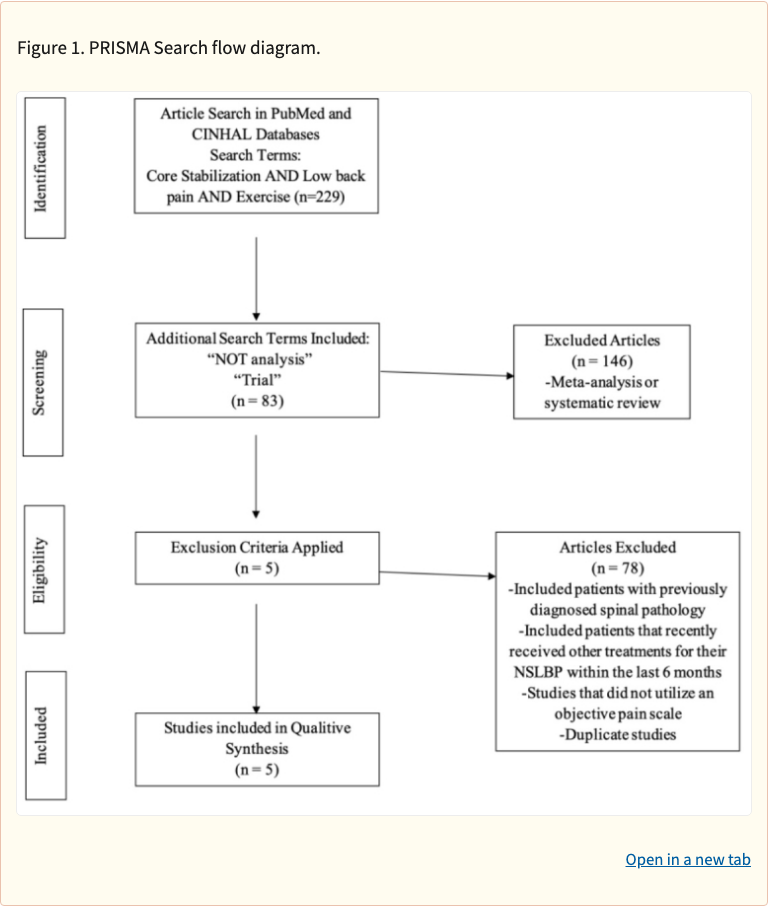 Figure 1