
Key Takeaway
Core training significantly improved balance (ES=1.17), vertical jump (ES=0.69), horizontal jump (ES=0.84), and throwing distance (ES=3.42) across 21 RCTs with healthy subjects.
Summary
This systematic review and meta-analysis examined whether core training programs translate into measurable athletic performance improvements. The authors searched Scopus, Web of Science, Sports Discuss, and PubMed through November 2022, following PRISMA guidelines. Inclusion criteria required randomized controlled trials with healthy subjects over 12 years old, core training programs lasting at least 4 weeks, and measurable performance outcomes.
From 3,223 initially identified studies, 22 were included in the systematic review and 21 in the meta-analysis. The results showed significant improvements in balance (ES=1.17, p<0.0001), vertical jumping (ES=0.69, p=0.0003), horizontal jump (ES=0.84, p=0.01), and throwing/hitting distance (ES=3.42, p=0.03). Throwing/hitting velocity showed a positive but non-significant trend (ES=0.30, p=0.14).
The findings demonstrate that core training is not just rehabilitative but has real carryover to athletic performance. The largest effect was on balance, which aligns with the role of core musculature in postural control and force transfer. Jump performance improvements suggest that core stability contributes to efficient force transmission from the trunk to the lower extremities during explosive movements.
Figures
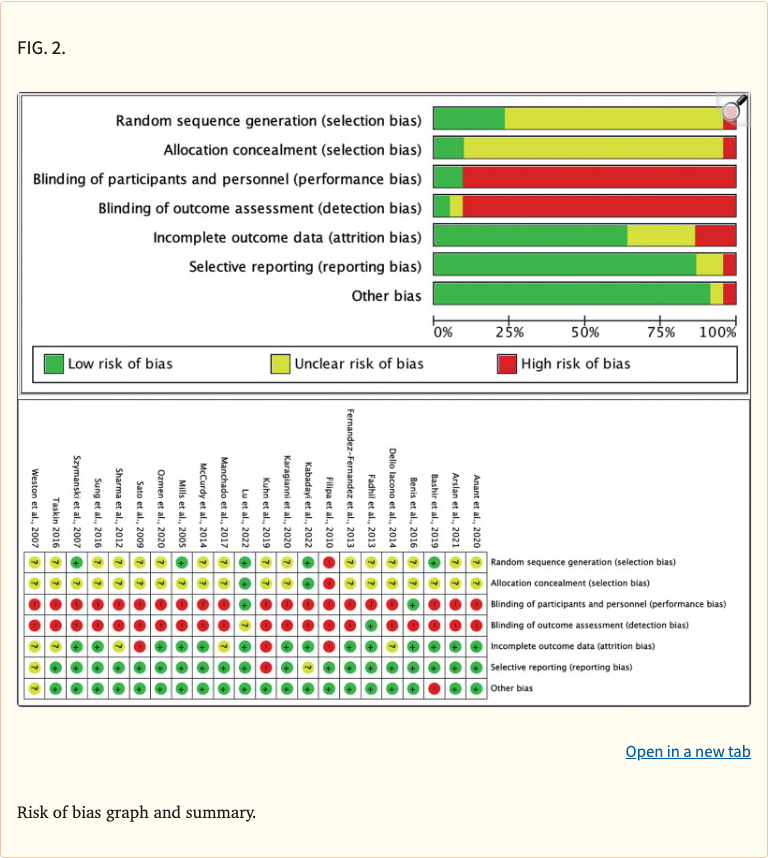 Figure 1
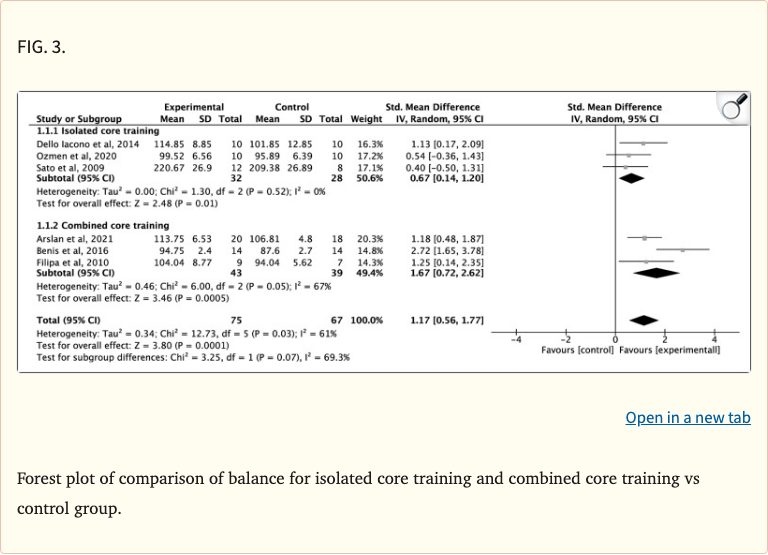 Figure 2
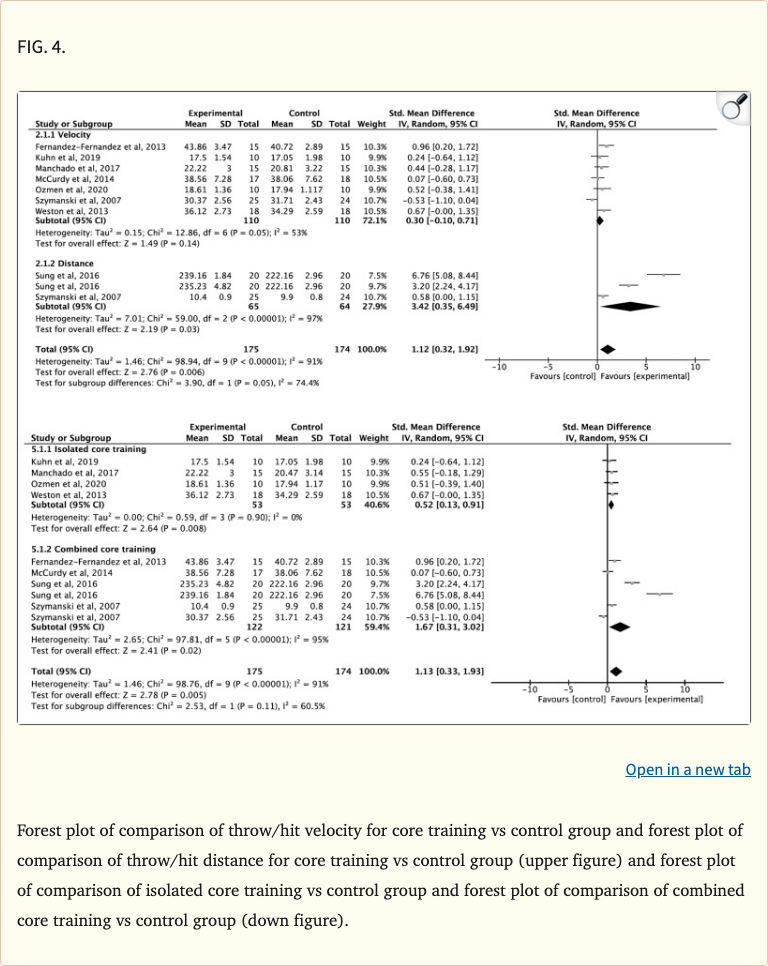 Figure 3
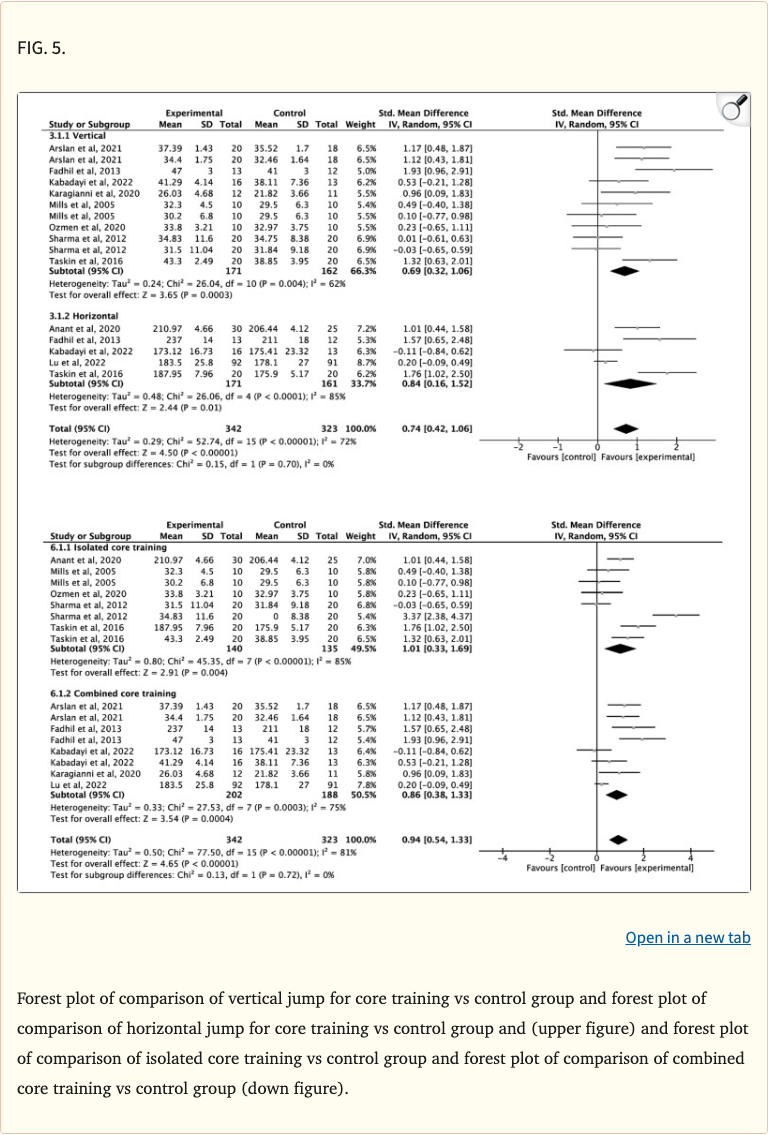 Figure 4