
Key Takeaway
Core stability exercise reduced pain and disability more than general exercise in the short term (≤3 months) for chronic low back pain, but the advantage disappeared at 6- and 12-month follow-ups.
Summary
This meta-analysis compared core stability exercise to general exercise for chronic low back pain, searching published articles from 1970 to October 2011. Two independent reviewers selected studies and extracted data from randomized controlled trials. From 28 potentially relevant trials, 5 RCTs involving 414 participants met inclusion criteria.
In the short term (3 months or less), core stability exercise was significantly more effective than general exercise for both pain reduction (mean difference -1.29) and disability improvement on the Oswestry Disability Index (mean difference -7.14). However, at 6-month follow-up, no significant differences were observed between groups for pain (mean difference -0.50, p=0.26). Similarly, at 12 months, pain differences remained non-significant (mean difference -0.32, p=0.25).
The results suggest that core stability exercise offers a meaningful short-term advantage over general exercise for chronic low back pain patients, particularly for functional disability. The lack of long-term superiority may indicate that consistent practice is necessary to maintain benefits, or that general exercise eventually catches up as overall fitness improves. For practitioners, core stability work appears most valuable as part of an initial treatment strategy, with ongoing maintenance required to sustain the advantage.
Figures
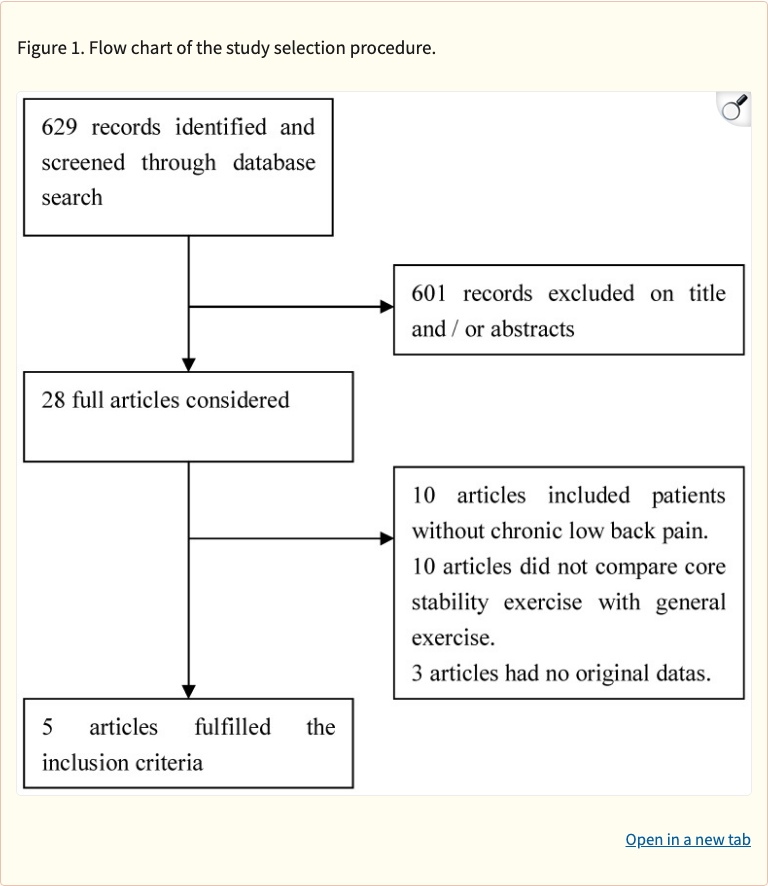 Figure 1
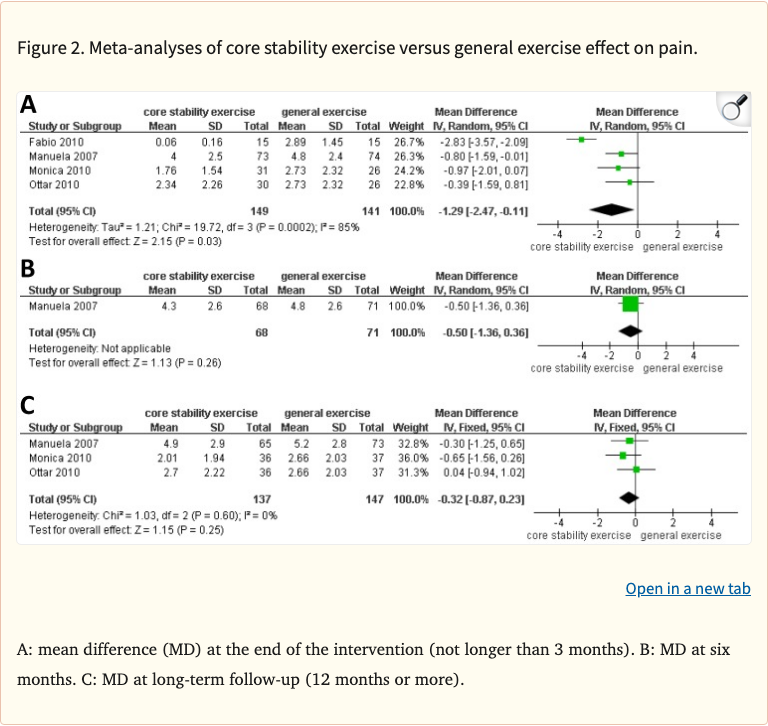 Figure 2
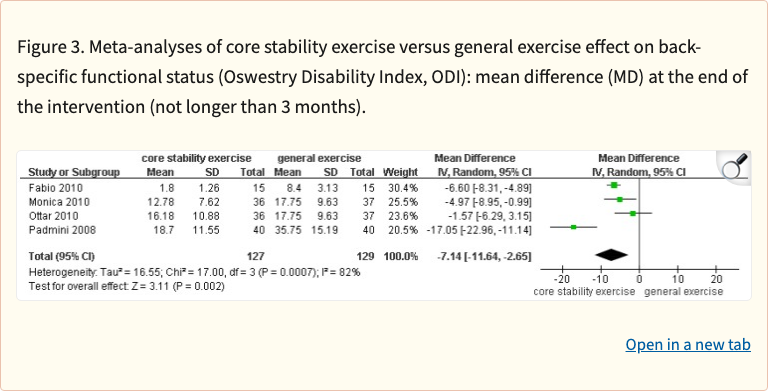 Figure 3