Key Takeaway
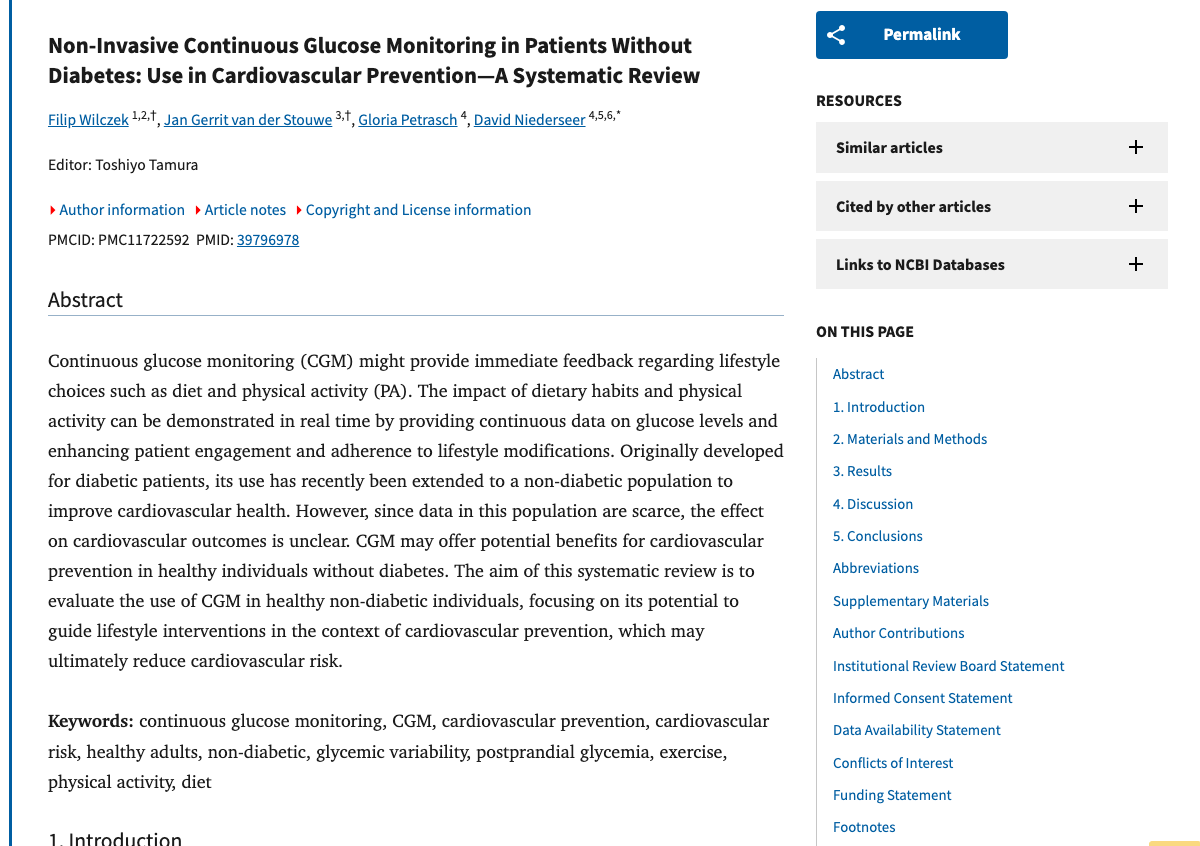
Systematic review finds CGM may guide lifestyle interventions for cardiovascular prevention in non-diabetics by revealing glucose variability patterns
Summary
This systematic review evaluated the potential of continuous glucose monitoring for cardiovascular prevention in individuals without diabetes. The research examines how CGM-guided interventions might reduce cardiovascular disease risk through improved glucose control and lifestyle modifications.
Methods
- Design: Systematic review following PRISMA guidelines
- Databases: Multiple electronic databases searched
- Focus: CGM applications in cardiovascular prevention
- Population: Non-diabetic individuals
- Outcomes: Glucose metrics, lifestyle changes, cardiovascular markers
Key Results
- CGM provides actionable data for lifestyle interventions
- Glucose variability linked to cardiovascular risk factors
- Many health benefits associated with fewer glucose excursions:
- Reduced cardiovascular disease risk
- Lower oxidative stress
- Decreased inflammation
- CGM enables personalized dietary recommendations
- Real-time feedback promotes sustained behavior change
- Early detection of dysglycemia before clinical diabetes
- Emerging tool for cardiovascular risk stratification
Limitations
- Heterogeneous study designs and populations
- Limited long-term cardiovascular outcome data
- Routine clinical use not yet established for non-diabetics
- Clinical significance of glucose variability in healthy people remains uncertain
- Need for larger, randomized controlled trials
- Cost-effectiveness in prevention not proven