
Key Takeaway
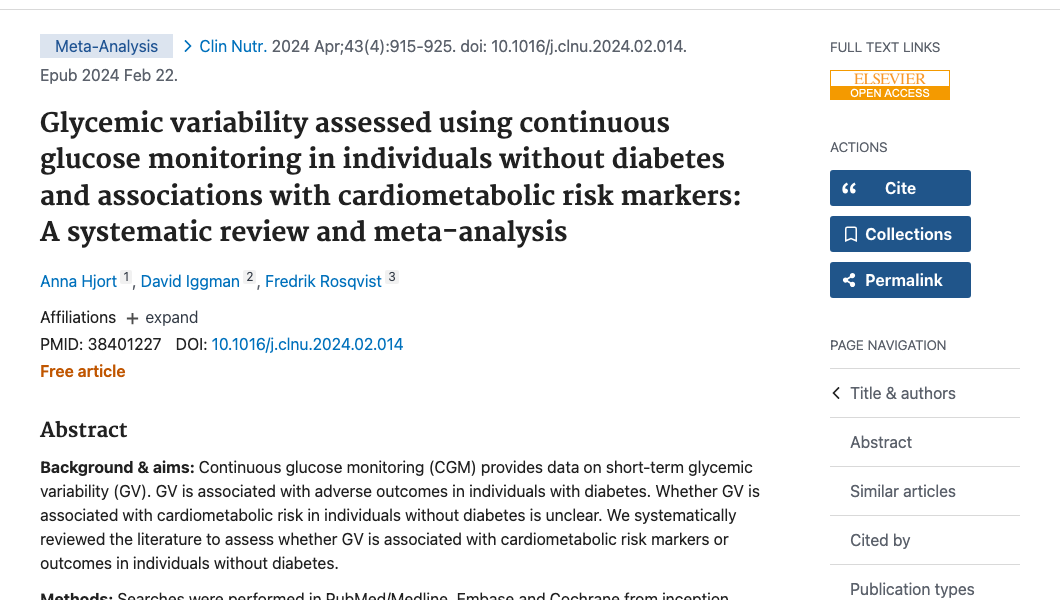
In non-diabetic individuals, higher glycemic variability measured by CGM is associated with worse cardiometabolic risk markers including higher BMI, waist circumference, and triglycerides.
Summary
This systematic review and meta-analysis investigated whether glycemic variability (GV) measured by continuous glucose monitoring is associated with cardiometabolic risk markers in people without diabetes. The authors pooled data from observational and interventional studies that used CGM in normoglycemic or prediabetic populations.
The meta-analysis found significant associations between higher glycemic variability metrics (such as MAGE, CV, and SD of glucose) and adverse cardiometabolic profiles. Participants with greater glucose fluctuations tended to have higher BMI, larger waist circumference, elevated triglycerides, and other markers of metabolic dysfunction, even in the absence of a diabetes diagnosis.
These findings suggest that CGM-derived glycemic variability captures meaningful metabolic information beyond what fasting glucose or HbA1c alone provide. The results support the concept that glucose instability may be an early and independent contributor to cardiometabolic risk, strengthening the rationale for CGM use as a screening and monitoring tool in non-diabetic populations seeking to optimize metabolic health.