
Key Takeaway
CGM revealed distinct "glucotypes" in healthy individuals, with 24% showing prediabetic glucose patterns invisible to standard testing
Summary
This Stanford study used continuous glucose monitoring to characterize glucose patterns in non-diabetic individuals. The research discovered that glucose regulation is highly variable between individuals, leading to the identification of distinct "glucotypes" that predict metabolic health better than standard testing.
Methods
- Design: Observational cohort study with CGM monitoring
- Participants: 57 participants without diabetes diagnosis
- Monitoring: Continuous glucose monitoring over multiple weeks
- Standardized meals: Identical glucose challenge tests
- Classification: Machine learning to identify glucose response patterns
- Validation: Comparison with standard glucose tolerance tests
Key Results
- Identified three distinct glucotypes: low, moderate, and high variability
- 24% of "healthy" participants showed high-variability patterns
- High-variability individuals spent ~15% of time above prediabetic threshold (140 mg/dL)
- Same foods caused dramatically different responses in different individuals
- Standard fasting glucose tests missed many dysregulated individuals
- CGM provided insights unavailable from single-point measurements
- Individual responses were consistent over time (reproducible patterns)
Figures
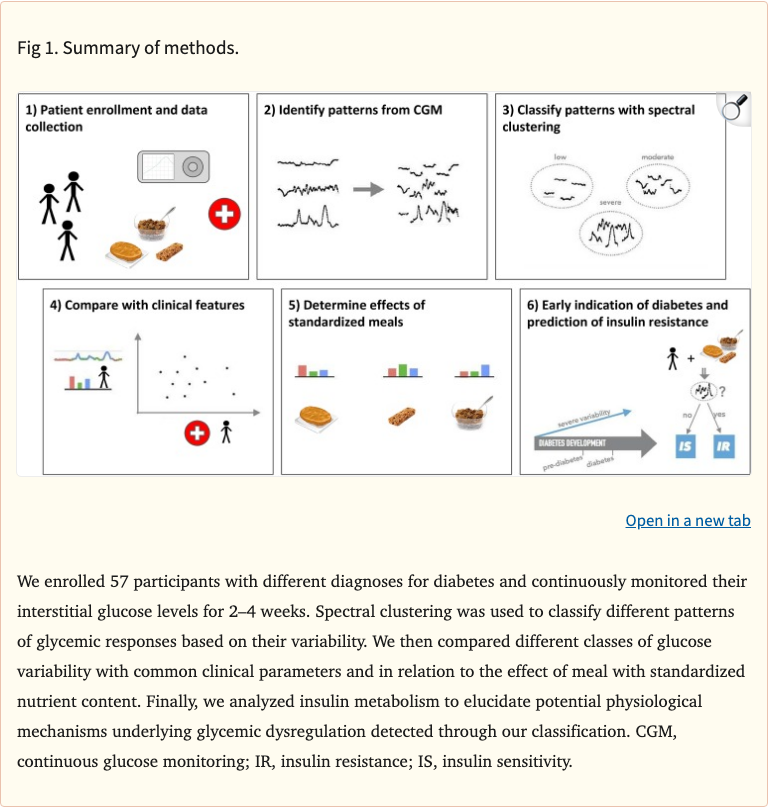 Figure 1
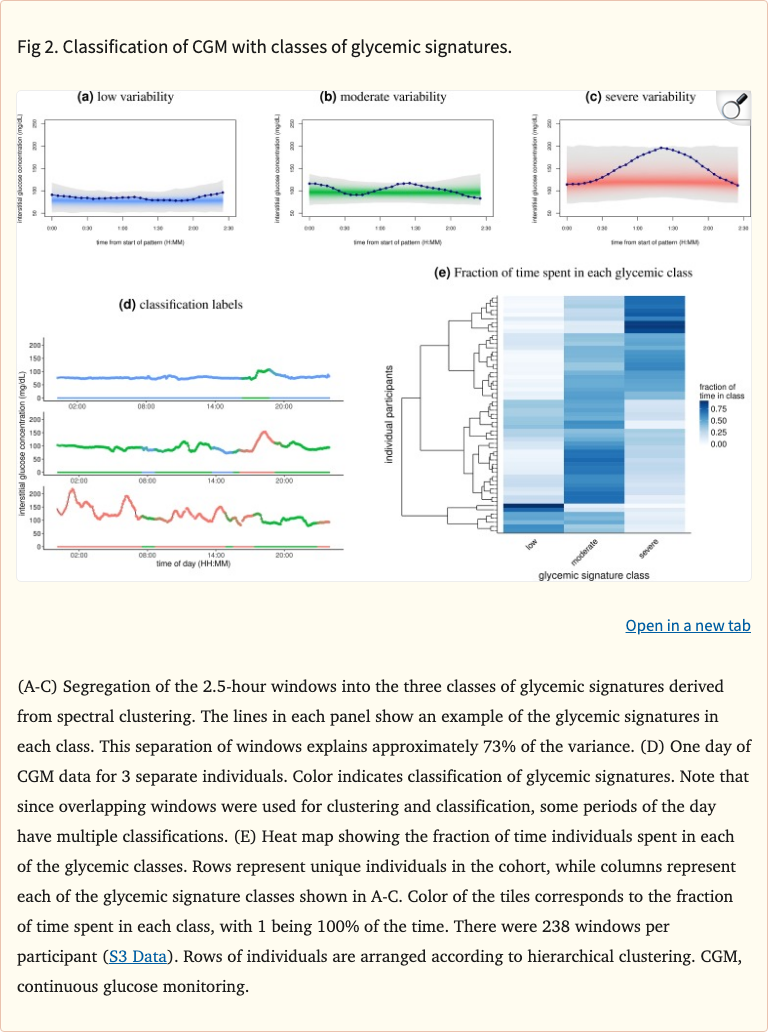 Figure 2
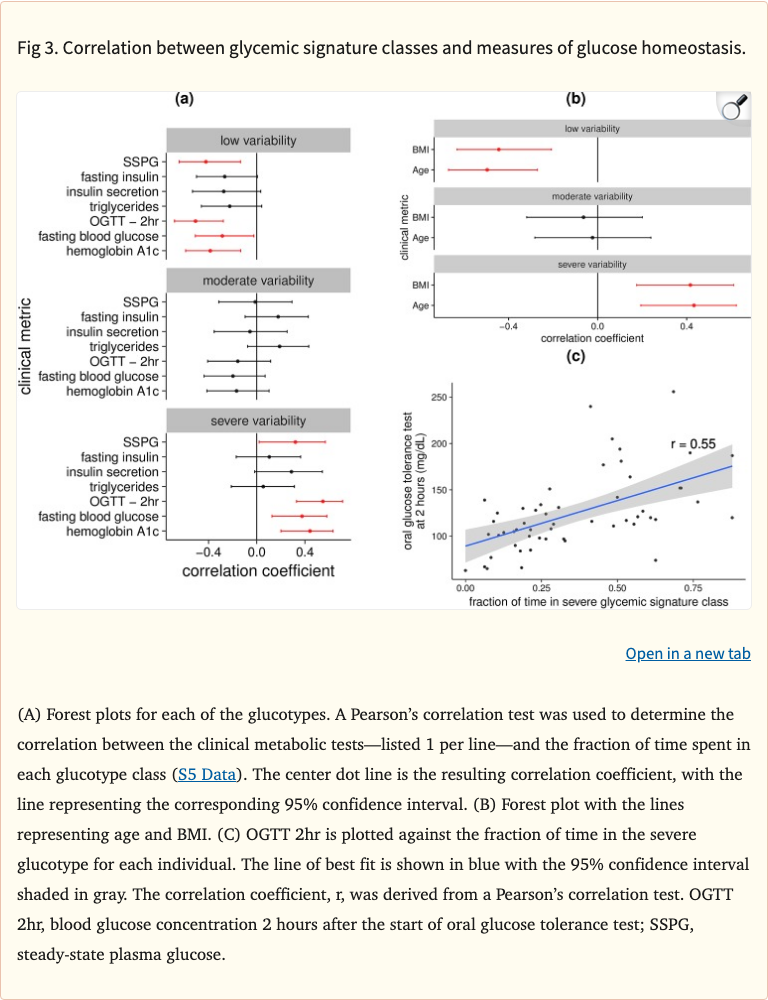 Figure 3
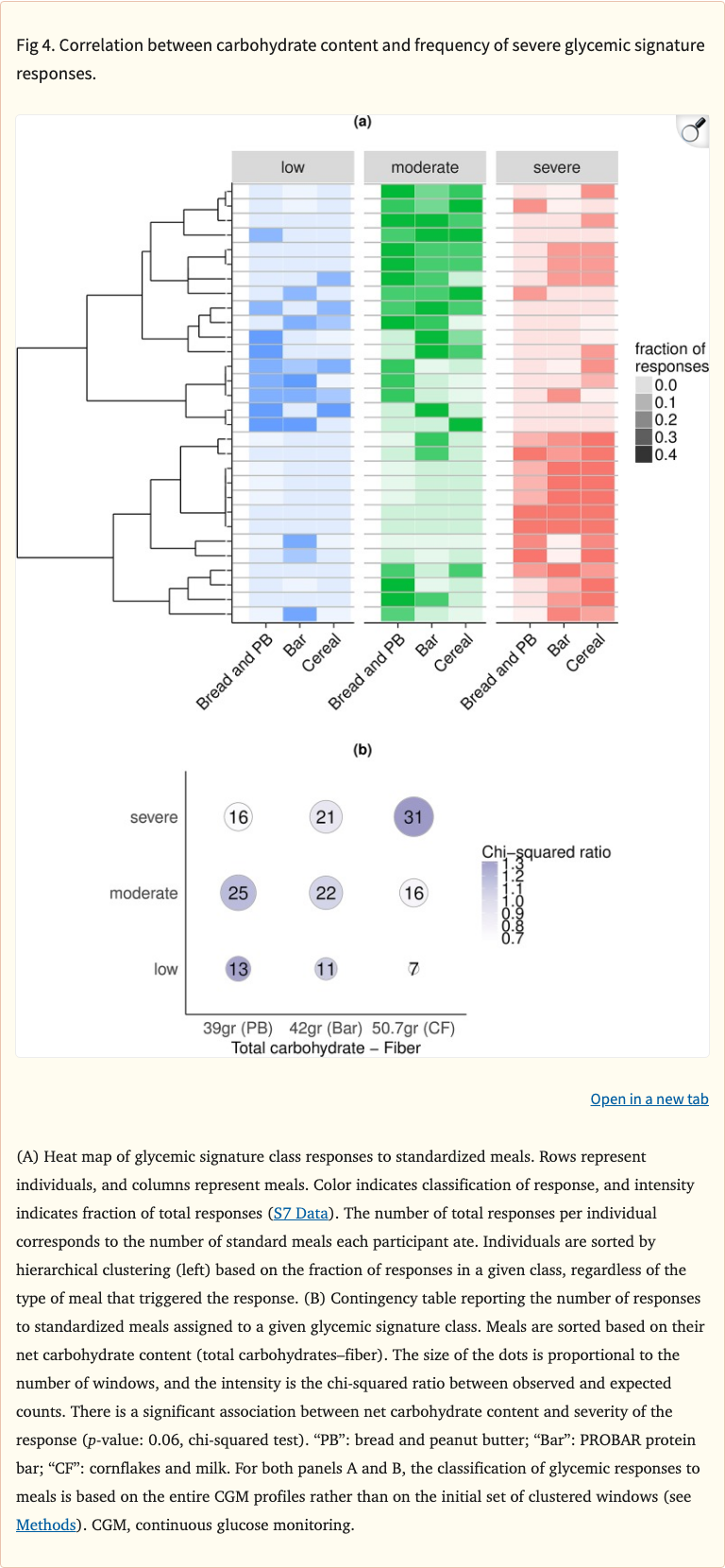 Figure 4
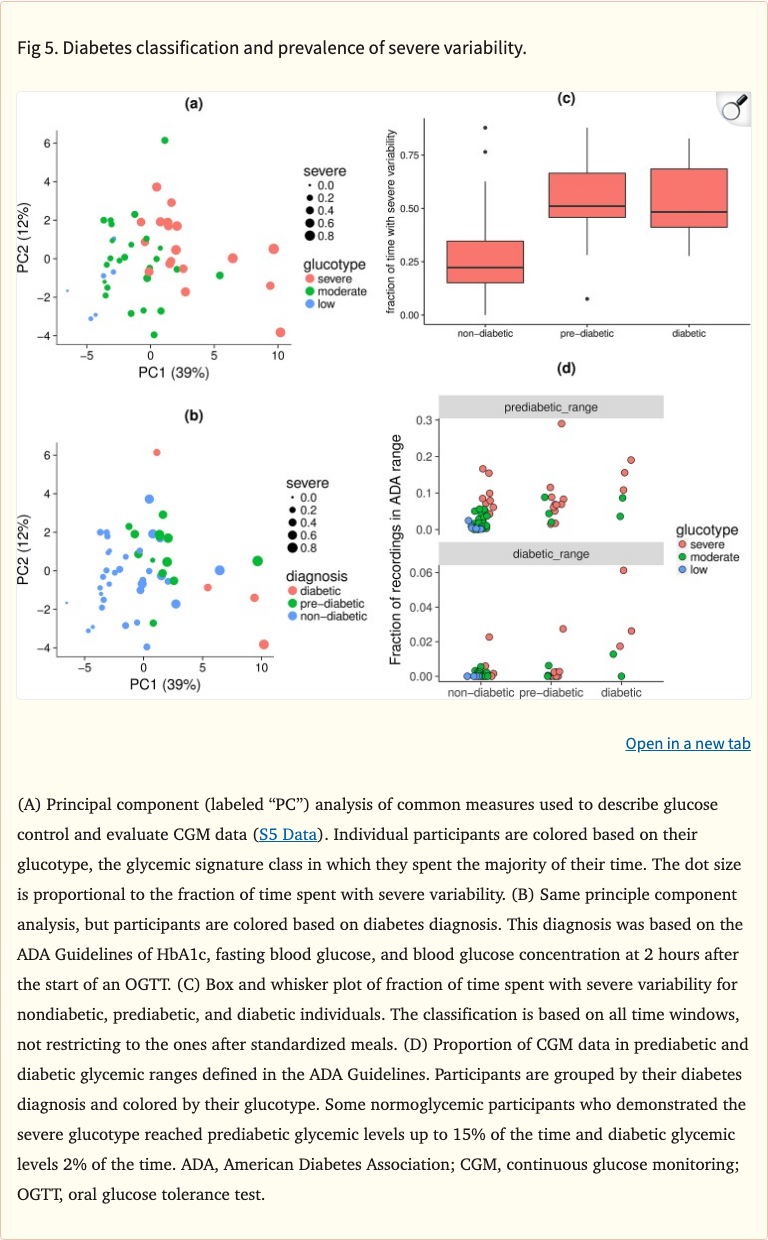 Figure 5
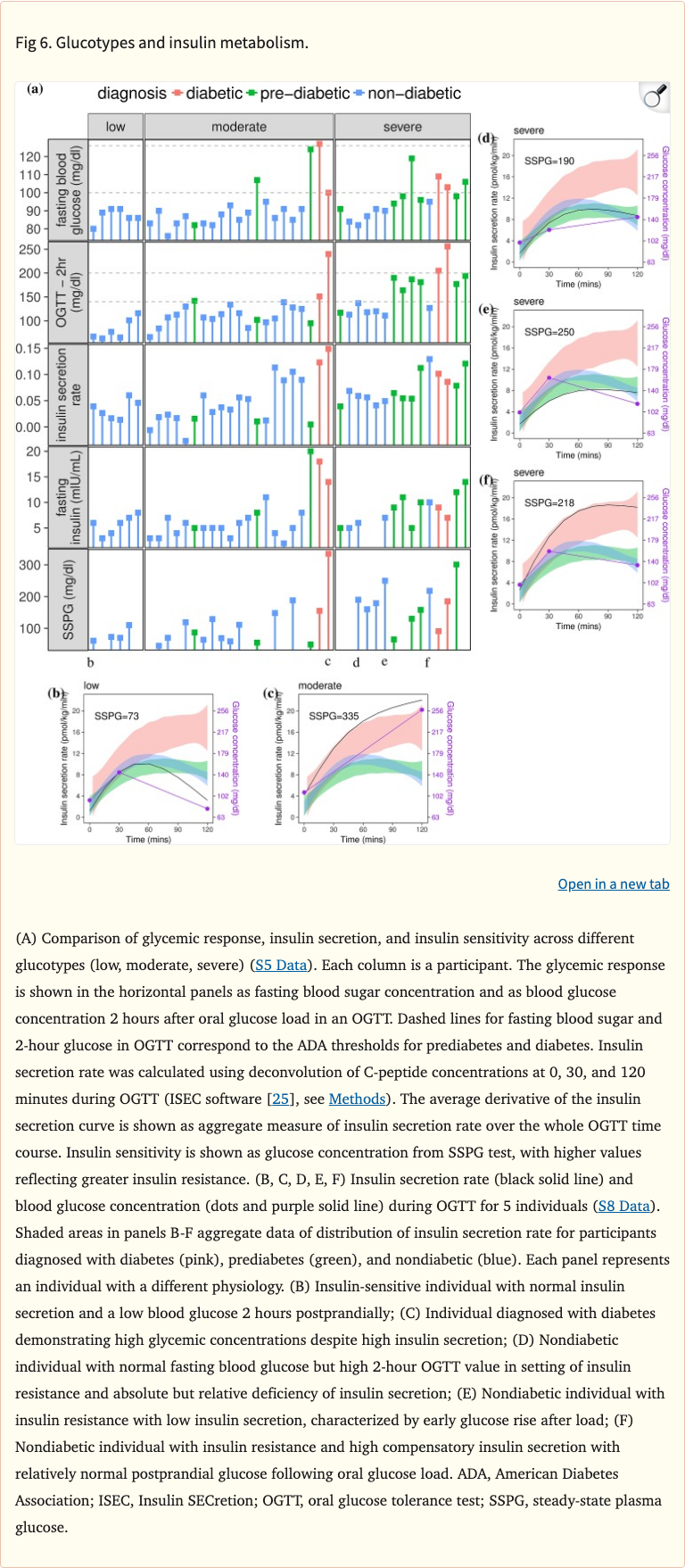 Figure 6
Limitations
- Relatively small sample size (n=57)
- Short monitoring duration for some participants
- Primarily healthy/prediabetic population
- Dietary factors not fully controlled
- Long-term health outcomes not assessed
- May not generalize to all populations