Key Takeaway
Review establishes four clinical use cases for CGM in non-diabetics: metabolic diseases, wellness optimization, elite athletics, and early disease detection
Summary
This comprehensive review examines the emerging role of continuous glucose monitoring in people without diabetes. The authors identify specific populations who may benefit and establish frameworks for clinical and wellness applications of CGM technology.
Methods
- Design: Narrative review of CGM literature
- Scope: Non-diabetic applications of CGM
- Focus areas: Clinical utility, wellness applications, athletic performance
- Analysis: Evidence synthesis across multiple use cases
- Framework: Development of clinical use case categories
Key Results
- Identified four primary use cases for CGM in non-diabetics:
1. Metabolic diseases with insulin-glucose dysregulation 2. Metabolic diseases without primary glucose pathology 3. Health and wellness optimization 4. Elite athletic performance - Real-time feedback effectively modifies eating behavior - CGM reveals subclinical metabolic dysfunction before standard tests - Personalized nutrition insights unavailable from other methods - Short-term use (weeks to months) most appropriate for healthy individuals - Growing evidence supports wellness applications
Figures
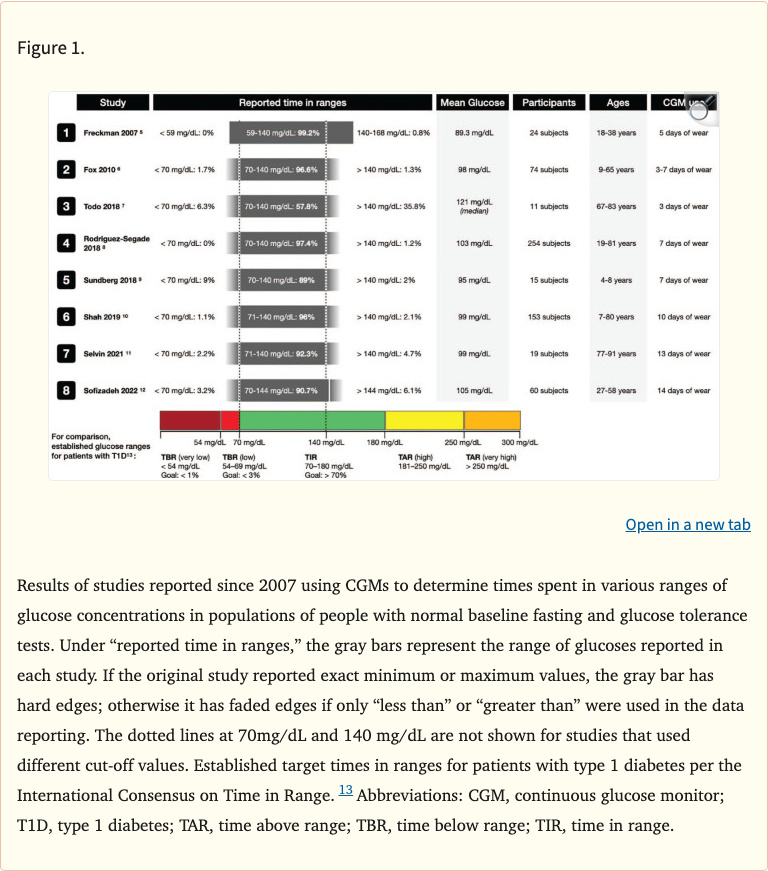 Figure 1
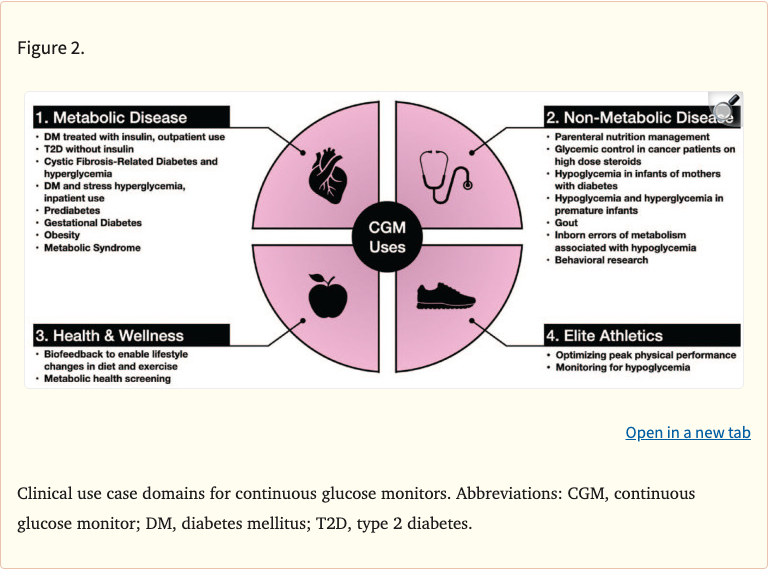 Figure 2
Limitations
- Narrative review (not systematic)
- Limited long-term outcome data for non-diabetic use
- Cost-effectiveness not fully established
- Psychological impacts not comprehensively addressed
- Clinical significance of glucose variability in healthy people uncertain
- Regulatory landscape still evolving
Related Interventions
Related Studies
Discussed In