Key Takeaway
CGM used as a behaviour change tool significantly improves HbA1c and body weight in both diabetic and non-diabetic populations compared to controls, supporting its role beyond traditional diabetes management.
Summary
This systematic review and meta-analysis of randomized controlled trials evaluated the effectiveness of continuous glucose monitoring as a behavioral change intervention across populations with and without diabetes. The authors identified RCTs where CGM was used specifically as a tool to drive lifestyle modifications rather than purely for clinical glucose management.
The meta-analysis found that CGM-based interventions led to statistically significant reductions in HbA1c compared to control groups, with meaningful effects observed in both diabetic and non-diabetic populations. Additionally, CGM users achieved greater reductions in body weight, suggesting that the real-time biofeedback from CGM motivated sustained dietary and physical activity changes.
Importantly, the study demonstrated that CGM value extends well beyond its traditional use in diabetes management. When framed as a behaviour change tool, CGM provides the kind of immediate, personalized feedback that supports self-regulation and goal-directed health behaviours. The authors concluded that CGM represents a promising intervention for improving metabolic health outcomes across a broad population, though they called for more research on long-term adherence and cost-effectiveness.
Figures
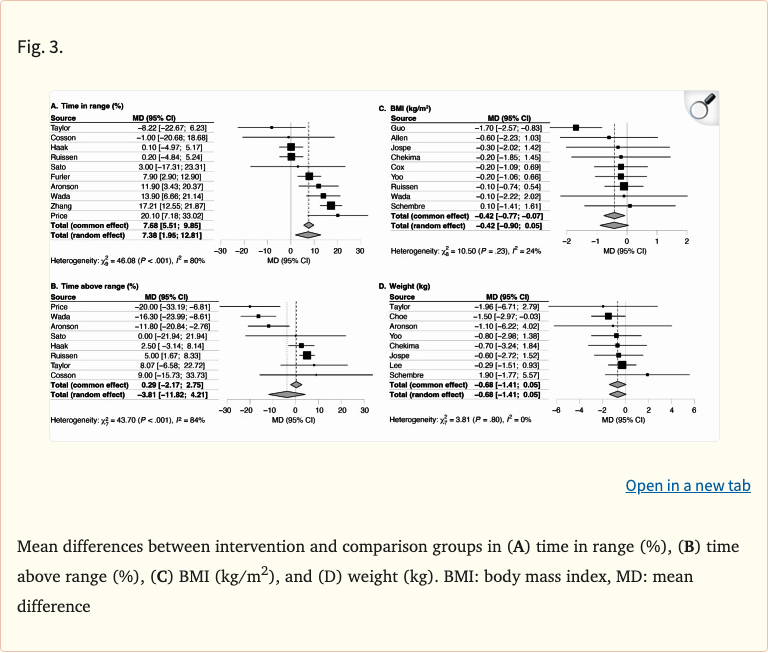 Figure 1
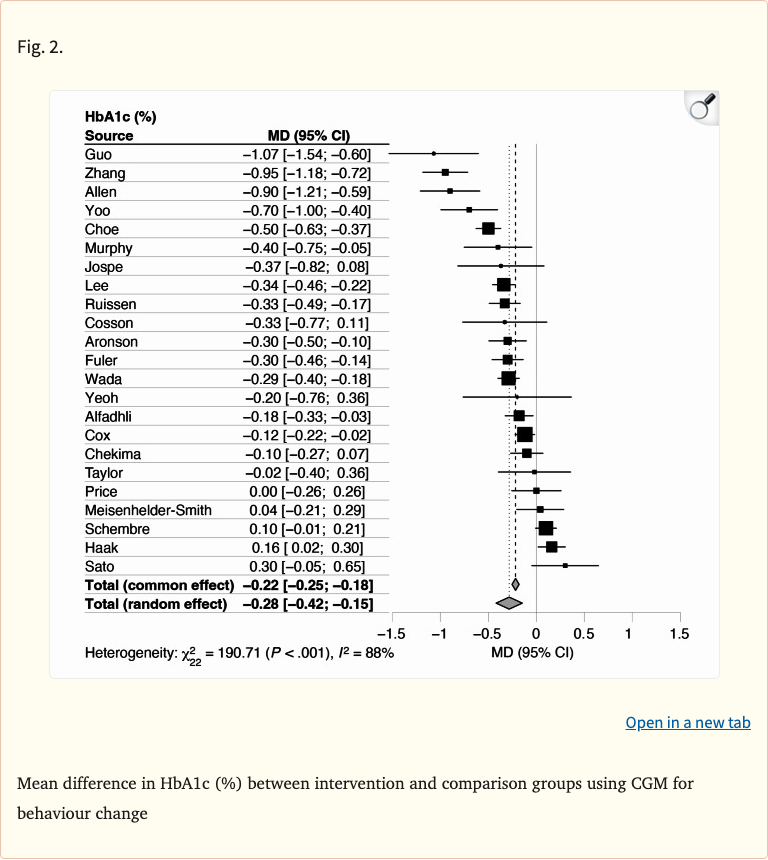 Figure 2