
Key Takeaway
Intermittent theta burst stimulation (iTBS) to the left DLPFC ranks among the most effective TMS protocols for depression, comparable to standard rTMS but with shorter treatment times.
Summary
This comprehensive network meta-analysis compared different theta burst stimulation (TBS) protocols for treating depression. The researchers used both network and pairwise meta-analytic methods to rank various TBS approaches against each other and against sham stimulation.
The analysis included randomized controlled trials evaluating intermittent TBS (iTBS), continuous TBS (cTBS), and bilateral TBS protocols. The network meta-analysis allowed for indirect comparisons between protocols that hadn't been directly compared in head-to-head trials.
Results showed that iTBS targeting the left dorsolateral prefrontal cortex (DLPFC) was among the most effective protocols, with efficacy comparable to standard repetitive TMS but requiring significantly less treatment time per session. This supports the use of accelerated iTBS protocols like the Stanford SAINT approach.
Methods
- Systematic search across major databases through 2024
- Included RCTs of TBS for major depressive disorder
- Network meta-analysis comparing iTBS, cTBS, bilateral TBS, and sham
- Pairwise meta-analyses for direct comparisons
- Surface under cumulative ranking curve (SUCRA) analysis
- Assessment of certainty of evidence using GRADE
Key Results
- iTBS to left DLPFC showed significant efficacy vs sham for response rates
- iTBS ranked highly among all TBS protocols for depression treatment
- Bilateral TBS (iTBS to left + cTBS to right DLPFC) also showed promise
- Effect sizes comparable to standard 10 Hz rTMS protocols
- Good tolerability across all TBS protocols
Figures
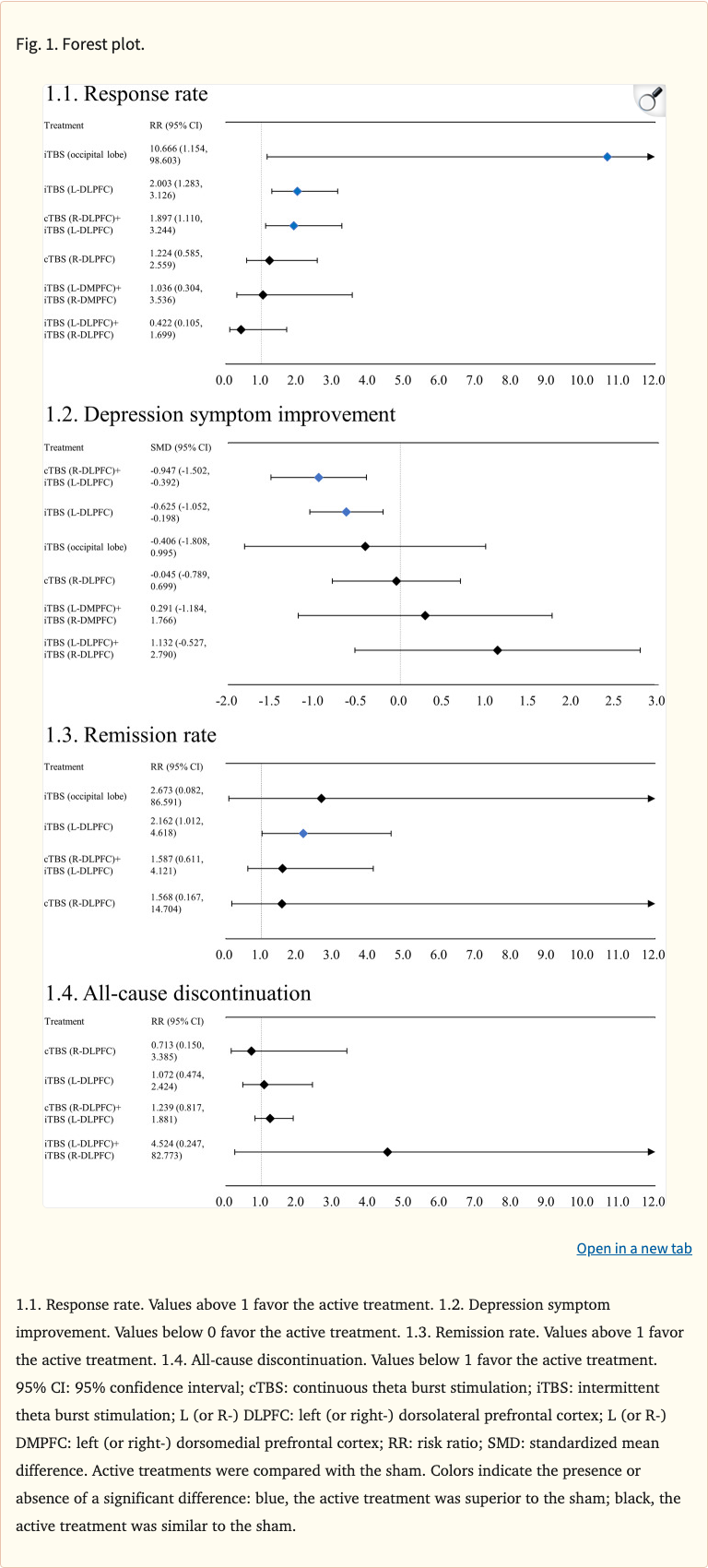 Figure 1
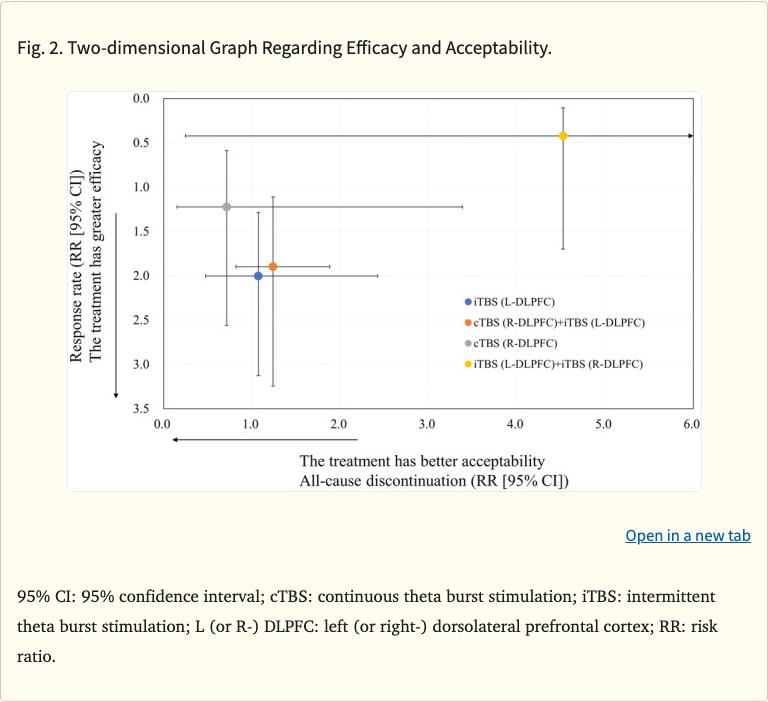 Figure 2
Limitations
- Heterogeneity in TBS parameters across studies
- Limited number of direct head-to-head comparisons
- Most studies used standard (non-accelerated) protocols
- Varying definitions of response and remission
- Publication bias possible in smaller studies