
Key Takeaway
Accelerated TMS protocols are significantly more effective than sham stimulation for depression, with benefits sustained at 1-4 week follow-up.
Summary
This systematic review and meta-analysis evaluated both the short-term and long-term efficacy of accelerated transcranial magnetic stimulation (aTMS) for treating depression. The researchers searched multiple databases and included randomized controlled trials comparing aTMS to sham stimulation.
The meta-analysis found that aTMS significantly reduced depression severity compared to sham, with effects maintained at follow-up assessments ranging from 1 to 4 weeks post-treatment. The analysis also examined different protocol parameters including stimulation frequency, number of sessions per day, and total treatment duration.
Subgroup analyses revealed that protocols using higher frequencies (10-20 Hz) and those delivering more pulses per session showed stronger antidepressant effects. The Stanford SAINT-style protocols using intermittent theta burst stimulation showed particularly promising results.
Methods
- Systematic search of PubMed, Embase, Cochrane Library, and PsycINFO databases
- Included randomized controlled trials comparing aTMS to sham stimulation
- Primary outcome: depression severity scores (HDRS, MADRS, BDI)
- Secondary outcomes: response rates, remission rates, sustained effects
- Random-effects meta-analysis with heterogeneity assessment
- Subgroup analyses by protocol parameters
Key Results
- aTMS significantly reduced depression scores vs sham (SMD = -0.71, 95% CI: -0.97 to -0.45)
- Response rates were significantly higher in aTMS groups
- Effects sustained at 1-4 week follow-up assessments
- Higher frequency protocols showed larger effect sizes
- Low to moderate heterogeneity across studies
Figures
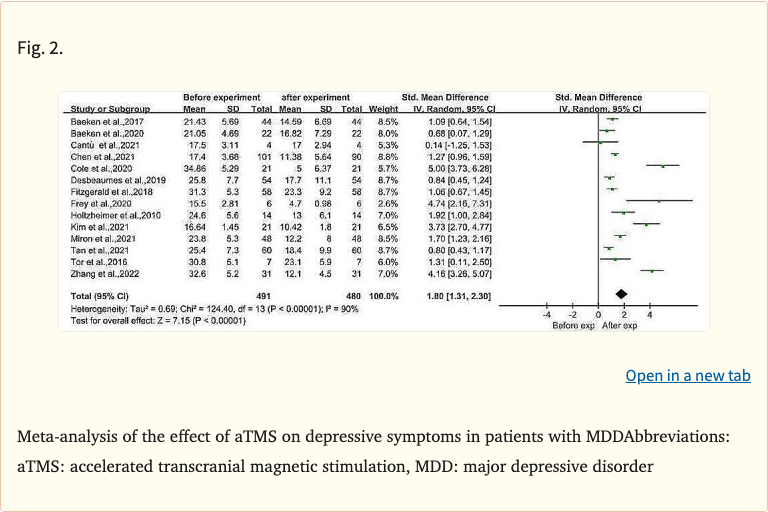 Figure 1
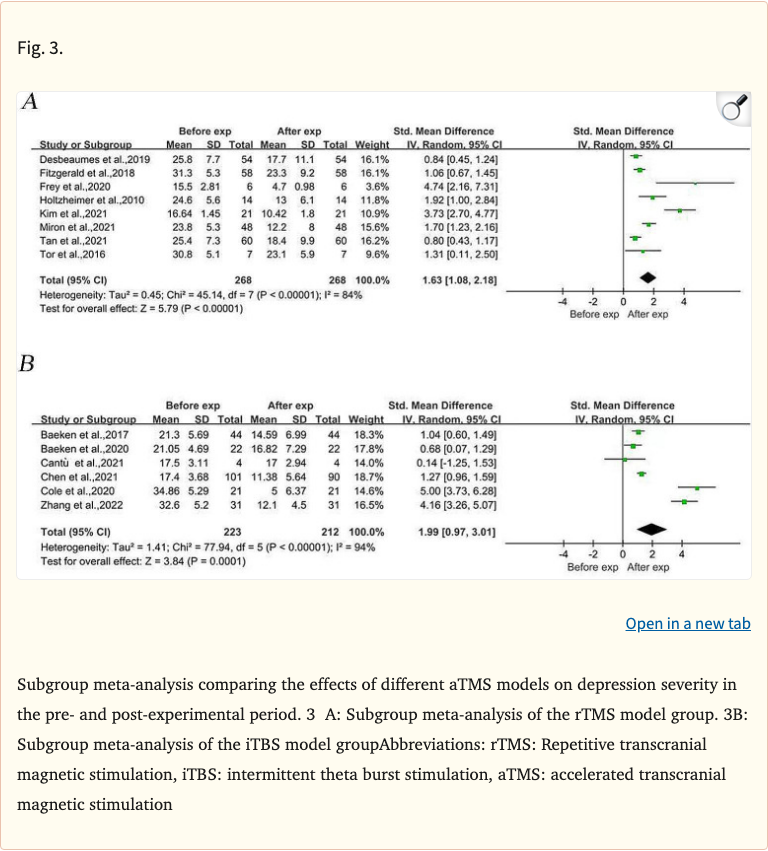 Figure 2
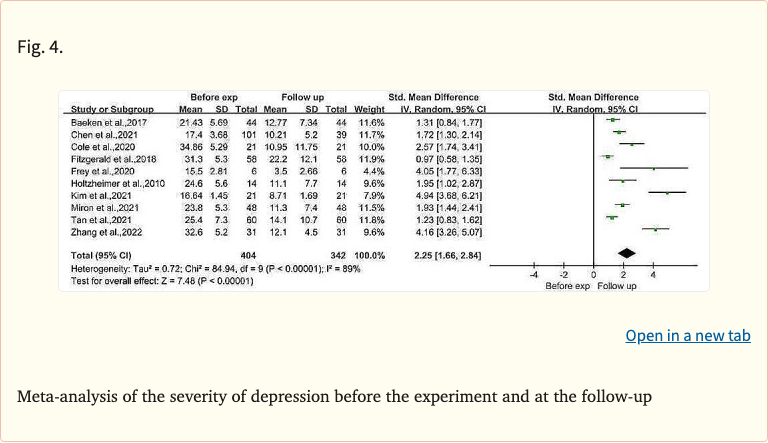 Figure 3
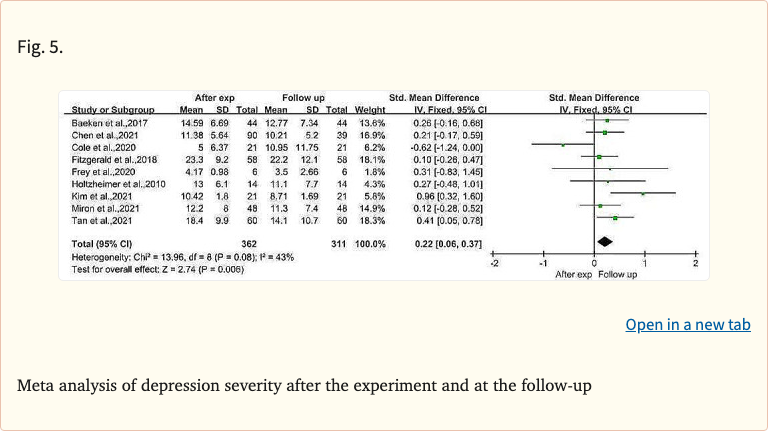 Figure 4
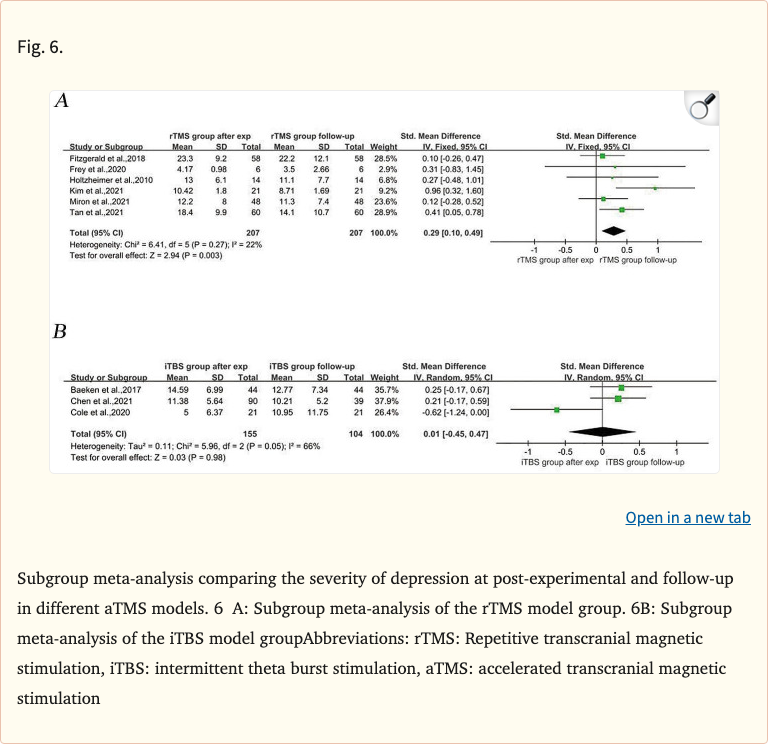 Figure 5
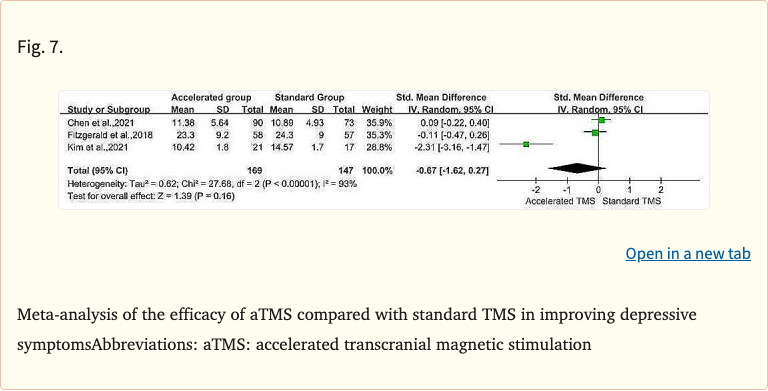 Figure 6
Limitations
- Variability in aTMS protocols across studies
- Relatively small sample sizes in individual trials
- Limited long-term follow-up beyond 4 weeks
- Most studies conducted at specialized academic centers
- Potential publication bias