
Key Takeaway
Meta-analysis establishing optimal balance training protocols - 3 sessions per week, 11-12 weeks duration, with progressive difficulty produces best results.
Summary
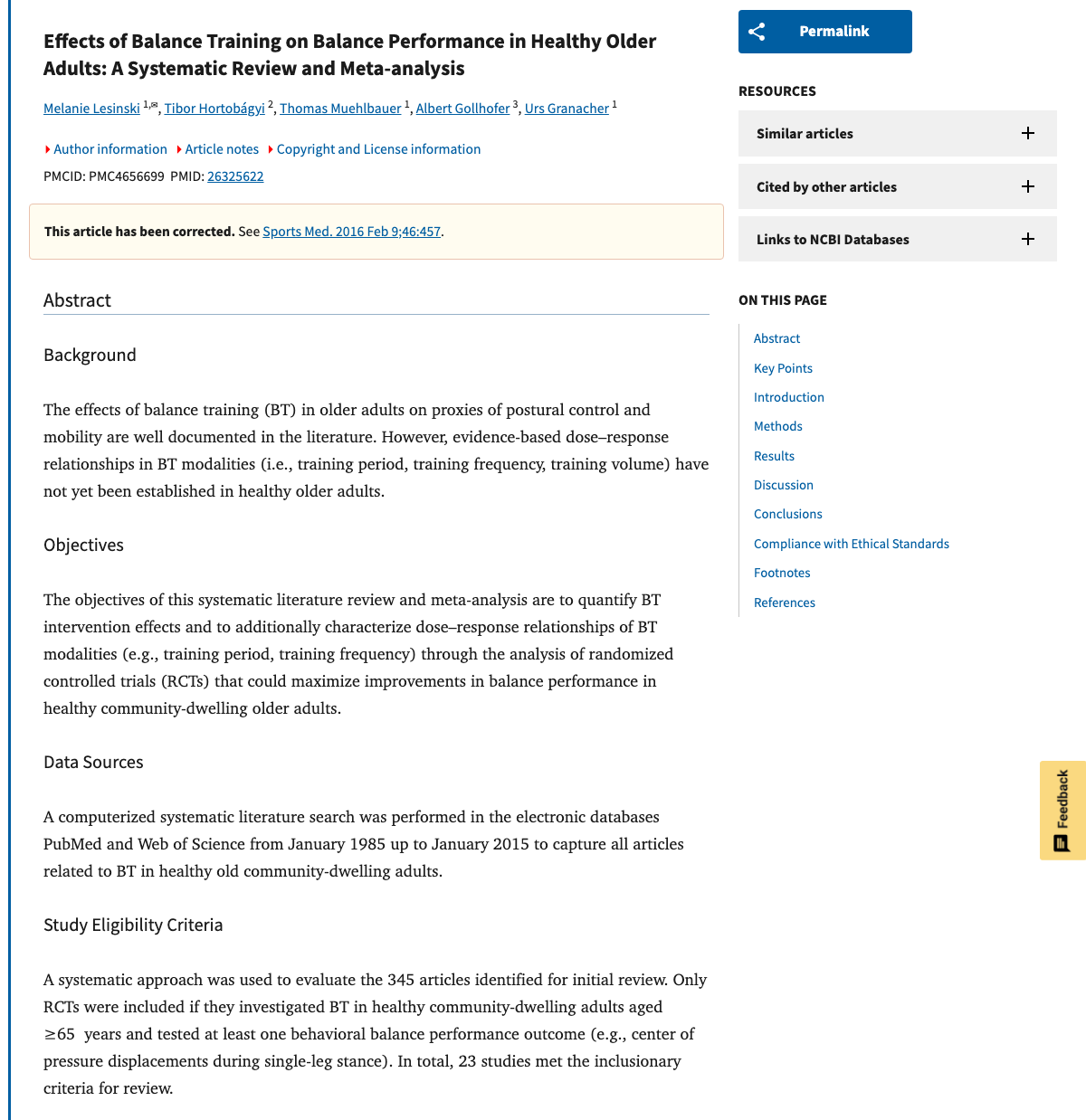
This systematic review and meta-analysis examined 23 studies to determine the dose-response relationship for balance training in healthy older adults.
The analysis identified optimal training parameters: frequency of 3 sessions per week, total duration of 11-12 weeks, and 91-120 minutes of weekly training time. Single-leg stance and dynamic movements showed the largest effect sizes.
The findings provide evidence-based guidance for designing balance training programs to maximize improvements in postural control and stability.
Methods
- Systematic review of 23 studies
- Meta-analysis of dose-response relationships
- Healthy adults aged 65+
- Various balance outcome measures
- Subgroup analysis by training parameters
Key Results
- Optimal frequency: 3 sessions/week
- Optimal duration: 11-12 weeks
- Weekly volume: 91-120 minutes
- Single-leg exercises most effective
- Progressive difficulty essential
- Large effect sizes for trained outcomes (d = 0.82)
Figures
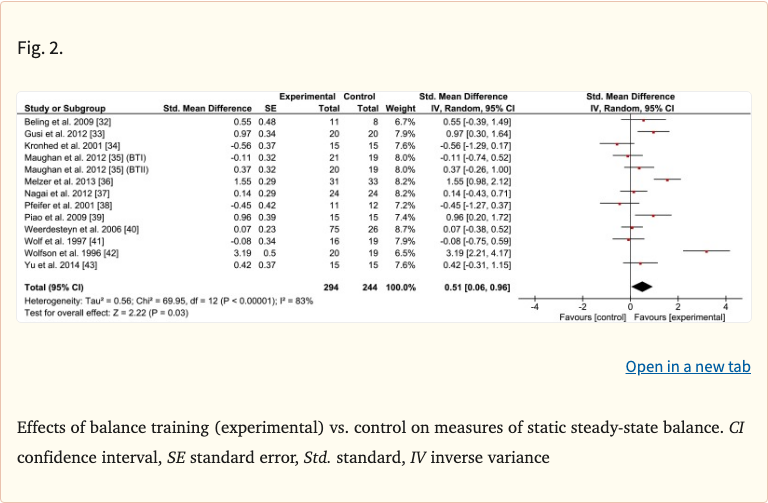 Figure 1
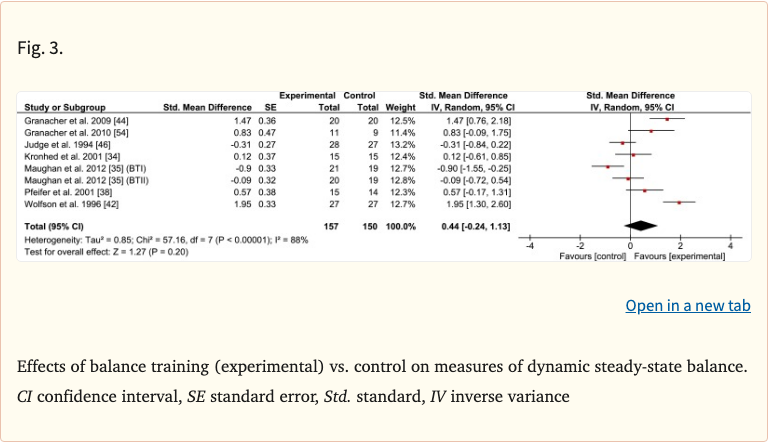 Figure 2
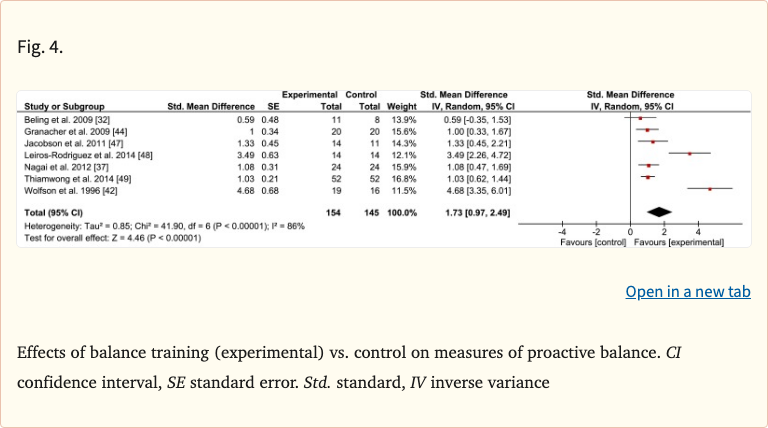 Figure 3
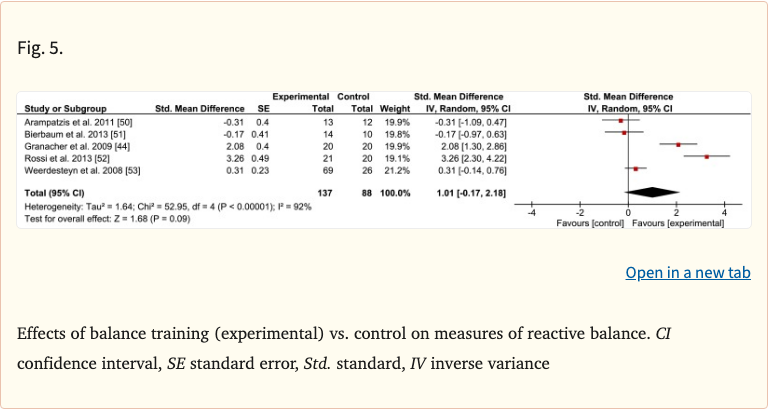 Figure 4
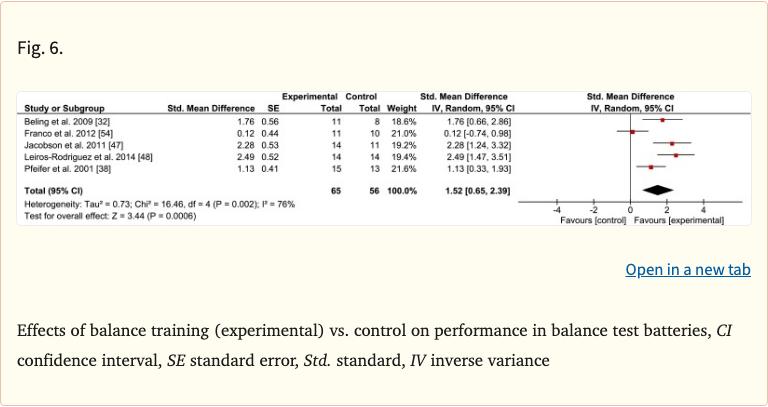 Figure 5
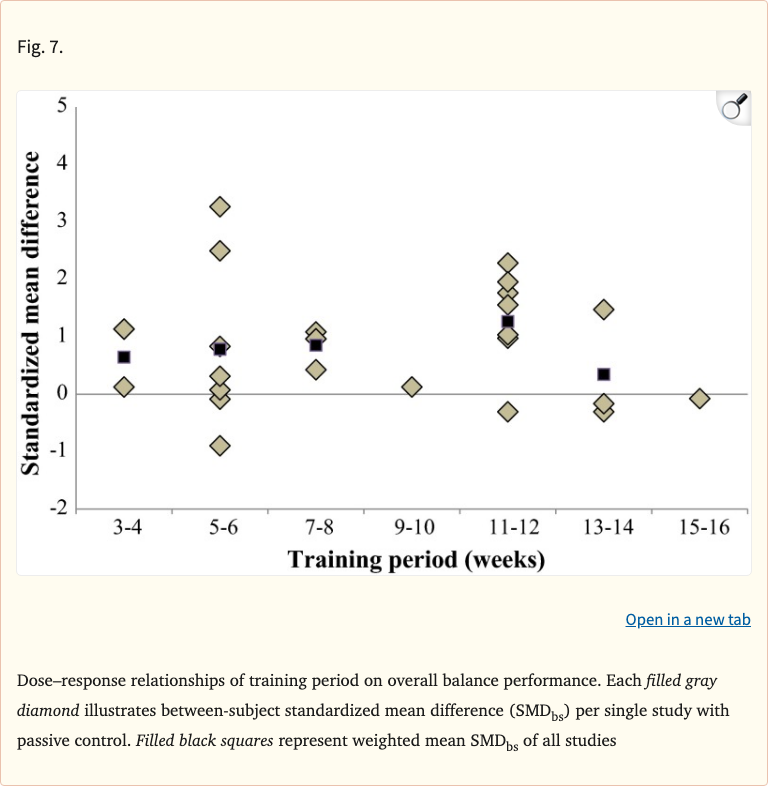 Figure 6
Limitations
- Heterogeneous outcome measures
- Publication bias possible
- Limited to healthy older adults
- Optimal parameters may differ for younger adults