
Key Takeaway
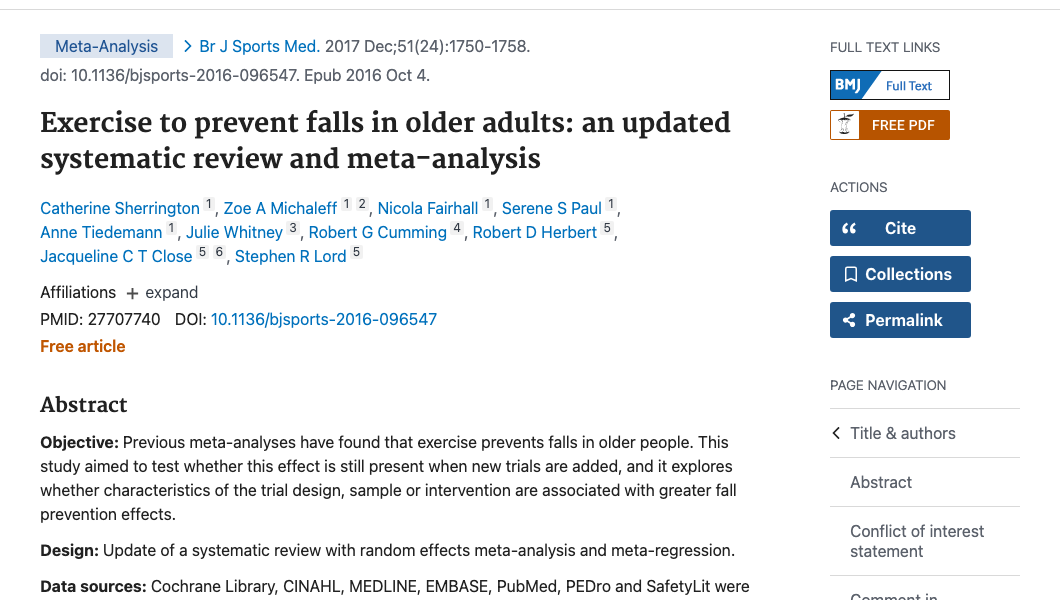
Updated meta-analysis of 88 trials (19,478 participants) found exercise reduces fall rates by 21% overall, with programs emphasizing balance challenge and exceeding 3 hours per week achieving a 39% reduction.
Summary
This updated systematic review and meta-analysis pooled data from 88 randomized controlled trials encompassing 19,478 community-dwelling older adults. The analysis examined the effectiveness of exercise interventions in preventing falls, building on earlier Cochrane reviews with substantially more data.
The overall pooled effect showed exercise reduced the rate of falls by approximately 21%. However, the most effective programs shared two key characteristics: they placed a high challenge on balance, and they totaled more than 3 hours of exercise per week. Programs meeting both criteria achieved a 39% reduction in fall rates, nearly double the average effect.
The review also found positive effects for subgroups including people with Parkinson's disease and those with cognitive impairment. Evidence was more limited for residential care settings and post-stroke populations. The findings reinforced that balance-challenging exercise should be the cornerstone of fall prevention programs, with sufficient weekly volume being critical for optimal outcomes.
Methods
- Systematic review with random effects meta-analysis and meta-regression
- 88 randomized controlled trials (99 comparisons)
- 19,478 community-dwelling older adults
- Compared exercise interventions to control conditions
- Subgroup analyses by exercise type, dose, and population
Key Results
- Overall fall rate reduction: 21% (rate ratio 0.79)
- High-challenge balance + >3 hrs/week: 39% reduction
- Positive effects in Parkinson's disease populations
- Positive effects in cognitively impaired populations
- Limited evidence for residential care and post-stroke
Limitations
- Heterogeneity across trial designs and outcome measures
- Most trials involved community-dwelling populations
- Limited data on residential care and hospital settings
- Variable definitions of "falls" across studies
- Some trials had unclear or high risk of bias