
Key Takeaway
Systematic review of 16 RCTs confirms physical exercise significantly improves both static and dynamic balance while reducing total falls and number of fallers in adults over 65.
Summary
This systematic review and meta-analysis examined 16 randomized clinical trials evaluating the effects of physical exercise on balance and fall prevention in adults aged 65 and older. The review was published in the Journal of Clinical Medicine and followed PRISMA guidelines.
The pooled analysis demonstrated statistically significant improvements across multiple outcomes. Dynamic balance improved (p = 0.008), static balance improved (p = 0.01), total falls decreased substantially (p = 0.0008), and the number of participants experiencing one or more falls was significantly reduced (p = 0.02). Beyond these primary outcomes, exercise interventions also reduced fear of falling, improved balance confidence, and enhanced overall quality of life.
The authors concluded that physical exercise is an effective treatment to improve balance and reduce fall rates in elderly populations. However, the review noted variability in risk of bias across included studies, with only three showing low risk, nine unclear, and four high risk. This highlights the need for higher-quality RCTs in the field while still supporting the overall benefit of exercise-based interventions.
Methods
- Systematic review and meta-analysis of randomized clinical trials
- 16 peer-reviewed articles included
- Participants aged 65 and older
- PRISMA guidelines followed
- Risk of bias assessed for each study
Key Results
- Dynamic balance: significant improvement (p = 0.008)
- Static balance: significant improvement (p = 0.01)
- Total falls: significant reduction (p = 0.0008)
- Number of fallers: significant reduction (p = 0.02)
- Additional benefits: reduced fear of falling, improved balance confidence, better quality of life
Figures
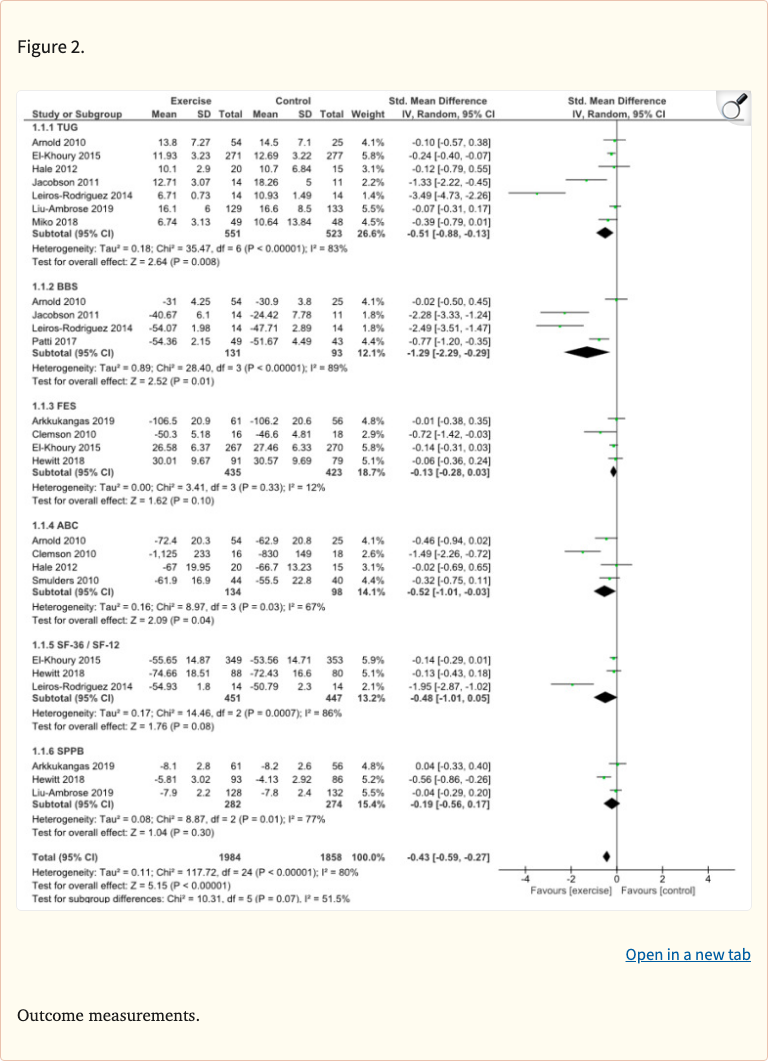 Figure 1
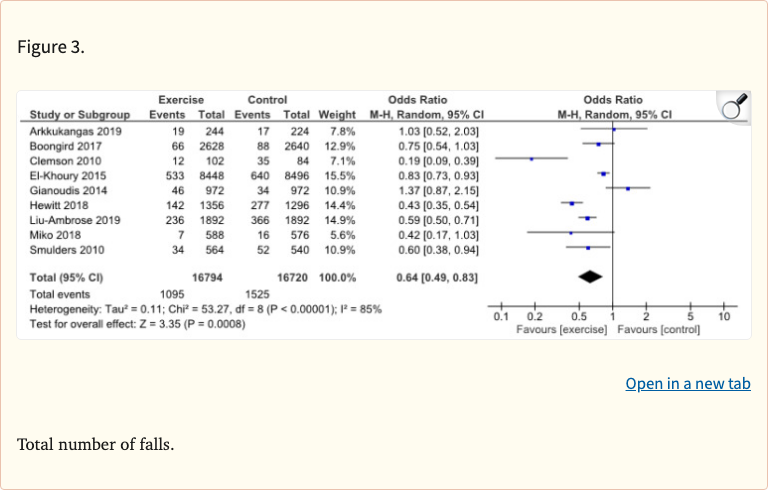 Figure 2
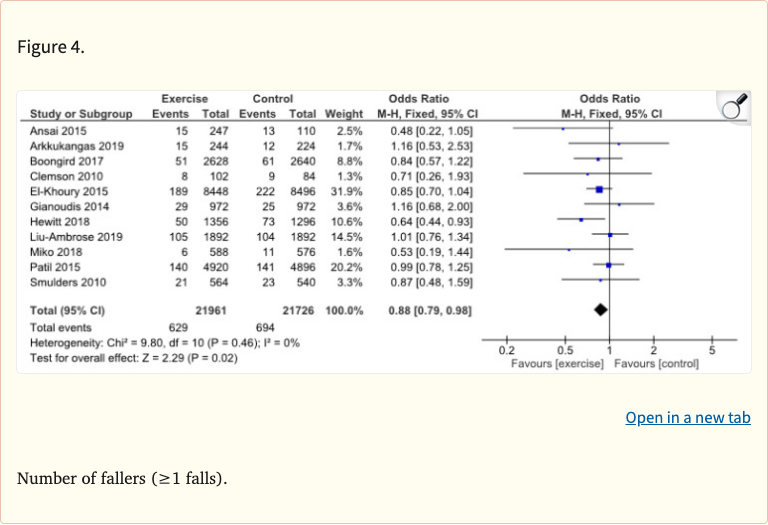 Figure 3
Limitations
- Only 3 of 16 studies had low risk of bias
- 9 studies had unclear risk of bias, 4 had high risk
- Heterogeneity in exercise types and protocols
- Limited to adults aged 65+
- Variable follow-up durations across studies