
Key Takeaway
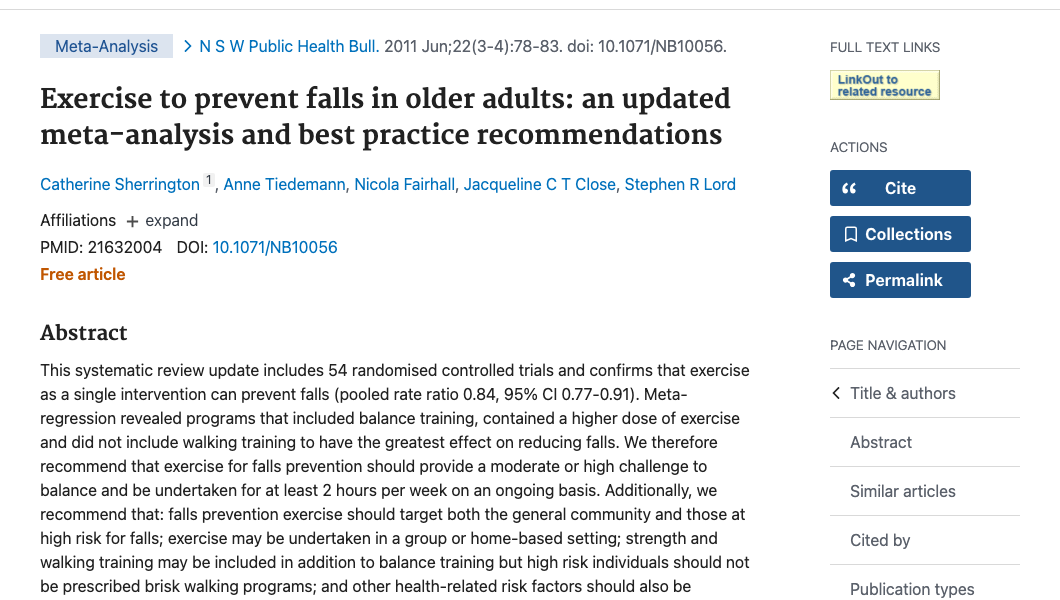
Meta-analysis of 54 RCTs established best practice recommendations for fall prevention exercise -- balance challenge at moderate-to-high intensity for at least 2 hours per week on an ongoing basis.
Summary
This meta-analysis synthesized data from 54 randomized controlled trials to update recommendations for exercise-based fall prevention in older adults. The pooled analysis found a significant overall reduction in fall rates (rate ratio 0.84, 95% CI 0.77-0.91), confirming that structured exercise programs are effective for preventing falls.
The analysis went beyond simply confirming exercise works by identifying the specific characteristics of the most effective programs. The greatest reductions in falls came from programs that challenged balance at moderate-to-high intensity, involved at least 2 hours of exercise per week, and were maintained on an ongoing basis. Both group-based and home-based formats were equally effective.
The resulting best practice recommendations emphasized that fall prevention exercise should primarily target balance through challenging movements, with strength training as a useful supplement. Importantly, the analysis found that programs incorporating brisk walking should be used with caution in high-risk populations, as walking-only programs did not show the same protective effect and could increase fall exposure. These guidelines have become foundational for clinical fall prevention programs worldwide.
Methods
- Systematic review and meta-analysis
- 54 randomized controlled trials included
- Community-dwelling and high-risk older adults
- Pooled rate ratios with random effects models
- Subgroup analyses by exercise characteristics
Key Results
- Overall fall rate reduction: 16% (rate ratio 0.84, 95% CI 0.77-0.91)
- Programs with balance challenge showed greatest effect
- Minimum effective dose: 2 hours per week
- Group and home-based formats equally effective
- Brisk walking programs not protective (caution in high-risk groups)
- Strength training beneficial as supplement to balance work
Limitations
- Heterogeneity in exercise protocols and fall definitions
- Limited data on specific exercise components
- Most evidence from community-dwelling populations
- Optimal exercise intensity thresholds not precisely defined
- Long-term adherence data limited