
Key Takeaway
A single night of sleeping with moderate room light (100 lux) increased insulin resistance, heart rate, and sympathetic nervous system activity compared to dim light (<3 lux).
Summary
This randomized controlled trial investigated whether ambient light exposure during sleep affects cardiometabolic function in healthy young adults. Twenty participants completed a two-night laboratory protocol, sleeping in either dim light (<3 lux) both nights or dim light the first night followed by moderate room light (100 lux) the second night.
The study found that a single night of room light exposure during sleep significantly impaired glucose homeostasis. Participants in the room light condition showed higher insulin resistance (HOMA-IR) the morning after exposure. During an oral glucose tolerance test, the room light group had elevated insulin levels, indicating the body needed to produce more insulin to maintain similar glucose levels.
Polysomnography revealed that room light increased heart rate and shifted autonomic balance toward greater sympathetic activation during sleep. Although total sleep architecture (time in each sleep stage) was not markedly different between conditions, the cardiovascular and metabolic effects were clear and consistent.
The findings demonstrate that even moderate light exposure during sleep — common in many bedrooms — can have acute, measurable effects on cardiometabolic regulation, highlighting the importance of sleeping in a dark environment.
Methods
- Randomized, parallel-group laboratory study with 20 healthy adults (ages 18-40)
- Two consecutive nights in a controlled sleep laboratory
- Dim light condition: <3 lux both nights
- Room light condition: <3 lux night 1, 100 lux night 2 (overhead fluorescent)
- Polysomnography recorded both nights (EEG, ECG, EMG)
- Morning oral glucose tolerance test (OGTT) after each night
- HOMA-IR, Matsuda index, and insulin/glucose AUC calculated
- Heart rate and heart rate variability assessed during sleep
Key Results
- Room light exposure increased HOMA-IR (insulin resistance) the following morning compared to dim light
- Higher insulin response during OGTT in the room light condition with similar glucose levels, indicating compensatory hyperinsulinemia
- 30-minute insulin AUC (early phase response) was significantly elevated after room light exposure
- Matsuda insulin sensitivity index was lower in the room light group
- Heart rate was higher during sleep in the room light condition
- Sympathovagal balance shifted toward sympathetic dominance (higher LF/HF ratio)
- Sleep stage distribution (N1, N2, N3, REM) was not significantly different between conditions
Figures
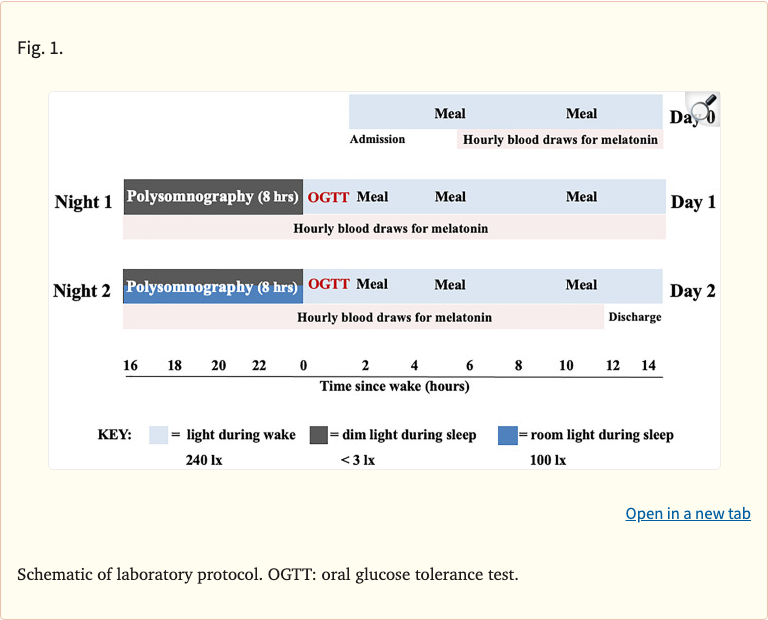 Figure 1
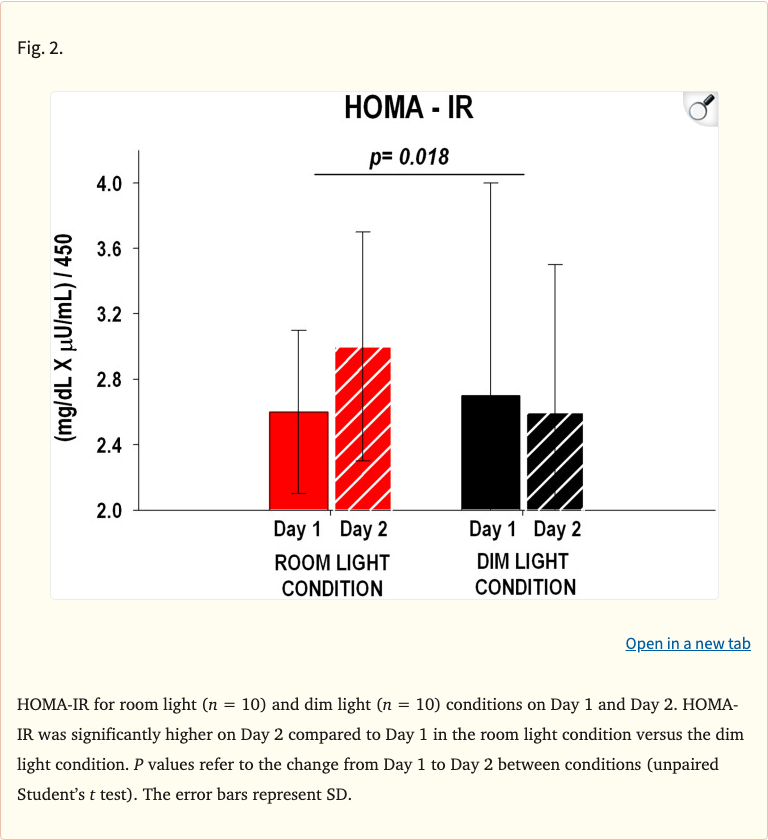 Figure 2
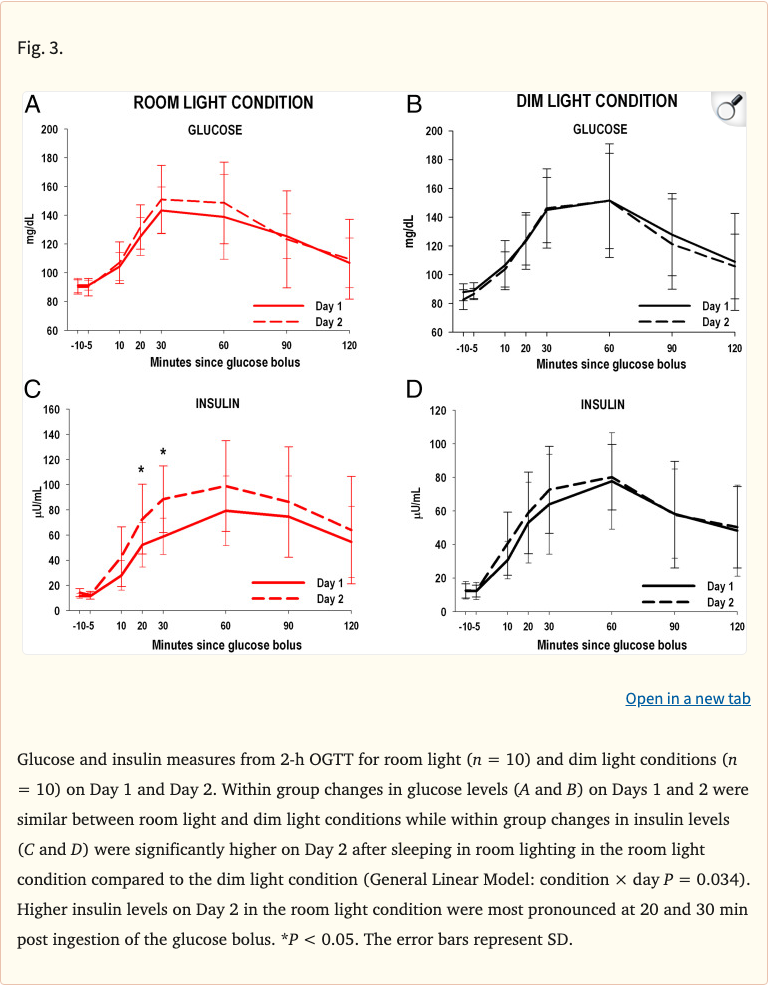 Figure 3
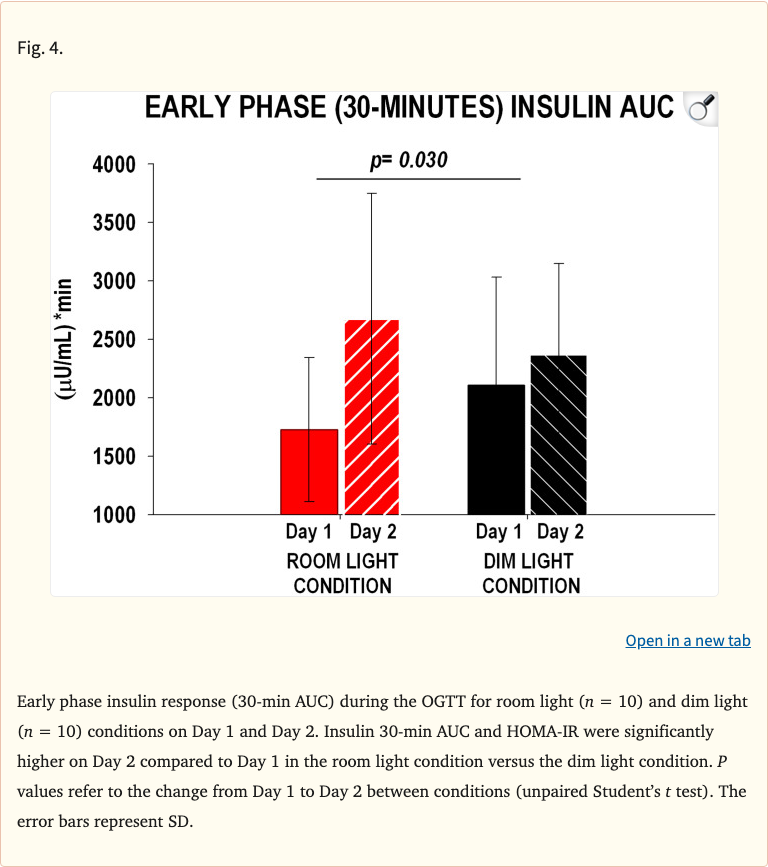 Figure 4
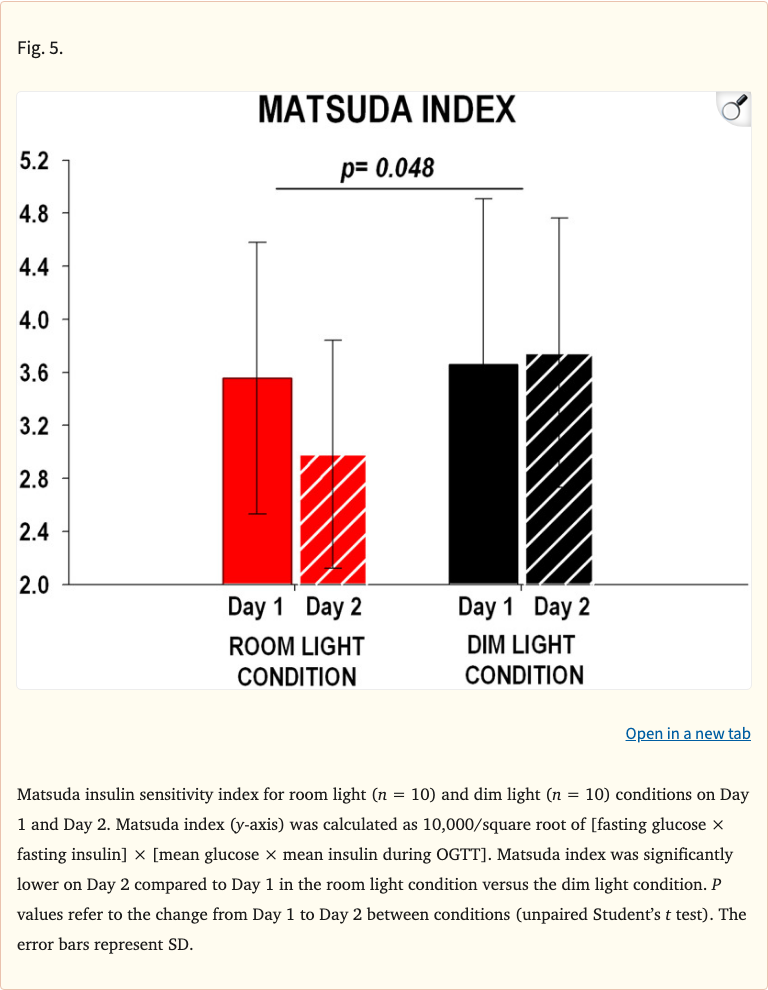 Figure 5
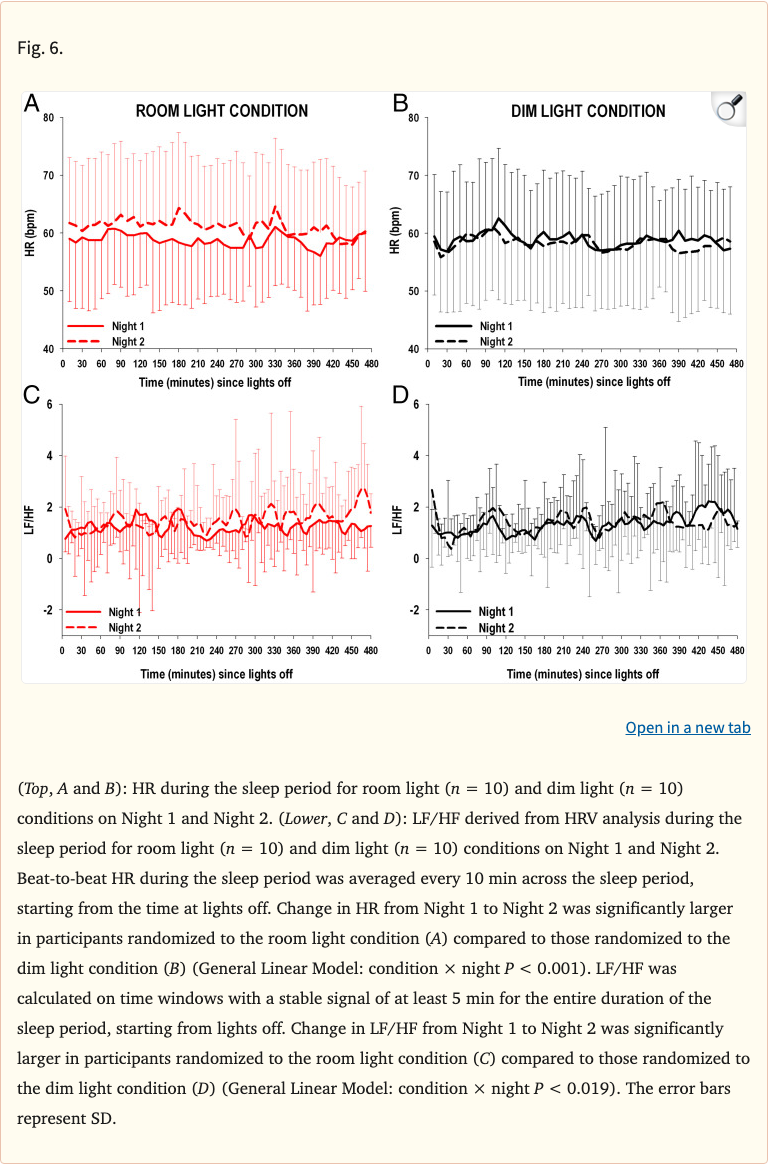 Figure 6
Limitations
- Small sample size (n = 20), limiting generalizability
- Single night of light exposure; chronic effects remain unknown
- Participants were young, healthy adults — results may differ in older or metabolically compromised populations
- 100 lux is moderate; many real-world bedrooms have lower or higher light levels
- Parallel-group (not crossover) design introduces inter-individual variability
- Lab setting may not fully replicate home sleep conditions
