Key Takeaway
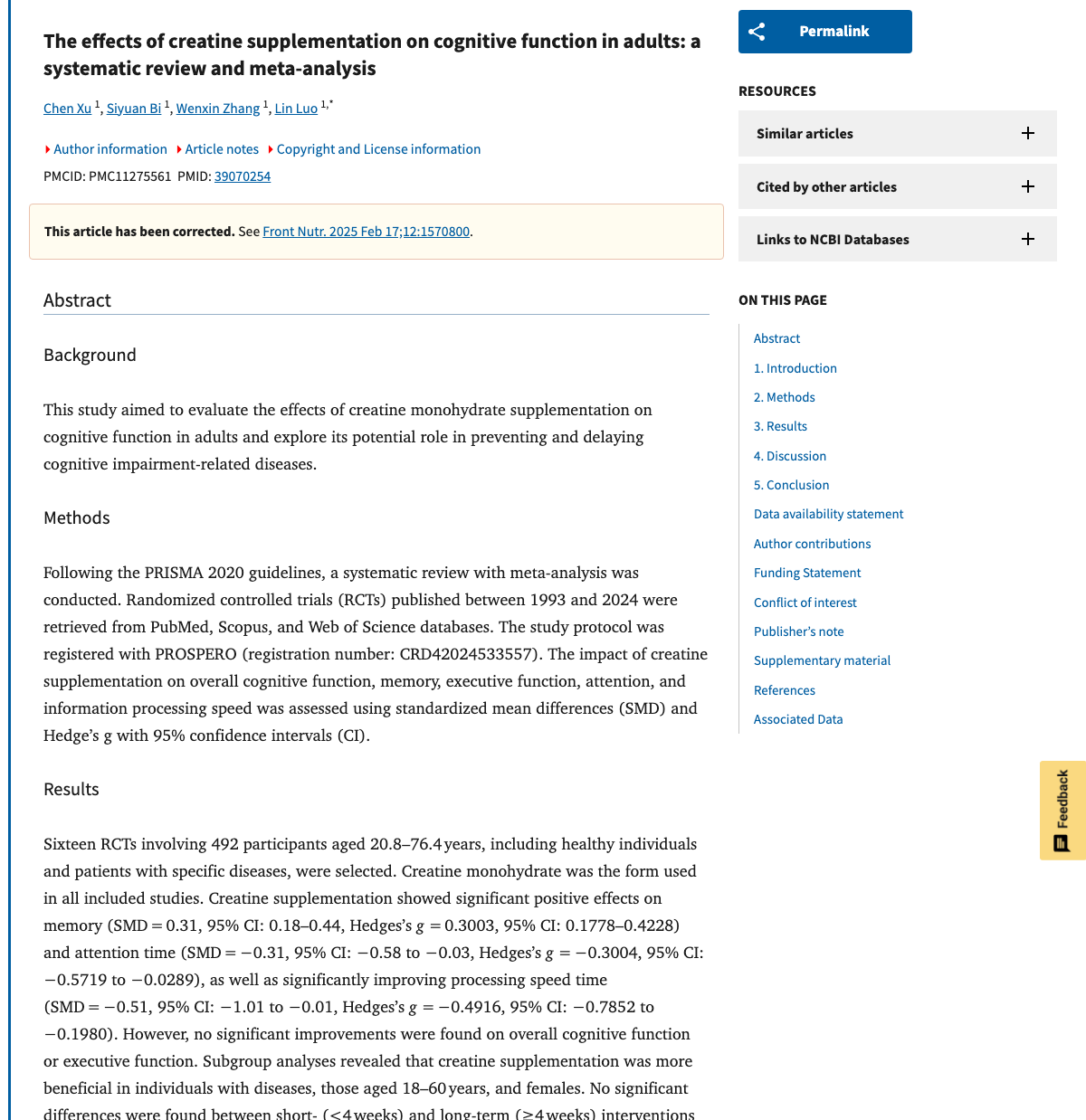
Meta-analysis of 16 RCTs found creatine supplementation significantly improved memory (SMD = 0.31), attention time, and processing speed, with greater benefits in diseased populations and females.
Summary
This 2024 systematic review and meta-analysis examined the effects of creatine monohydrate supplementation on cognitive function across 16 randomized controlled trials involving 492 participants aged 20.8-76.4 years. The study followed PRISMA 2020 guidelines and searched PubMed, Scopus, and Web of Science databases for RCTs published from 1993 to 2024.
Creatine supplementation significantly improved memory (SMD = 0.31, 95% CI: 0.18-0.44), attention time (SMD = -0.31, 95% CI: -0.58 to -0.03), and processing speed (SMD = -0.51, 95% CI: -1.01 to -0.01). However, no significant improvements were detected for overall cognitive function or executive function.
Subgroup analyses revealed that benefits were greater in diseased populations, individuals aged 18-60, and females. Duration of supplementation (short-term vs. long-term) did not significantly affect outcomes. The authors conclude that creatine may confer beneficial effects on specific cognitive domains but call for larger clinical trials to validate findings.
Methods
- Systematic review and meta-analysis of 16 randomized controlled trials
- 492 total participants (ages 20.8-76.4 years)
- Searched PubMed, Scopus, and Web of Science (1993-2024)
- Used standardized mean differences and Hedge's g with 95% CIs
- Subgroup analyses by age, sex, health status, and duration
Key Results
- Memory significantly improved (SMD = 0.31, 95% CI: 0.18-0.44)
- Attention time significantly improved (SMD = -0.31, 95% CI: -0.58 to -0.03)
- Processing speed significantly improved (SMD = -0.51, 95% CI: -1.01 to -0.01)
- No significant effect on overall cognitive function or executive function
- Greater benefits in diseased populations, ages 18-60, and females
Figures
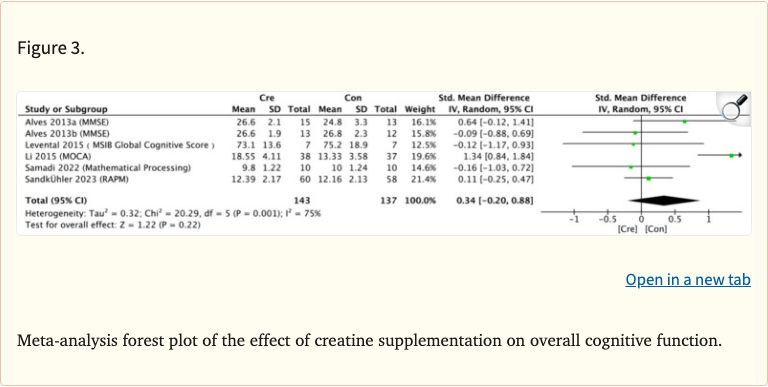 Figure 1
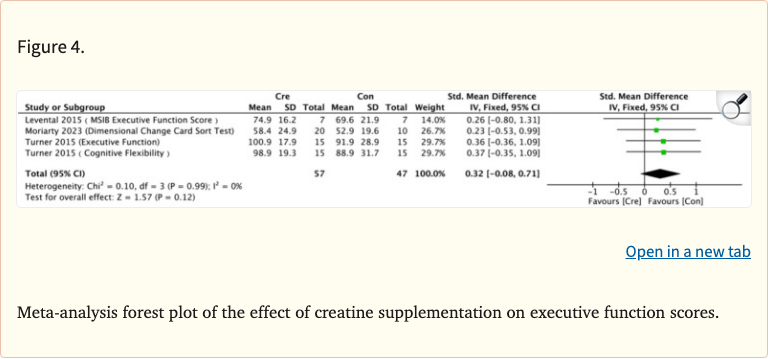 Figure 2
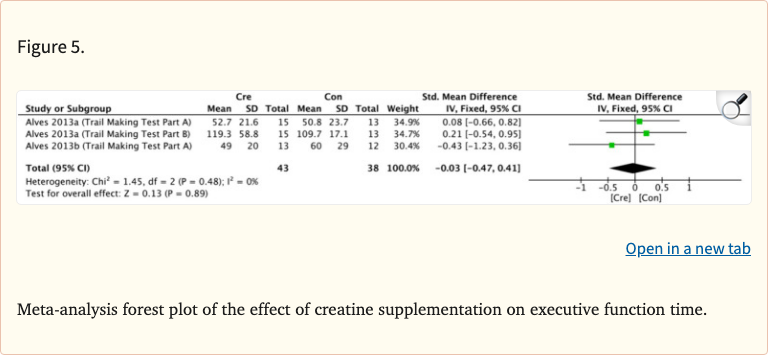 Figure 3
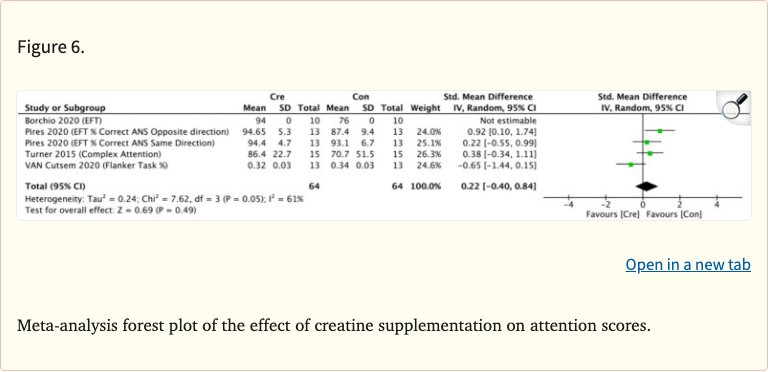 Figure 4
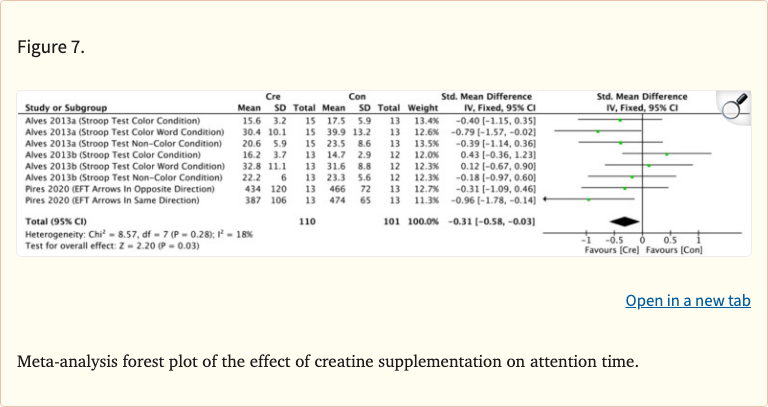 Figure 5
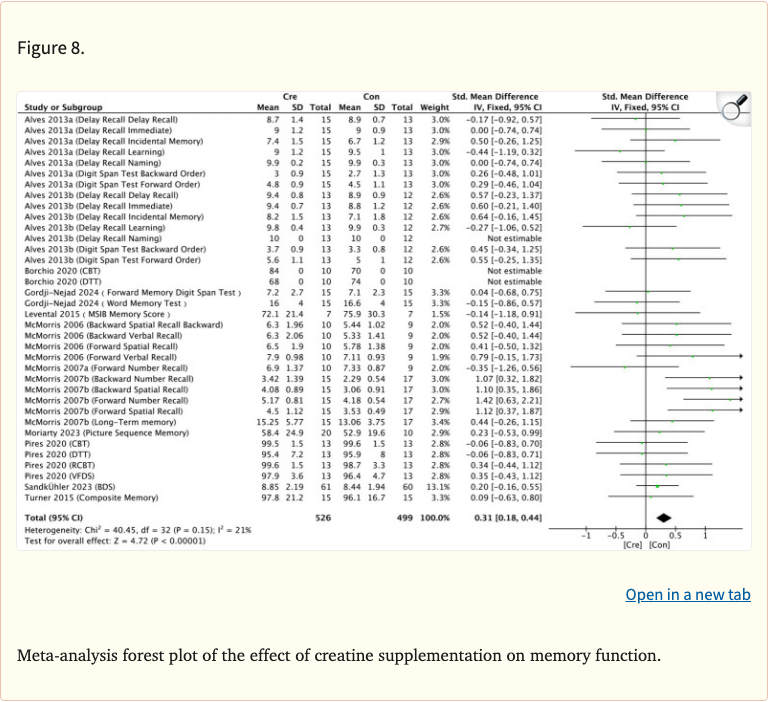 Figure 6
Limitations
- Low certainty evidence for some outcomes
- Relatively small total sample size (492 participants)
- Heterogeneous cognitive tests across studies
- Limited number of studies for some subgroup analyses
- Mechanisms of action not fully explored
Related Interventions
Related Studies
Discussed In