Key Takeaway
Meta-analysis of 10 RCTs found creatine supplementation improved memory (SMD = 0.29, p = 0.02), with the strongest effects in older adults aged 66-76 (SMD = 0.88) and minimal effects in younger individuals.
Summary
This systematic review and meta-analysis examined the effects of creatine supplementation on memory in healthy individuals across 10 randomized controlled trials, with 8 included in the quantitative meta-analysis. Databases searched included PubMed, Web of Science, Cochrane Library, and Scopus through September 2021.
The overall analysis found that creatine supplementation significantly improved memory compared with placebo (SMD = 0.29, 95% CI: 0.04-0.53, p = 0.02). The most striking finding was the age-dependent effect: older adults aged 66-76 showed large benefits (SMD = 0.88, 95% CI: 0.22-1.55, p = 0.009), while younger adults aged 11-31 showed no significant improvement (SMD = 0.03, p = 0.72).
Creatine dose (ranging from 2.2-20 g/day), intervention duration (5 days to 24 weeks), sex, and geographical origin did not significantly influence outcomes. The findings suggest creatine supplementation has meaningful cognitive benefits particularly for aging populations.
Methods
- Systematic review and meta-analysis of 10 RCTs (8 in quantitative analysis)
- Searched PubMed, Web of Science, Cochrane Library, and Scopus through September 2021
- Included healthy individuals across age groups
- Assessed memory outcomes using standardized mean differences
- Subgroup analyses by age, dose, duration, sex, and geography
Key Results
- Overall memory improvement (SMD = 0.29, 95% CI: 0.04-0.53, p = 0.02)
- Older adults (66-76 years): large effect (SMD = 0.88, p = 0.009)
- Younger adults (11-31 years): no significant effect (SMD = 0.03, p = 0.72)
- No significant influence of dose, duration, sex, or geography
- Moderate heterogeneity across studies (I2 = 66%)
Figures
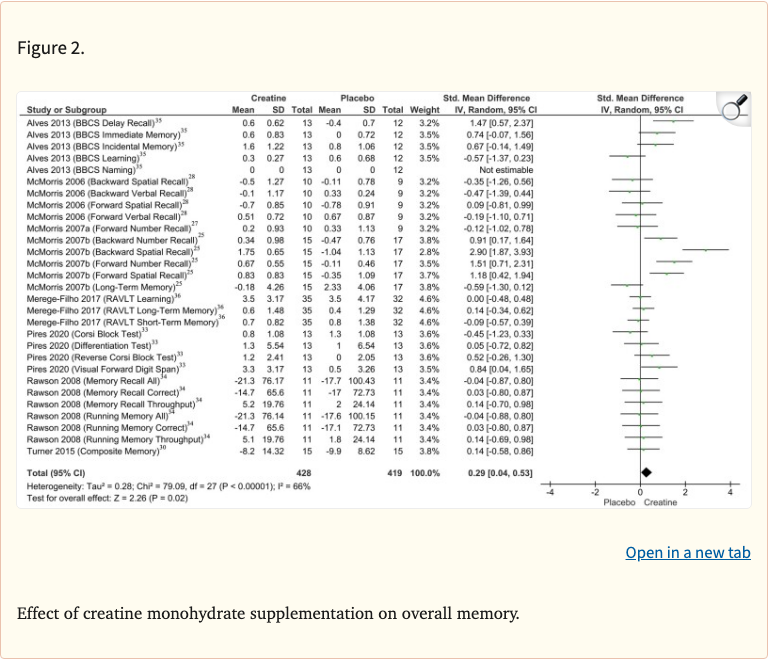 Figure 1
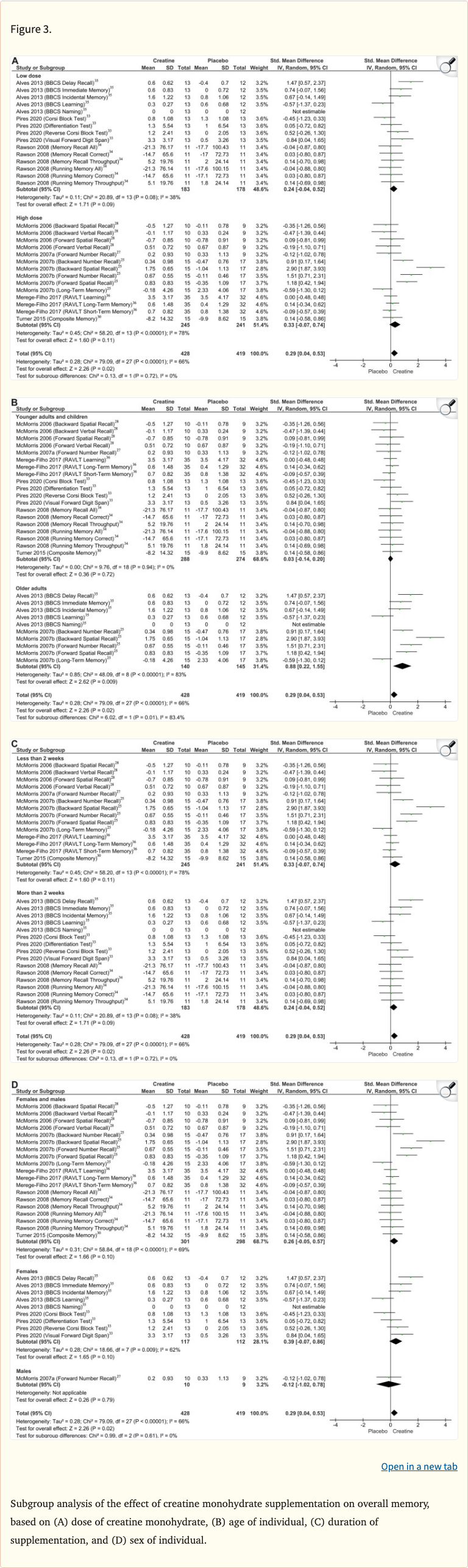 Figure 2
Limitations
- Moderate heterogeneity across included studies (I2 = 66%)
- Relatively small number of eligible RCTs
- Limited representation of middle-aged adults
- Heterogeneous memory assessment tools across studies
- Mechanisms underlying age-dependent effects not fully explained
Related Interventions
Related Studies
Discussed In