Summary
Dr. Guido Kroemer discusses autophagy, caloric restriction, and their roles in longevity and disease prevention.
Key Points
- Autophagy clears damaged cellular components
- Fasting triggers autophagy
- Caloric restriction extends lifespan
- Spermidine induces autophagy
- Exercise activates autophagy
- Autophagy declines with age
Key Moments
Extended Fasting Discussion
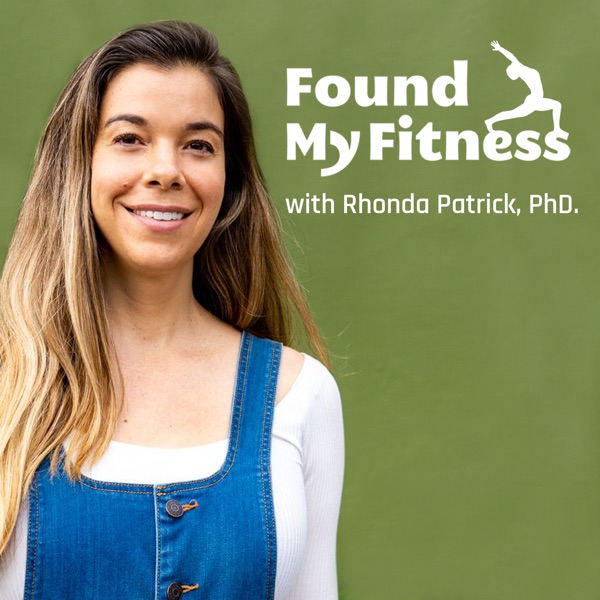
Welcome back, Found My Fitness podcast listeners. Today's episode features Dr.
"Welcome back, Found My Fitness podcast listeners. Today's episode features Dr. Guido Cromer, who was a professor at the University of Paris, Descartes."
Autophagy: Fasting
Welcome back, Found My Fitness podcast listeners. Today's episode features Dr.
"And actually, the phenomenon is observed mostly in the context of stress. So cells, when they are stressed, will often undergo an autophagic reaction, which occurs before the cells die."
Sauna: Heat Shock
It has not been, to my knowledge, extrapolated to other organs. There's a fundamental difference between rodents and humans.
"And he observed that as a result of not eating during the day, there was more autophagy in the liver. So this result is intriguing. It has not been, to my knowledge, extrapolated to other organs. And it certainly requires more profound studies. So what we did on circulating leukocytes is that we needed to wait for three or four days to see a massive induction of autophagy. There's a fundamental difference between rodents and humans. So the two days that you have been alluding to cause a 20% weight loss in mice that are, at this time point, at the verge of death. Another day would potentially kill them. And so 20% is a lot. Imagine this for yourself. In two days, a human being only loses one to two percent of his or her weight. Is that because they have a higher metabolism, rodents do? Yeah, it's certainly linked to the change in the surface volume ratio that is classically associated with an accelerated metabolism. Yeah. Okay. So we don't really know to what extent autophagy can be occurring in a shorter intermittent fast. There's some hope that it does. I mean, I know, for example, you mentioned IGF-1 and how lowering IGF-1 is important for reducing autophagy because of the whole mTOR pathway and so on. But I do know that the half-life of IGF-1 in serum, at least, is around 12 hours. So the question becomes, well, okay, if you start to lower IGF-1 after 12 hours, do you still need more to occur, like more ATP depletion, more...what, you know, what is it that needs to happen, you know, to actually send a signal to the cells to go, oh, I'm stressed, I need to start eating my whatever organelle or damaged proteins or something. So that would...is that something that people are currently investigating, like the minimum amount of time that it would sort of take to induce, or for fasting at least, to induce autophagy? That's an extremely interesting question that is easy to be answered in rodents and difficult in humans because it may be easy to find a volunteer who fasts and allows for regular blood drawing, but it will be very difficult to find a volunteer who fasts and allows for liver, muscle, or skin biopsies. Right, right. It kind of reminds me, there was a study I was actually reading the other day that was done in the Kellogg-restricted society. You know, there's a group of people that are out there practicing caloric restriction, which typically is eating around, what, 30% less food than you normally would eat or something like that. A lot more difficult for people to maintain, I think, than intermittent fasting is. But there was a study that was published, and these individuals had been doing caloric restriction for about six years, plus or minus. I'm sure you've seen this study. But they did muscle biopsies on them, and they measured LC3. They measured some of the biomarkers of autophagy, I think Becklin, I think some other things. And then they measured heat shock proteins, which are also a stress response. And it was, you know, like in some cases, like the heat shock proteins, like HSP70 was elevated by 12-fold compared to age-matched lean controls that eat more of a Western-type diet. But, you know, the fact of the matter is that they did do a muscle biopsy. Autophagy was activated. You know, the stress response pathway in general was activated. But six years of doing caloric restriction is not very sustainable for the majority of the population, you know, at least in the United States and Western world. Actually, in mice, you can obtain exactly the same longevity extension that you would obtain with 30 percent of caloric restriction by intermittent fasting. So it's logistically much more difficult. Imagine you have to wait for each mouse the amount of food that they would eat normally, subtract 30 percent, put it in the cage, individual cages, because calorific, gastric, shit, mice tend to eat each other. Oh, wow. Yeah, they become aggressive because they are hungry. They become cannibals. They become cannibals. So it is logistically much more simple to take out the food from the cage completely and to put back the food on the next day. So it's one day without any food and another day with normal nutrition. And at the end, so you have an oscillation of the weight of the mice, 10% every day. These oscillations tend to become smaller because it might somehow adapt to this sort of stress. But the final result is that the intermittently fasted mouse has the same weight as a normally fat mouse. At difference with the calorically restricted mouse, it weights also 20 to 30 percent less. And in spite of this difference in the body weight, intermittent fasting allows for lifetime expansion in the same way as does caloric restriction. So one can also consider that this may be more amusing to have, if I was a mouse, I would probably prefer the intermittent regimen because it means satisfaction during one day and dissatisfaction on the other day, but not permanent dissatisfaction. Most people prefer doing intermittent fasting. I mean, that's, so it'll be very interesting to see more studies come out on, you know, the translation of this to humans. And as you mentioned, you needed three days of...was it a water fast they did? Was it a complete fast or they had coffee or... Coffee, tea, no sugar, no milk, and water. Okay. So three days was enough to at least show signs of autophagy in circulating leukocytes. And Walter's work has shown, you know, four to five days, and he's done, you know, he's got his fasting, and then he's got the fasting-mimicking diet. And some also hints that that also isn't enough. So that's sort of encouraging. It would be more encouraging to have like a 24-hour fast or a 48-hour. I mean, that's so much easier to do in general. But the other thing that induces autophagy, you were mentioning the stress response and oxidative oxygen, and it sort of reminded me of exercise and how exercise also induces autophagy. I've seen some studies where in humans, they've looked at muscle, skeletal muscle, and how aerobic exercise and eccentric and concentric exercise all can activate autophagy in skeletal muscle. Do you know if it activates autophagy in multiple tissues, exercise? that's something that we have not studied so it is known that in dual Do you know if it activates autophagy in multiple tissues exercise? That's something that we have not studied. So it is known that endurance training is particularly efficient in mice to induce autophagy and that it mediates anti-obesity and anti-diabetic effects that are depending, in a way, on autophagy induction. Because genetic modifications of the process that leads to autophagy induction, its inhibition specifically by exercise can prevent these antidiabetic effects. Really? Oh, I didn't know that the role of the exercise in preventing diabetes was shown to be dependent on autophagy to some degree. That's very interesting. So do you think that has to do with the liver, in the pancreas, somewhere? I mean, is it now? Yeah, to know this in detail, it would be necessary to inhibit autophagy specifically in different tissues. To my knowledge, this has not been done yet. Okay. So do you think fasting while you're exercising, like exercising in a fasted state, now that's another thing that's, do you think that would be important? Or do we, I mean, I've seen some studies in mice where they claim it is, but mice have a very high metabolism. And so there's a synergy there. But when you look in humans, it's not so important. Like, the exercise can still induce autophagy and skeletal muscle in humans, even without being in a fasted state. But the question is, like, will you synergize more? You can speculate, but we don't know. I'm giving you a lot of ideas here. So maybe we can kind of talk, shift a little bit into the general role that autophagy plays in some of these age-led diseases like neurodegenerative disease, cardiovascular disease, and cancer. Talk a little bit about the micro-autophagy. Is that what you call it when you're talking about the specific degradation of organelles like mitochondria or protein aggregates?"
Time Restricted Eating: Fasting
It has not been, to my knowledge, extrapolated to other organs. There's a fundamental difference between rodents and humans.
"And he observed that as a result of not eating during the day, there was more autophagy in the liver. So this result is intriguing. It has not been, to my knowledge, extrapolated to other organs. And it certainly requires more profound studies. So what we did on circulating leukocytes is that we needed to wait for three or four days to see a massive induction of autophagy. There's a fundamental difference between rodents and humans. So the two days that you have been alluding to cause a 20% weight loss in mice that are, at this time point, at the verge of death. Another day would potentially kill them. And so 20% is a lot. Imagine this for yourself. In two days, a human being only loses one to two percent of his or her weight. Is that because they have a higher metabolism, rodents do? Yeah, it's certainly linked to the change in the surface volume ratio that is classically associated with an accelerated metabolism. Yeah. Okay. So we don't really know to what extent autophagy can be occurring in a shorter intermittent fast. There's some hope that it does. I mean, I know, for example, you mentioned IGF-1 and how lowering IGF-1 is important for reducing autophagy because of the whole mTOR pathway and so on. But I do know that the half-life of IGF-1 in serum, at least, is around 12 hours. So the question becomes, well, okay, if you start to lower IGF-1 after 12 hours, do you still need more to occur, like more ATP depletion, more...what, you know, what is it that needs to happen, you know, to actually send a signal to the cells to go, oh, I'm stressed, I need to start eating my whatever organelle or damaged proteins or something. So that would...is that something that people are currently investigating, like the minimum amount of time that it would sort of take to induce, or for fasting at least, to induce autophagy? That's an extremely interesting question that is easy to be answered in rodents and difficult in humans because it may be easy to find a volunteer who fasts and allows for regular blood drawing, but it will be very difficult to find a volunteer who fasts and allows for liver, muscle, or skin biopsies. Right, right. It kind of reminds me, there was a study I was actually reading the other day that was done in the Kellogg-restricted society. You know, there's a group of people that are out there practicing caloric restriction, which typically is eating around, what, 30% less food than you normally would eat or something like that. A lot more difficult for people to maintain, I think, than intermittent fasting is. But there was a study that was published, and these individuals had been doing caloric restriction for about six years, plus or minus. I'm sure you've seen this study. But they did muscle biopsies on them, and they measured LC3. They measured some of the biomarkers of autophagy, I think Becklin, I think some other things. And then they measured heat shock proteins, which are also a stress response. And it was, you know, like in some cases, like the heat shock proteins, like HSP70 was elevated by 12-fold compared to age-matched lean controls that eat more of a Western-type diet. But, you know, the fact of the matter is that they did do a muscle biopsy. Autophagy was activated. You know, the stress response pathway in general was activated. But six years of doing caloric restriction is not very sustainable for the majority of the population, you know, at least in the United States and Western world. Actually, in mice, you can obtain exactly the same longevity extension that you would obtain with 30 percent of caloric restriction by intermittent fasting. So it's logistically much more difficult. Imagine you have to wait for each mouse the amount of food that they would eat normally, subtract 30 percent, put it in the cage, individual cages, because calorific, gastric, shit, mice tend to eat each other. Oh, wow. Yeah, they become aggressive because they are hungry. They become cannibals. They become cannibals. So it is logistically much more simple to take out the food from the cage completely and to put back the food on the next day. So it's one day without any food and another day with normal nutrition. And at the end, so you have an oscillation of the weight of the mice, 10% every day. These oscillations tend to become smaller because it might somehow adapt to this sort of stress. But the final result is that the intermittently fasted mouse has the same weight as a normally fat mouse. At difference with the calorically restricted mouse, it weights also 20 to 30 percent less. And in spite of this difference in the body weight, intermittent fasting allows for lifetime expansion in the same way as does caloric restriction. So one can also consider that this may be more amusing to have, if I was a mouse, I would probably prefer the intermittent regimen because it means satisfaction during one day and dissatisfaction on the other day, but not permanent dissatisfaction. Most people prefer doing intermittent fasting. I mean, that's, so it'll be very interesting to see more studies come out on, you know, the translation of this to humans. And as you mentioned, you needed three days of...was it a water fast they did? Was it a complete fast or they had coffee or... Coffee, tea, no sugar, no milk, and water. Okay. So three days was enough to at least show signs of autophagy in circulating leukocytes. And Walter's work has shown, you know, four to five days, and he's done, you know, he's got his fasting, and then he's got the fasting-mimicking diet. And some also hints that that also isn't enough. So that's sort of encouraging. It would be more encouraging to have like a 24-hour fast or a 48-hour. I mean, that's so much easier to do in general. But the other thing that induces autophagy, you were mentioning the stress response and oxidative oxygen, and it sort of reminded me of exercise and how exercise also induces autophagy. I've seen some studies where in humans, they've looked at muscle, skeletal muscle, and how aerobic exercise and eccentric and concentric exercise all can activate autophagy in skeletal muscle. Do you know if it activates autophagy in multiple tissues, exercise? that's something that we have not studied so it is known that in dual Do you know if it activates autophagy in multiple tissues exercise? That's something that we have not studied. So it is known that endurance training is particularly efficient in mice to induce autophagy and that it mediates anti-obesity and anti-diabetic effects that are depending, in a way, on autophagy induction. Because genetic modifications of the process that leads to autophagy induction, its inhibition specifically by exercise can prevent these antidiabetic effects. Really? Oh, I didn't know that the role of the exercise in preventing diabetes was shown to be dependent on autophagy to some degree. That's very interesting. So do you think that has to do with the liver, in the pancreas, somewhere? I mean, is it now? Yeah, to know this in detail, it would be necessary to inhibit autophagy specifically in different tissues. To my knowledge, this has not been done yet. Okay. So do you think fasting while you're exercising, like exercising in a fasted state, now that's another thing that's, do you think that would be important? Or do we, I mean, I've seen some studies in mice where they claim it is, but mice have a very high metabolism. And so there's a synergy there. But when you look in humans, it's not so important. Like, the exercise can still induce autophagy and skeletal muscle in humans, even without being in a fasted state. But the question is, like, will you synergize more? You can speculate, but we don't know. I'm giving you a lot of ideas here. So maybe we can kind of talk, shift a little bit into the general role that autophagy plays in some of these age-led diseases like neurodegenerative disease, cardiovascular disease, and cancer. Talk a little bit about the micro-autophagy. Is that what you call it when you're talking about the specific degradation of organelles like mitochondria or protein aggregates?"
Caloric Restriction Discussion
It has not been, to my knowledge, extrapolated to other organs. There's a fundamental difference between rodents and humans.
"And he observed that as a result of not eating during the day, there was more autophagy in the liver. So this result is intriguing. It has not been, to my knowledge, extrapolated to other organs. And it certainly requires more profound studies. So what we did on circulating leukocytes is that we needed to wait for three or four days to see a massive induction of autophagy. There's a fundamental difference between rodents and humans. So the two days that you have been alluding to cause a 20% weight loss in mice that are, at this time point, at the verge of death. Another day would potentially kill them. And so 20% is a lot. Imagine this for yourself. In two days, a human being only loses one to two percent of his or her weight. Is that because they have a higher metabolism, rodents do? Yeah, it's certainly linked to the change in the surface volume ratio that is classically associated with an accelerated metabolism. Yeah. Okay. So we don't really know to what extent autophagy can be occurring in a shorter intermittent fast. There's some hope that it does. I mean, I know, for example, you mentioned IGF-1 and how lowering IGF-1 is important for reducing autophagy because of the whole mTOR pathway and so on. But I do know that the half-life of IGF-1 in serum, at least, is around 12 hours. So the question becomes, well, okay, if you start to lower IGF-1 after 12 hours, do you still need more to occur, like more ATP depletion, more...what, you know, what is it that needs to happen, you know, to actually send a signal to the cells to go, oh, I'm stressed, I need to start eating my whatever organelle or damaged proteins or something. So that would...is that something that people are currently investigating, like the minimum amount of time that it would sort of take to induce, or for fasting at least, to induce autophagy? That's an extremely interesting question that is easy to be answered in rodents and difficult in humans because it may be easy to find a volunteer who fasts and allows for regular blood drawing, but it will be very difficult to find a volunteer who fasts and allows for liver, muscle, or skin biopsies. Right, right. It kind of reminds me, there was a study I was actually reading the other day that was done in the Kellogg-restricted society. You know, there's a group of people that are out there practicing caloric restriction, which typically is eating around, what, 30% less food than you normally would eat or something like that. A lot more difficult for people to maintain, I think, than intermittent fasting is. But there was a study that was published, and these individuals had been doing caloric restriction for about six years, plus or minus. I'm sure you've seen this study. But they did muscle biopsies on them, and they measured LC3. They measured some of the biomarkers of autophagy, I think Becklin, I think some other things. And then they measured heat shock proteins, which are also a stress response. And it was, you know, like in some cases, like the heat shock proteins, like HSP70 was elevated by 12-fold compared to age-matched lean controls that eat more of a Western-type diet. But, you know, the fact of the matter is that they did do a muscle biopsy. Autophagy was activated. You know, the stress response pathway in general was activated. But six years of doing caloric restriction is not very sustainable for the majority of the population, you know, at least in the United States and Western world. Actually, in mice, you can obtain exactly the same longevity extension that you would obtain with 30 percent of caloric restriction by intermittent fasting. So it's logistically much more difficult. Imagine you have to wait for each mouse the amount of food that they would eat normally, subtract 30 percent, put it in the cage, individual cages, because calorific, gastric, shit, mice tend to eat each other. Oh, wow. Yeah, they become aggressive because they are hungry. They become cannibals. They become cannibals. So it is logistically much more simple to take out the food from the cage completely and to put back the food on the next day. So it's one day without any food and another day with normal nutrition. And at the end, so you have an oscillation of the weight of the mice, 10% every day. These oscillations tend to become smaller because it might somehow adapt to this sort of stress. But the final result is that the intermittently fasted mouse has the same weight as a normally fat mouse. At difference with the calorically restricted mouse, it weights also 20 to 30 percent less. And in spite of this difference in the body weight, intermittent fasting allows for lifetime expansion in the same way as does caloric restriction. So one can also consider that this may be more amusing to have, if I was a mouse, I would probably prefer the intermittent regimen because it means satisfaction during one day and dissatisfaction on the other day, but not permanent dissatisfaction. Most people prefer doing intermittent fasting. I mean, that's, so it'll be very interesting to see more studies come out on, you know, the translation of this to humans. And as you mentioned, you needed three days of...was it a water fast they did? Was it a complete fast or they had coffee or... Coffee, tea, no sugar, no milk, and water. Okay. So three days was enough to at least show signs of autophagy in circulating leukocytes. And Walter's work has shown, you know, four to five days, and he's done, you know, he's got his fasting, and then he's got the fasting-mimicking diet. And some also hints that that also isn't enough. So that's sort of encouraging. It would be more encouraging to have like a 24-hour fast or a 48-hour. I mean, that's so much easier to do in general. But the other thing that induces autophagy, you were mentioning the stress response and oxidative oxygen, and it sort of reminded me of exercise and how exercise also induces autophagy. I've seen some studies where in humans, they've looked at muscle, skeletal muscle, and how aerobic exercise and eccentric and concentric exercise all can activate autophagy in skeletal muscle. Do you know if it activates autophagy in multiple tissues, exercise? that's something that we have not studied so it is known that in dual Do you know if it activates autophagy in multiple tissues exercise? That's something that we have not studied. So it is known that endurance training is particularly efficient in mice to induce autophagy and that it mediates anti-obesity and anti-diabetic effects that are depending, in a way, on autophagy induction. Because genetic modifications of the process that leads to autophagy induction, its inhibition specifically by exercise can prevent these antidiabetic effects. Really? Oh, I didn't know that the role of the exercise in preventing diabetes was shown to be dependent on autophagy to some degree. That's very interesting. So do you think that has to do with the liver, in the pancreas, somewhere? I mean, is it now? Yeah, to know this in detail, it would be necessary to inhibit autophagy specifically in different tissues. To my knowledge, this has not been done yet. Okay. So do you think fasting while you're exercising, like exercising in a fasted state, now that's another thing that's, do you think that would be important? Or do we, I mean, I've seen some studies in mice where they claim it is, but mice have a very high metabolism. And so there's a synergy there. But when you look in humans, it's not so important. Like, the exercise can still induce autophagy and skeletal muscle in humans, even without being in a fasted state. But the question is, like, will you synergize more? You can speculate, but we don't know. I'm giving you a lot of ideas here. So maybe we can kind of talk, shift a little bit into the general role that autophagy plays in some of these age-led diseases like neurodegenerative disease, cardiovascular disease, and cancer. Talk a little bit about the micro-autophagy. Is that what you call it when you're talking about the specific degradation of organelles like mitochondria or protein aggregates?"
Autophagy: Fasting
You have similar examples in the embryonic development of the retina for retinal ganglion cells or the differentiation of macrophages from so-called M0 to M1 macrophages in which the cells change from oxidative phosphorylation, respiration...
"You have similar examples in the embryonic development of the retina for retinal ganglion cells or the differentiation of macrophages from so-called M0 to M1 macrophages in which the cells change..."
Caloric Restriction Discussion
So, in contrast to the official dogma that has been en vogue for several decades, chemotherapy is not just killing the cancer cells as if we used an antibiotic that specifically paralyzes the metabolism of...
"And it is exactly this process that makes cancer therapies efficient. So, in contrast to the official dogma that has been en vogue for several decades, chemotherapy is not just killing the cancer cells as if we used an antibiotic that specifically paralyzes the metabolism of bacteria. No, it is true that chemotherapy induces cancer cell death, but the important point is that chemotherapy must provoke this cell death in a way that it later leads to an immune response. And so if you have a long-term effect of chemotherapy for years or decades that continues beyond removal of the drug, it is due to an anticancer immune response. And so, since this is so important, the capacity of the chemotherapeutic agent to induce autophagy is actually required for the long-term efficacy of the treatment. I did not know that. I had no idea that the induction of autophagy would stimulate the immune system through this extracellular ATP mechanism and how that is. I mean, obviously, the immune system is extremely important for killing cancer cells, but that's very cool and probably leads to the next topic on some of your work with the fasting, so-called fasting mimetics, like spermidine, hydroxycitrate that you've done. Maybe can you kind of just briefly explain, let's start with spermidine. What is spermidine? What does it do? Well, I will first start to explain what are these fasting mimetics, as you say, and caloric restriction mimetics, as we say. So the CRMs, caloric restriction mimetics, are actually inducing the same biochemical changes in the cells as would do starvation or fasting. So we have been discussing on the importance of acetyl-CoA and protein deacetylation resulting from the depletion of acetyl-CoA in the context of fasting. And caloric restriction mimetics similarly induce deacetylation reactions to stimulate autophagy. And this can be actually achieved in three different ways. First, you simply inhibit the generation of acetyl-CoA, the enzyme that generates acetyl-CoA in our cells. The most important one for the cytosolic pool is ATP citrate liase and hydroxycitrate or pharmacological compounds that inhibit this enzyme cause acetyl-CoA depletion, deacetylation, and autophagy. And you can have the same effect by inhibiting the protein acetyltransferases."
Resveratrol Discussion
The protein acetylation, it seems like that. I know it's found in high concentrations in natto, the Japanese fermented soybean that doesn't taste that great.
"And one example that is well known is resveratrol contained in red wine that induces autophagy through this pathway. So all these agents, caloric restriction mimetics, have different molecular targets but activate autophagy by a final common pathway. The protein acetylation, it seems like that. Yes, exactly. Okay. So with some of the major ones that you've worked with, spermidine, I've read quite a bit about spermidine. I know it's found in high concentrations in natto, the Japanese fermented soybean that doesn't taste that great. But I've seen studies about aging, giving it to even aging mice or something can extend their lifespan. Is that true? So spermidine, to come to the source of spermidine, is contained in the nuclei of all kinds of cells. So in the nucleoid of bacteria, but also in the nuclei from yeast cells or from plant cells or animal cells. So all food items that contain nuclei, cells, actually containing spermidine, although there are large variations in the content. So we have to know that spermidine also is volatile and accounts for the smell of sperm. So it is frequently found in food items that have some kind of smell like natto or durian fruit or fermented cheese when it is generated from non-prosterized sources and very rich in bacteria and fungi that are contributing to the fermentation process, which is, of course, smelly cheese."
Extended Fasting Discussion
You have similar examples in the embryonic development of the retina for retinal ganglion cells or the differentiation of macrophages from so-called M0 to M1 macrophages in which the cells change from oxidative phosphorylation, respiration...
"And in mice, you actually can give a combination of high-fat diets that usually would cause obesity with spermidine to reduce weight gain through mechanisms that we don't understand and that we..."