Key Takeaway
Across 50 years of data and 5,973 participants, larger training volumes and higher intensities drive greater mitochondrial content increases, with adaptability maintained throughout life regardless of sex or disease status.
Summary
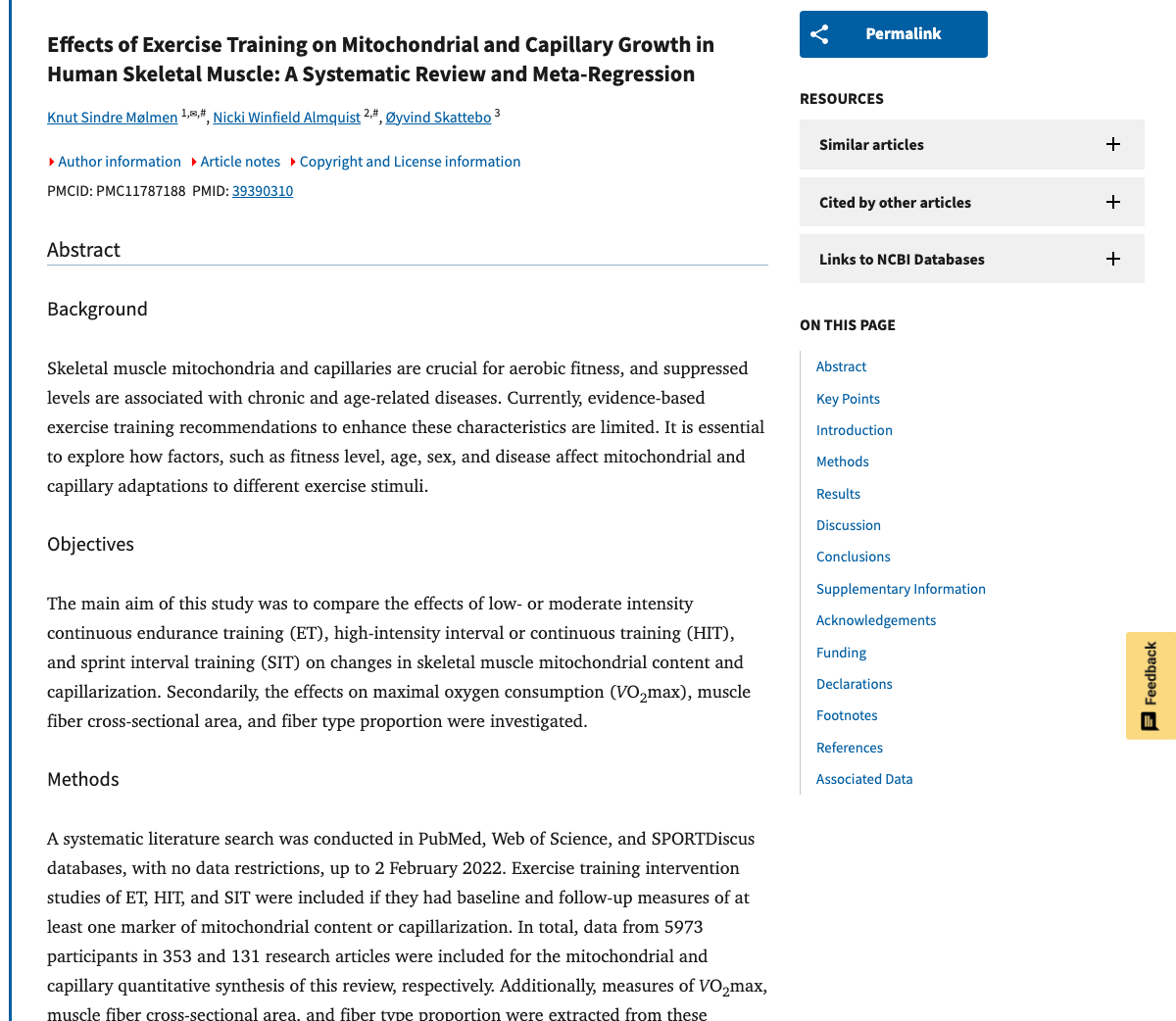
This systematic review and meta-regression synthesized over 50 years of exercise training research encompassing 5,973 participants to determine the effects of training volume, intensity, and duration on mitochondrial volume density and capillary growth in human skeletal muscle. It is the most comprehensive quantitative analysis of exercise-induced mitochondrial adaptation to date.
The analysis found that both greater training volumes and higher exercise intensities were associated with larger increases in mitochondrial content. When normalized per hour of training, sprint interval training (SIT) produced the greatest mitochondrial gains, followed by high-intensity interval training (HIT), then traditional endurance training. However, because endurance training is typically performed for longer durations, total weekly mitochondrial adaptation can be comparable or greater with moderate-intensity approaches at sufficient volume.
Critically, the capacity for mitochondrial and capillary adaptation was maintained throughout the lifespan and was not diminished by sex or the presence of chronic disease. This underscores that exercise training remains a potent stimulus for metabolic health at any age, supporting the role of Zone 2 and other aerobic training modalities as lifelong interventions.
Methods
Systematic review with meta-regression of studies reporting mitochondrial volume density and/or capillary-to-fiber ratio changes in response to exercise training. Included studies spanning 50+ years with a combined 5,973 participants. Analyzed effects of training intensity (endurance, HIT, SIT), volume, duration, baseline fitness, age, sex, and health status using multivariate meta-regression models.
Key Results
- Larger training volumes and higher intensities associated with greater mitochondrial content increases
- Per hour of training: SIT > HIT > endurance training for mitochondrial density gains
- Capillary-to-fiber ratio increased with training volume and duration
- Mitochondrial adaptability maintained across age groups, sexes, and in populations with chronic disease
- Initial fitness level moderated the response, with less-fit individuals showing larger relative gains
Figures
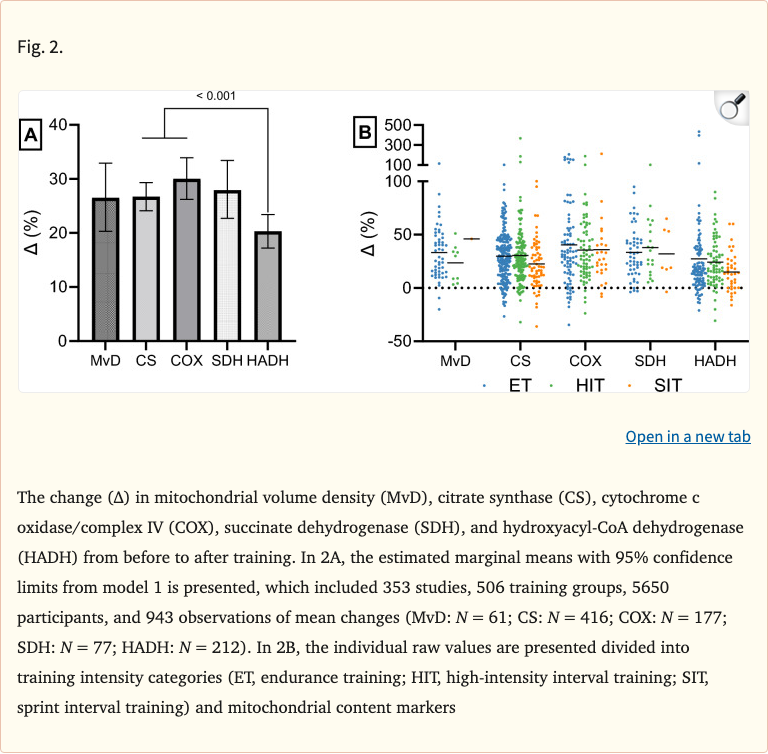 Figure 1
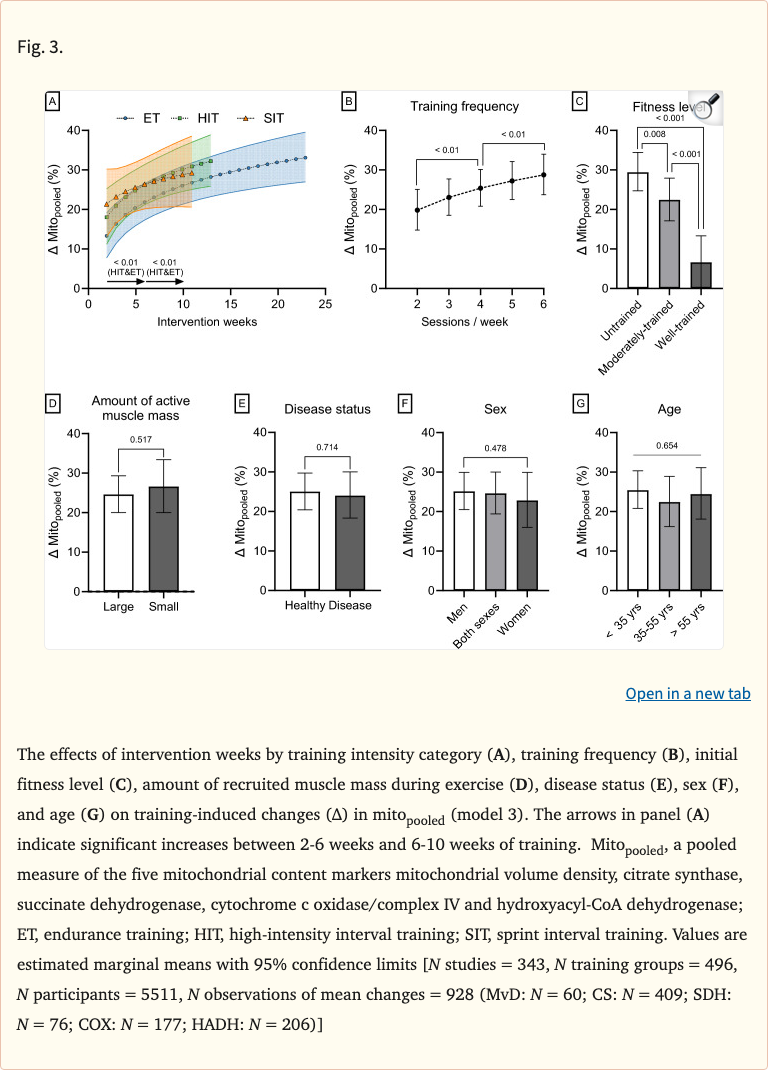 Figure 2
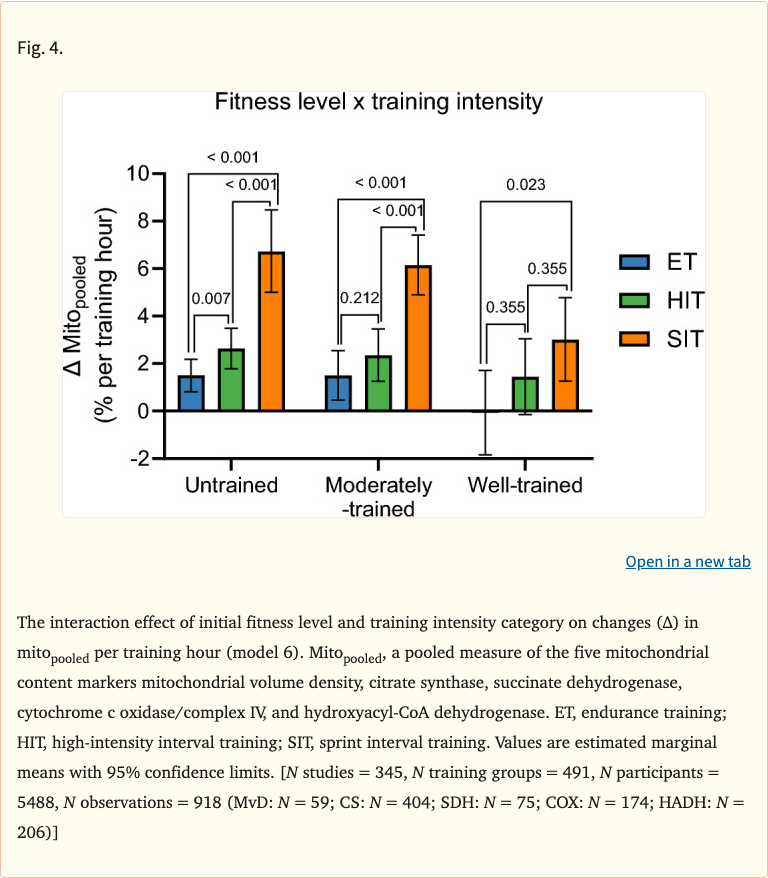 Figure 3
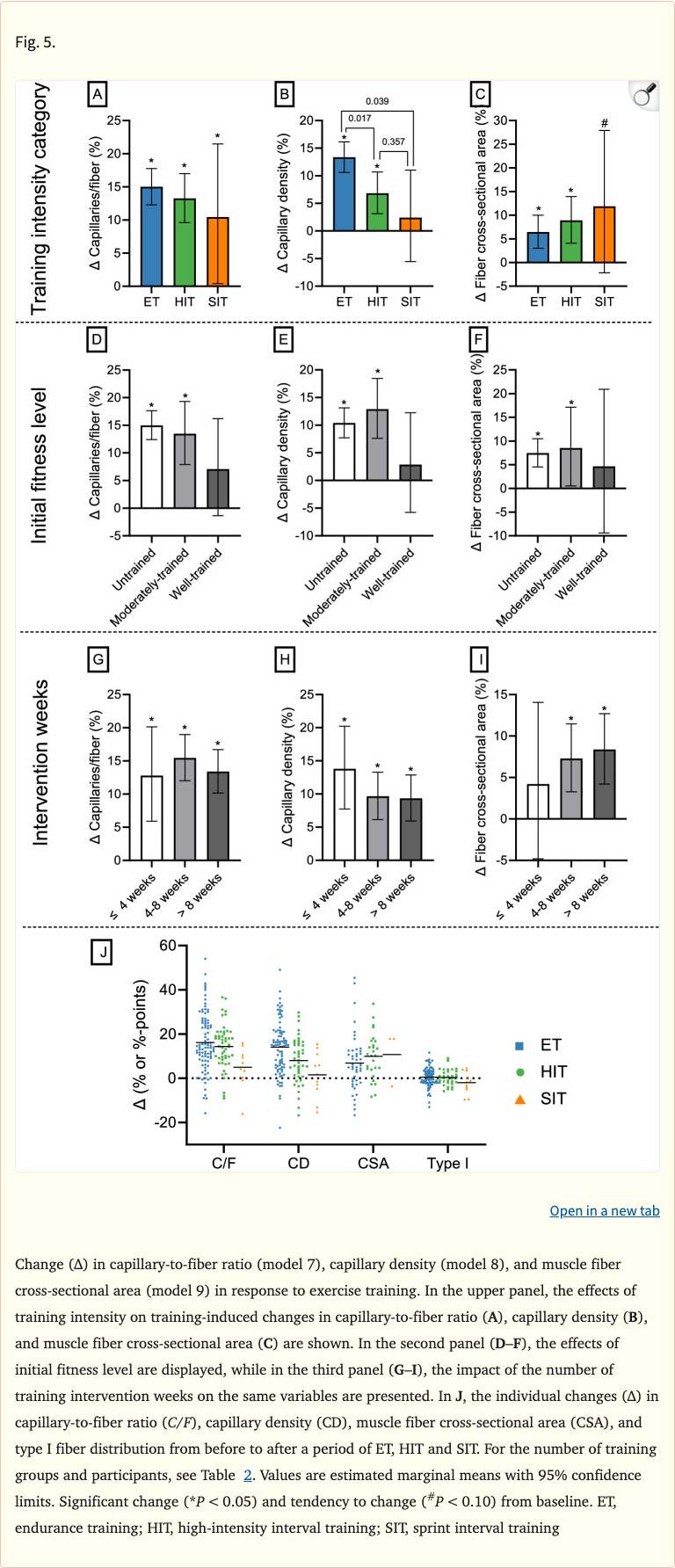 Figure 4
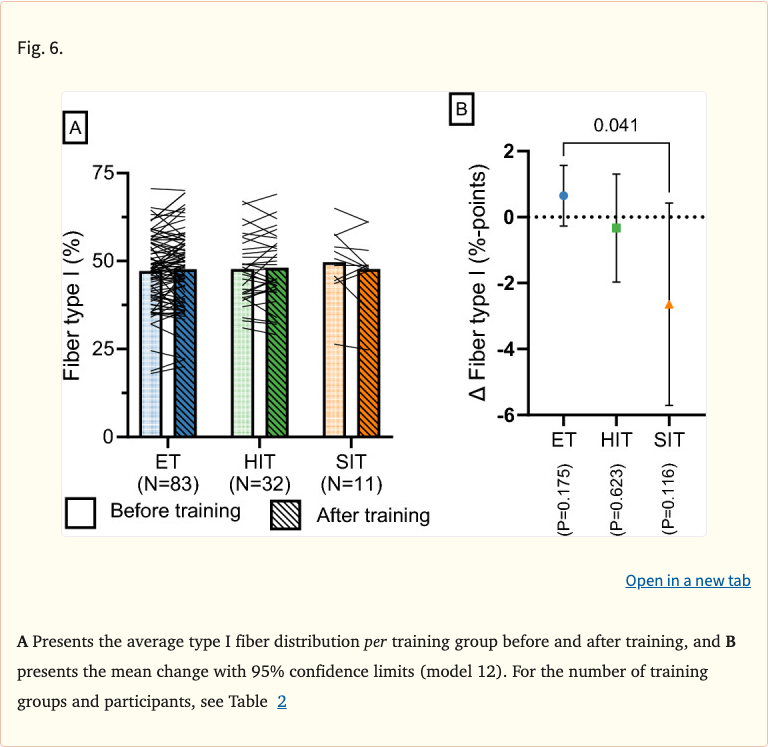 Figure 5
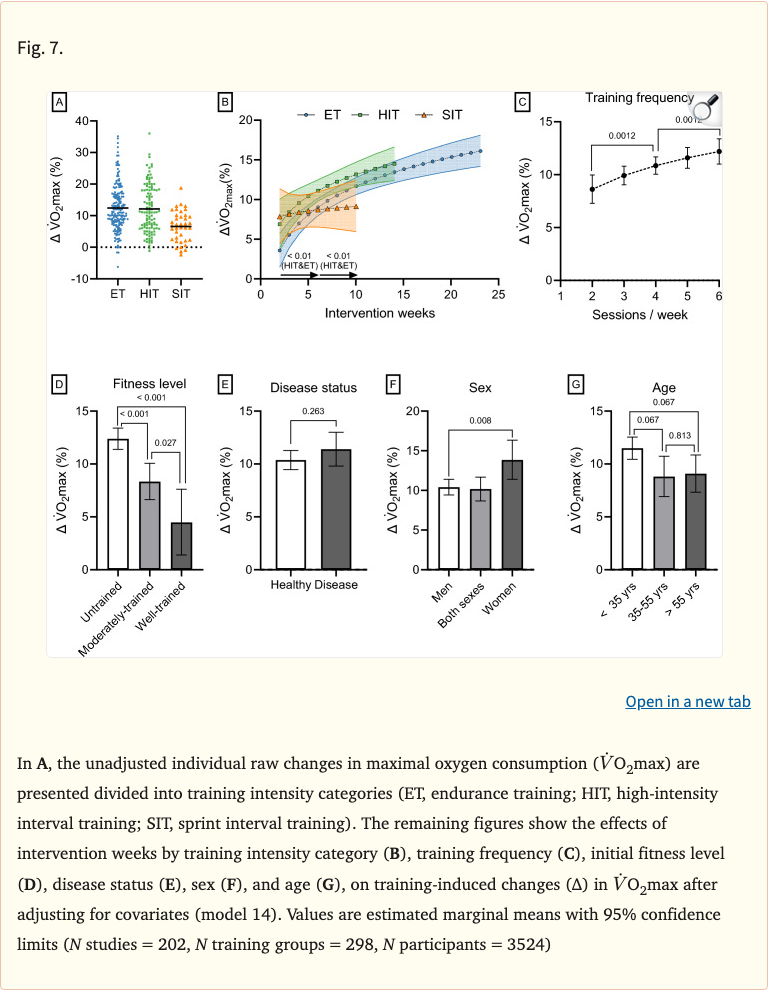 Figure 6
Limitations
- Heterogeneity across 50+ years of studies with varying methodologies and measurement techniques
- Most studies used small sample sizes with predominantly male participants
- Training protocols varied widely, making direct comparisons between intensity categories approximate
- Meta-regression cannot establish causation
- Limited data on very long-term (>6 month) interventions
Related Interventions
Related Studies
Discussed In