
Key Takeaway
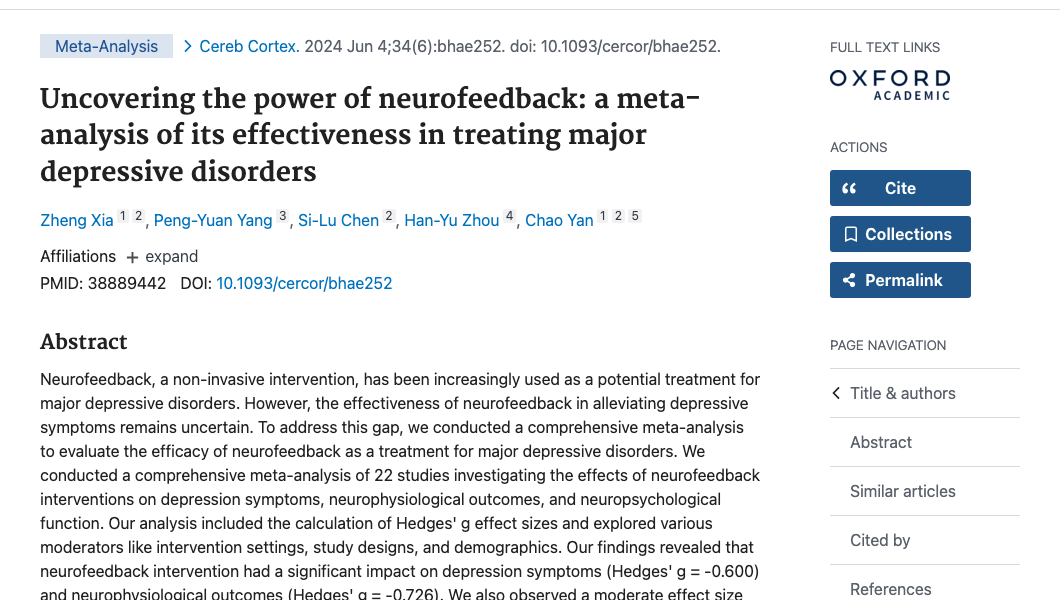
Meta-analysis of 22 studies found neurofeedback significantly reduced depressive symptoms (Hedges' g = -0.600), improved neurophysiological outcomes (g = -0.726), and enhanced neuropsychological function (g = -0.418) in major depressive disorders.
Summary
This comprehensive meta-analysis evaluated the efficacy of neurofeedback as a non-pharmacological treatment for major depressive disorders. The researchers analyzed 22 studies examining the effects of neurofeedback interventions on depression symptoms, neurophysiological outcomes, and neuropsychological function, calculating Hedges' g effect sizes and exploring moderators such as intervention settings, study designs, and participant demographics.
The analysis revealed significant effects of neurofeedback on depression symptoms (Hedges' g = -0.600), neurophysiological outcomes (Hedges' g = -0.726), and a moderate effect on neuropsychological function (Hedges' g = -0.418). Moderator analysis showed that longer intervention durations were associated with greater improvements in depressive symptoms and neuropsychological function, while shorter individual sessions were linked to better neurophysiological outcomes.
The authors conclude that neurofeedback holds promising potential as a non-invasive, non-pharmacological intervention for improving depressive symptoms and associated neurological outcomes in individuals with major depressive disorders.
Methods
Comprehensive meta-analysis of 22 studies investigating neurofeedback interventions for major depressive disorders. Hedges' g effect sizes were calculated across three outcome domains: depression symptoms, neurophysiological outcomes, and neuropsychological function. Moderator analyses examined intervention settings, study designs, session length, intervention duration, and participant demographics.
Key Results
Neurofeedback produced significant effects on depression symptoms (Hedges' g = -0.600), neurophysiological outcomes (Hedges' g = -0.726), and moderate effects on neuropsychological function (Hedges' g = -0.418). Longer intervention length predicted better outcomes for depressive symptoms (β = -4.36, P < 0.001) and neuropsychological function (β = -2.89, P = 0.003). Shorter individual sessions were associated with improved neurophysiological outcomes (β = 3.34, P < 0.001).
Limitations
The included studies varied in design quality, with a mix of controlled and uncontrolled studies. Heterogeneity across study protocols, neurofeedback modalities, and target brain regions may limit generalizability. The analysis could not fully disentangle the specific neurofeedback protocols that drive the largest effects.