Summary
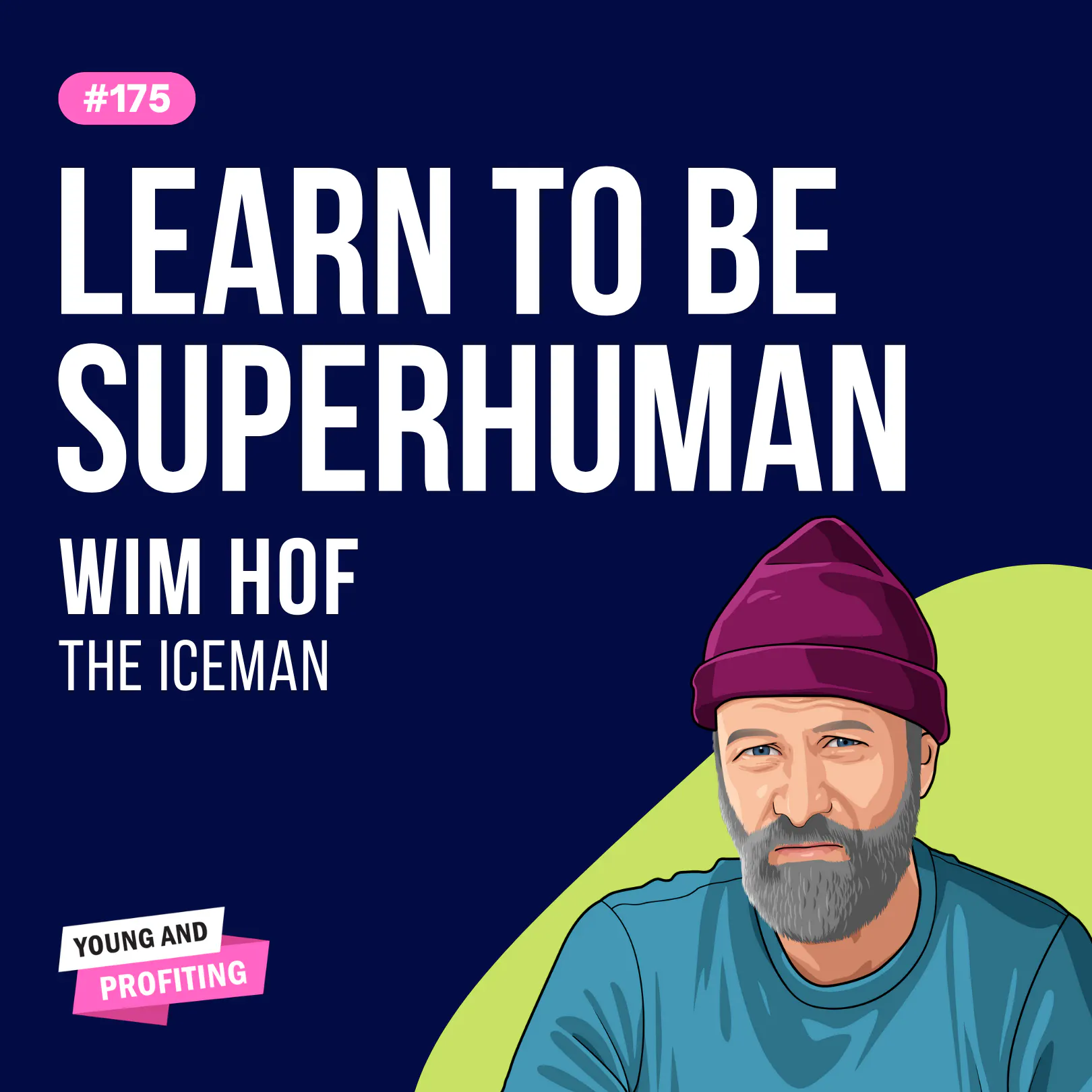
Fearne Cotton interviews Wim Hof about cold therapy, breathwork, and his philosophy of being happy, strong, and healthy. Wim shares the dramatic story of his birth as an unexpected twin and how his mother's invocation shaped his life mission. He explains that modern life has alienated us from our innate stress-response capabilities, and that cold exposure reactivates the millions of small muscles in the vascular system, improving blood flow and delivering oxygen and nutrients to cells more efficiently. Wim discusses the loss of his first wife to suicide after years of declining mental health that no psychiatric treatment could address, and how cold water became his way to still the mind and find healing. He describes how brain scan studies showed his breathing techniques activated deeper brain regions than four hours of daily mindfulness practice achieved over years. The conversation covers the hormonal benefits of cold exposure, including activation of endogenous cannabinoid and opioid systems, and how a 2014 comparative study demonstrated voluntary suppression of inflammatory markers for the first time in scientific history. Fearne's seven-year-old son even tried an eight-minute cold shower after reading Wim's book and reported feeling remarkably calm afterward.
Key Points
- Cold exposure trains the millions of tiny vascular muscles, improving blood flow so oxygen, nutrients, and vitamins reach cells more efficiently, producing a major energy boost
- Regular cold showers lower resting heart rate by 20-30 beats per minute around the clock, reducing baseline stress levels
- Brain scan studies showed Wim's breathing techniques activate deeper brain areas than four hours of daily mindfulness practice sustained over years
- Cold water activates endogenous cannabinoid and opioid systems in the brain, producing natural euphoria without external drugs
- The 2014 comparative study was the first in medical history to show voluntary suppression of inflammatory markers after E. coli injection
- Cold exposure forces the thinking mind to quiet, allowing blood flow to descend into deeper brain regions, which is the neurological basis of meditation
- Discipline in voluntarily entering stressful situations like cold showers builds neural pathways that help handle any type of stress: mental, emotional, bacterial, or viral
- Wim found that cold water was the only thing that could silence the emotional agony after his wife's suicide, opening a door to healing
Key Moments
Cold exposure activates endogenous cannabinoids and opioids
Wim explains that cold water immersion activates the brain's cannabinoid and opioid systems, producing natural euphoria. Brain scans confirmed he can access the deepest parts of the brain that hold these neurochemicals at will.
"Blissful, it is a relates to hormonal secretions like cannabinoids. In the same area where we have the cannabinoids and secretion, there is the secretion of opioids. And it was unknown in science to be able to be activated by humans at will."
Cold showers train the vascular system and produce an energy boost
Wim explains that cold exposure exercises the millions of tiny muscles in the vascular system, improving blood flow so oxygen, nutrients, and vitamins reach cells more efficiently. The result is dramatically more energy and a resting heart rate 20-30 beats lower.
"through the cold, you exercise the millions of little muscles of the vascular system. The vascular system is more than 100,000 kilometers within us. It is everywhere, except for the bones, even in the bones, there's blood flow."
Cold water silences the thinking mind like deep meditation
Wim describes how entering an ice bath forces the thinking brain to quiet down, allowing blood flow to descend into deeper brain regions. This produces a meditative state and builds neural pathways for handling any type of stress.
"Just being is great. When you go into an ice bath, you have to learn to let go of this thinking, controlling brain. You learn to let go."
Breathing techniques go deeper than years of mindfulness practice
Wim references brain scan comparisons showing that his breathing techniques activate deeper brain regions than a person practicing four hours of mindfulness daily for years, demonstrating the power of cold-induced breathwork.
"they compared brain scans of a person who is doing four hours of mindfulness a day for years so a very practiced adapt in mindfulness and they saw the brain in a brain scan and then they compared it to the people doing these breathing techniques and it showed that these people doing these breathing techniques went deeper into the brain than a person going four hours a day for years into mindfulness"
Wim found healing from grief through cold water after wife's suicide
Wim shares the devastating story of his first wife's suicide and how cold water became his only source of relief from emotional agony, allowing him to still his mind and find a path to healing while raising four children alone.
"She kissed the children goodbye, being at an eight-story, and jumped down. That is terror. That is horror."