Key Takeaway
Yogic breathing techniques produce measurable effects across neurological, cardiovascular, respiratory, metabolic, and psychological systems, with different pranayama types activating distinct physiological pathways.
Summary
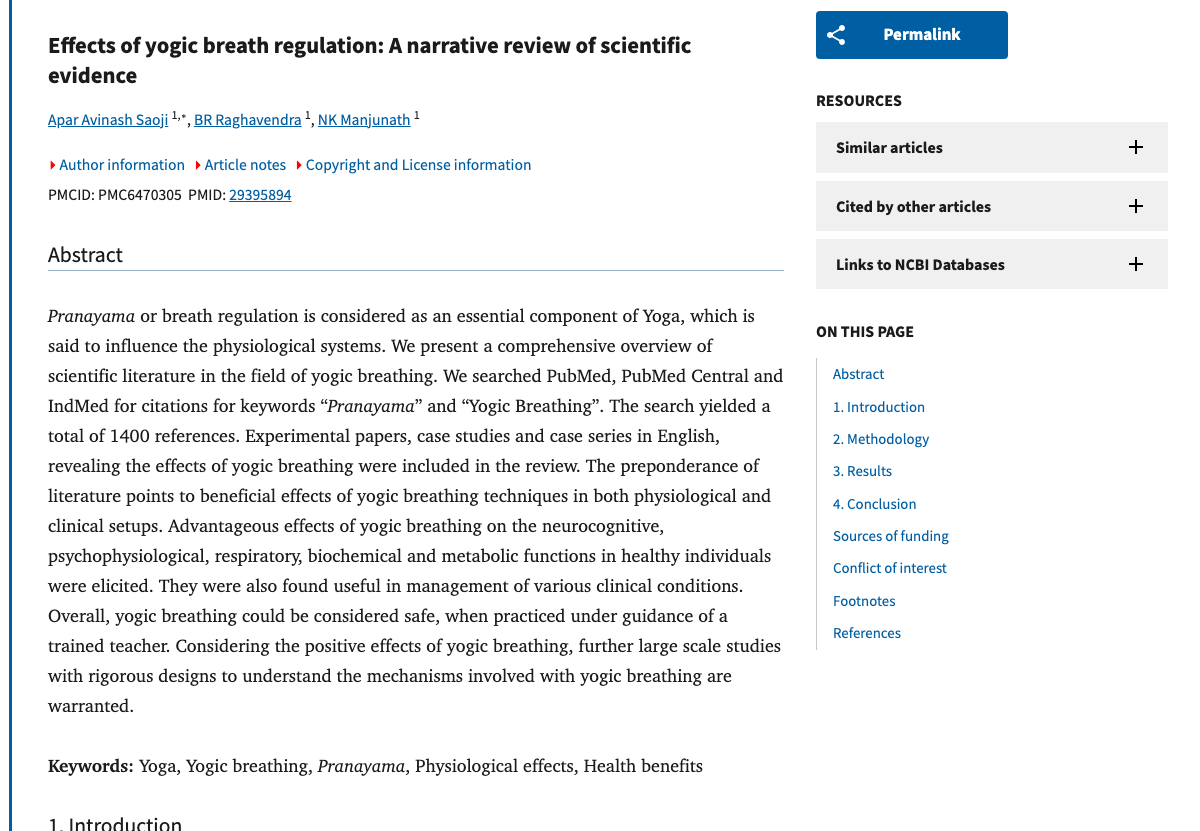
This comprehensive narrative review from S-VYASA University synthesized 68 experimental studies on yogic breathing (pranayama) techniques, drawing from 1,400 references identified across PubMed, PubMed Central, and IndMed databases. Unlike reviews that examine yoga as a whole, this paper focused exclusively on the effects of breath regulation practiced in isolation.
The review covers eight primary pranayama techniques: Kapalabhati (rapid abdominal breathing), Bhastrika (forceful bellows breathing), Nadishuddhi/Nadi Shodhan (alternate nostril breathing), Ujjayi (throat constriction breathing), Bhramari (humming breath), Suryanuloma Viloma (right nostril only), Chandranuloma Viloma (left nostril only), and Suryabhedana (right nostril-initiated breathing). Each technique produces distinct physiological responses -- for example, right nostril breathing activates sympathetic pathways and increases metabolic oxygen consumption, while left nostril breathing enhances parasympathetic activity.
Key findings include enhanced alpha brain waves during Kapalabhati, improved cognitive processing (increased P300 peak amplitudes) with alternate nostril breathing, maximized baroreflex sensitivity at 6 breaths per minute with slow equal-ratio breathing, significant improvements in pulmonary function (PEFR, FEV), reduced free radicals following practice, and reduced test anxiety (33% vs 67% in controls). Clinical applications span hypertension management, asthma stabilization, cardiac arrhythmia improvement, cancer symptom reduction, and smoking cessation support. The authors note that while the evidence base is promising, many studies lack methodological rigor and recommend larger trials with rigorous designs.
Methods
- Searched PubMed, PubMed Central, and IndMed databases using keywords "Pranayama" and "Yogic Breathing"
- 1,400 references identified; 68 studies included after applying filters
- Included experimental papers, case studies, and case series in English
- Excluded studies combining pranayama with other yoga practices
- Organized findings by physiological system (neurological, cardiovascular, respiratory, metabolic, psychological)
- Covered 8 distinct pranayama techniques with different breathing patterns
- Narrative synthesis without quantitative meta-analysis
Key Results
- Neurological: enhanced alpha waves during Kapalabhati; improved reaction time with Bhastrika; increased P300 peak amplitudes (cognitive processing) with alternate nostril breathing
- Cardiovascular: slow breathing at 6 breaths/min maximized baroreflex sensitivity; right nostril breathing activated sympathetic responses; left nostril breathing enhanced parasympathetic activity
- Respiratory: significant improvements in PEFR and FEV25 with slow pranayama; improved forced expiratory volumes in asthmatic patients with Kapalabhati
- Metabolic: significant decrease in free radicals following pranayama practice; right nostril breathing increased metabolic oxygen consumption; altered salivary protein expression patterns
- Psychological: reduced test anxiety (33% vs 67% in controls); stress and anxiety reduction across multiple studies
- Clinical applications identified: hypertension, asthma, cardiac arrhythmia, cancer symptoms, diabetes quality of life, post-stroke recovery, smoking cessation
- Safety: generally safe under guidance; isolated adverse case reports (spontaneous pneumothorax)
Limitations
- Narrative review without statistical validation of pooled data
- Many included studies lack methodological rigor (small samples, inadequate controls)
- Limited to English-language publications, potentially missing relevant research in other languages
- Database access limitations may have excluded some relevant studies
- Heterogeneity in techniques, populations, and outcomes makes cross-study comparison difficult
- Some findings based on single studies without replication
- Mechanisms of action remain incompletely understood for most techniques
Related Interventions
Related Studies
Discussed In