Summary
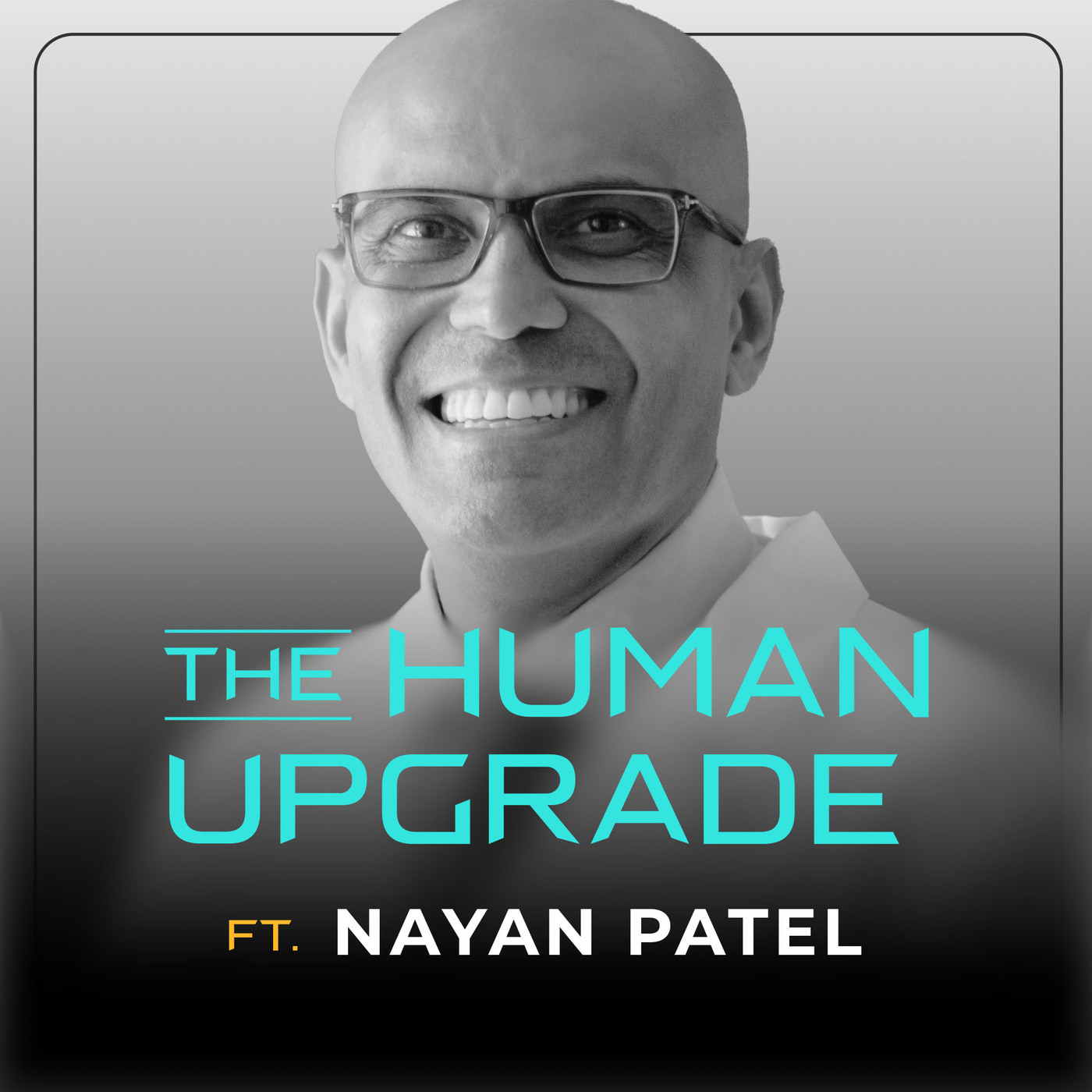
Dave Asprey interviews pharmacist Nayan Patel about a breakthrough transdermal delivery system for glutathione that uses sugar-based dextrin technology to bypass the skin's fat layer entirely, sending compounds through water channels directly into cells within about one minute. Patel explains that traditional glutathione delivery (oral, liposomal, IV) gets broken down and must be reassembled by the body, creating delayed effects, while his topical spray achieves equal or higher intracellular levels than an IV -- confirmed by MRI brain scans showing glutathione hot spots in the brain after application. Asprey connects glutathione to his long-standing advocacy of pharmaceutical nicotine as a cognitive enhancer, arguing that anyone using nicotine or other compounds that increase neuronal metabolic activity should pair them with glutathione to buffer the resulting oxidative stress. Patel discusses glutathione's role as a master immunological modulator, NAD-sparing molecule, and mitochondrial protector. They explore how reducing oxidative stress enables mitogenesis, supports sirtuin longevity pathways, and may improve emotional resilience. The episode also covers proper dosing (4 sprays twice daily, max 12-18 sprays for high need), stacking with vitamin C, vitamin E, and CoQ10, and early work with professional athletes showing improved exercise tolerance and potential TBI protection.
Key Points
- A novel transdermal glutathione delivery uses dextrin sugar technology through the skin's water channels, bypassing the fat layer and achieving intracellular levels equal to or higher than IV within one minute
- MRI brain scans confirm the topical spray gets glutathione across the blood-brain barrier, unlike delayed results from IV or liposomal forms
- Glutathione is an NAD-sparing molecule -- reducing oxidative stress preserves available NAD, supporting sirtuin longevity pathways and mitogenesis
- Dave Asprey recommends pairing pharmaceutical nicotine with glutathione because nicotine increases neuronal metabolic activity and oxidative byproducts that glutathione can buffer
- Professional NFL and NHL athletes using glutathione report better exercise tolerance and less lactic acid buildup, with potential TBI protection by reducing reactive oxygen species after head impacts
- Exogenous glutathione does not trigger negative feedback on endogenous production because peptide synthesis (unlike hormones) has no pituitary-mediated suppression mechanism
- Standard dose is 4 sprays twice daily; exceeding 16-18 sprays can trigger Herxheimer reactions including headaches, fatigue, rashes, and diarrhea from too-rapid detoxification
- Stack glutathione with vitamin C, vitamin E, or CoQ10 to recycle oxidized glutathione (GSSG) back to its reduced active form
Key Moments
Pharmaceutical nicotine can prevent early-onset Alzheimer's according to Vanderbilt research
Dave Asprey references his interview with a Vanderbilt University professor confirming that pharmaceutical nicotine (not smoking) can reverse or prevent early-onset Alzheimer's, citing research going back to 1986. He emphasizes using sprays, gum, patches, or lozenges at low doses.
"After I interviewed a professor from Vanderbilt University, he said, pharmaceutical nicotine, not smoking, can reverse or prevent early-onset Alzheimer's disease. And since 1986, there's been a bunch of papers."
Nicotine increases oxidative stress in neurons -- pair it with glutathione
Asprey explains that nicotine mildly increases reactive oxygen species in neurons, which can be hormetic but warrants buffering with glutathione, especially with daily use. He argues that any cognitive enhancer that speeds up the nervous system should be paired with glutathione to protect against metabolic exhaust.
"So it's all need-based. If your oxygen stress is high during the morning, then you may need more glutathione in the morning. But usually during the afternoon time, evening time, you need more glutathione as well. And so there's no security rhythm, so to speak. Like for example, if you drink alcohol in the morning, your needs of glutathione is very high in the morning. If you work out and you take antioxidants like vitamin E, it reduces your body's ability to grow after the exercise. Does glutathione suppress muscle from exercising? No, it does not. And this is a great question because that's what I thought so first that I don't want to suppress people's antioxidant benefits because exercise is a resistance type training and I need those resistance increasing so that people can start building the muscle mass and all those things. But then when I started working with a lot of professional athletes from NFL to NBA to MLB and NHL, now ice hockey teams are customers of ours too. And what I'm finding out that having glutathione on board, they're able to exercise even stronger, better, faster without getting the muscle pain or without getting a lot of lactic acid buildup. And so granted, I'm working with younger kids, like under the age of 30, but they can feel the effect of better exercise tolerance when they have glutathione on board versus when they do not have that. There's something else really important, and I've spoken with Nick Foles about this and privately with some MMA fighters. Any sport you're in, hockey players, if you're going to hit your head or have a likely chance of hitting your head, all the damage comes from reactive oxygen species right after you hit your head. So I've gone through strategies to reduce ROS so that you don't get a brain injury, even if you hit your head, or if you do get one, it's much smaller. Does glutathione belong in that stack? So if your levels are high before you get hit in the head and you'll get less damage? Oh, absolutely. That is 100%. So as I said earlier, we do work with NFL neurosurgeons directly for TBIs, post-recoveries, but we have worked with patients that are after concussion comes and happens. Actually, I'm working with two NFL players right now that had 14 years of concussions and now they're coming to us, right? So it's kind of late in the game because now they are on the verge of getting Parkinson's, Alzheimer's, all kinds of diseases of the later stages. But the thing is, if I can get them early and prevent that problem, it will be a game changer. So that's what the study was done about the brain mapping studies. So if you imagine, okay, you're a pro ball player, so you get an IV of glutathione before every game. That's a huge commitment of time and money and effort. Or you're in the locker room and you take, what, four or five sprays before you put on your uniform you got and you play. Your levels are higher. If you do get head in the head or you head a soccer ball or take a knee to wherever, your odds of getting a brain injury go down. Absolutely. Absolutely. Wow. Absolutely. What should I stack when I'm using your glutathione? So I'm going to spray oral glutathione on my body. It's going to regulate or upregulate the amount of glutathione inside my cells. Should I be taking other antioxidants, other peptides? What goes with it? So my number one drug of choice with glutathione is something like vitamin C, vitamin E, CoQ10. and the reason is because all the glutathione, if the oxygen stress is high, the glutathione is going to become into the redox, which is oxidized glutathione, which is GSSG molecule, which is glutathione disulfides. And that glutathione molecule is stable, but it's oxidized. And to revert back to glutathione, either the body has to produce enzymes like glutathione peroxidase enzymes, or you can, the cheapest way to do it is you take some vitamin C or vitamin E or CoQ10 and it will revive it back to normal. And so for me is I want to have a reduced amount of glutathione in my body all the time. So having something like this type of products along with the glutathione will ensure that I have the highest amount of reduced glutine inside my body. I have a suggestion for people. I've been very open about using pharmaceutical nicotine as a performance enhancer for cognitively and physically for more than a decade. And you see a lot of people talking about like, finally, we're all catching up to this. After I interviewed a professor from Vanderbilt University, he said, pharmaceutical nicotine, not smoking, can reverse or prevent early-onset Alzheimer's disease. And since 1986, there's been a bunch of papers. And again, don't smoke, don't vape, don't you? This is about using either a spray or gum or a patch or a lozenge and at low doses. But even then, it mildly increases reactive oxygen species in your neurons, which isn't necessarily a bad thing because that can be a hormetic signal. But if you're using it every day the way I do, having a little bit of extra glutathione in your body, especially in your liver, is a really good idea, as well as in your brain. So I think nicotine and glutathione pair really nicely. And so I'm willing to spray some glutathione on every day or two. It's pretty easy to do. So that I have heard of before. I have not tried it myself personally. I know I've seen you spray the, I think the gum or the whatever you take every time with the nicotine, I've seen you plenty of times. And I always question myself. And if you think about it, nicotine was used to prevent long COVID. It was used for, yeah, for all the, during the COVID time, this was a big deal. We were using it at the pharmacy all the time, nicotine. It has benefits and smoking is not good for you. And most people just hear nicotine and then they hear smoking and they're just not the same. So I've been using a very small dose of it. Every one of my books after, I think after the Bulletproof Diet was always caffeine and a low dose of nicotine because it's such a powerful nootropic. and if I'm using any kind of cognitive enhancer and I use them all, then I would want extra glutathione buffering inside my brain and inside the rest of my cells because I'm increasing my metabolic activity, especially my neurons, because I'm jacking up my brain, which means more mitochondrial demand, which means more oxidative byproducts, which means my glutathione demands are going to be higher than the average human being because I'm getting more done. So that means I want to put glutathione into my system regularly because I'm planning to live a very long time. It's like if you're going to drive a car really fast, you need to have better lubricant. You need to have better fuel, better tires. So if you're a biohacker, I think there's a case that says anything that speeds up your nervous system should be paired with glutathione because it's going to protect your nervous system from the downside of basically having exhaust coming out of your cells. Am I onto something in that way of thinking? You are 110% correct. By the way, I've seen your nutritional cupboard with a couple of supplements in there, which is amazing, all arranged by alphabetical order as i was shocked when i saw that for the first time so but anyways the what you just said right now is absolutely instrumental because everything we do that we know about gliothan it's only stopping the oxygen stress down but your body is rejuvenating regenerating new cells until the day you die i don't care if you're 150 years old the body is rejuvenating, regenerating new cells until the day you die. I don't care if you're 150 years old. The body is trying to repair every single thing. We have to be getting out of the way to do so. So you can do all the stimulants and every single thing, but they will all work as long as you can reduce oxygen stress down to zero. I want to make sure that people understand their parts. The glutathione becomes a primary stack for everything else you do. And it doesn't suppress the exercise benefits the way most other antioxidants would. So there are just lots of benefits to doing this as a longevity agent. And what I want to know, are there changes in gene expression from increasing glutathione levels. So that part I have not studied yet."
Nicotine as a foundational nootropic stack ingredient for over a decade
Asprey reveals he has advocated pharmaceutical nicotine as a cognitive enhancer in every book since the Bulletproof Diet, always pairing it with caffeine. He argues that increasing neuronal metabolic activity with nicotine demands more mitochondrial output and produces more oxidative byproducts, making glutathione essential for anyone using cognitive enhancers.
"So it's all need-based. If your oxygen stress is high during the morning, then you may need more glutathione in the morning. But usually during the afternoon time, evening time, you need more glutathione as well. And so there's no security rhythm, so to speak. Like for example, if you drink alcohol in the morning, your needs of glutathione is very high in the morning. If you work out and you take antioxidants like vitamin E, it reduces your body's ability to grow after the exercise. Does glutathione suppress muscle from exercising? No, it does not. And this is a great question because that's what I thought so first that I don't want to suppress people's antioxidant benefits because exercise is a resistance type training and I need those resistance increasing so that people can start building the muscle mass and all those things. But then when I started working with a lot of professional athletes from NFL to NBA to MLB and NHL, now ice hockey teams are customers of ours too. And what I'm finding out that having glutathione on board, they're able to exercise even stronger, better, faster without getting the muscle pain or without getting a lot of lactic acid buildup. And so granted, I'm working with younger kids, like under the age of 30, but they can feel the effect of better exercise tolerance when they have glutathione on board versus when they do not have that. There's something else really important, and I've spoken with Nick Foles about this and privately with some MMA fighters. Any sport you're in, hockey players, if you're going to hit your head or have a likely chance of hitting your head, all the damage comes from reactive oxygen species right after you hit your head. So I've gone through strategies to reduce ROS so that you don't get a brain injury, even if you hit your head, or if you do get one, it's much smaller. Does glutathione belong in that stack? So if your levels are high before you get hit in the head and you'll get less damage? Oh, absolutely. That is 100%. So as I said earlier, we do work with NFL neurosurgeons directly for TBIs, post-recoveries, but we have worked with patients that are after concussion comes and happens. Actually, I'm working with two NFL players right now that had 14 years of concussions and now they're coming to us, right? So it's kind of late in the game because now they are on the verge of getting Parkinson's, Alzheimer's, all kinds of diseases of the later stages. But the thing is, if I can get them early and prevent that problem, it will be a game changer. So that's what the study was done about the brain mapping studies. So if you imagine, okay, you're a pro ball player, so you get an IV of glutathione before every game. That's a huge commitment of time and money and effort. Or you're in the locker room and you take, what, four or five sprays before you put on your uniform you got and you play. Your levels are higher. If you do get head in the head or you head a soccer ball or take a knee to wherever, your odds of getting a brain injury go down. Absolutely. Absolutely. Wow. Absolutely. What should I stack when I'm using your glutathione? So I'm going to spray oral glutathione on my body. It's going to regulate or upregulate the amount of glutathione inside my cells. Should I be taking other antioxidants, other peptides? What goes with it? So my number one drug of choice with glutathione is something like vitamin C, vitamin E, CoQ10. and the reason is because all the glutathione, if the oxygen stress is high, the glutathione is going to become into the redox, which is oxidized glutathione, which is GSSG molecule, which is glutathione disulfides. And that glutathione molecule is stable, but it's oxidized. And to revert back to glutathione, either the body has to produce enzymes like glutathione peroxidase enzymes, or you can, the cheapest way to do it is you take some vitamin C or vitamin E or CoQ10 and it will revive it back to normal. And so for me is I want to have a reduced amount of glutathione in my body all the time. So having something like this type of products along with the glutathione will ensure that I have the highest amount of reduced glutine inside my body. I have a suggestion for people. I've been very open about using pharmaceutical nicotine as a performance enhancer for cognitively and physically for more than a decade. And you see a lot of people talking about like, finally, we're all catching up to this. After I interviewed a professor from Vanderbilt University, he said, pharmaceutical nicotine, not smoking, can reverse or prevent early-onset Alzheimer's disease. And since 1986, there's been a bunch of papers. And again, don't smoke, don't vape, don't you? This is about using either a spray or gum or a patch or a lozenge and at low doses. But even then, it mildly increases reactive oxygen species in your neurons, which isn't necessarily a bad thing because that can be a hormetic signal. But if you're using it every day the way I do, having a little bit of extra glutathione in your body, especially in your liver, is a really good idea, as well as in your brain. So I think nicotine and glutathione pair really nicely. And so I'm willing to spray some glutathione on every day or two. It's pretty easy to do. So that I have heard of before. I have not tried it myself personally. I know I've seen you spray the, I think the gum or the whatever you take every time with the nicotine, I've seen you plenty of times. And I always question myself. And if you think about it, nicotine was used to prevent long COVID. It was used for, yeah, for all the, during the COVID time, this was a big deal. We were using it at the pharmacy all the time, nicotine. It has benefits and smoking is not good for you. And most people just hear nicotine and then they hear smoking and they're just not the same. So I've been using a very small dose of it. Every one of my books after, I think after the Bulletproof Diet was always caffeine and a low dose of nicotine because it's such a powerful nootropic. and if I'm using any kind of cognitive enhancer and I use them all, then I would want extra glutathione buffering inside my brain and inside the rest of my cells because I'm increasing my metabolic activity, especially my neurons, because I'm jacking up my brain, which means more mitochondrial demand, which means more oxidative byproducts, which means my glutathione demands are going to be higher than the average human being because I'm getting more done. So that means I want to put glutathione into my system regularly because I'm planning to live a very long time. It's like if you're going to drive a car really fast, you need to have better lubricant. You need to have better fuel, better tires. So if you're a biohacker, I think there's a case that says anything that speeds up your nervous system should be paired with glutathione because it's going to protect your nervous system from the downside of basically having exhaust coming out of your cells. Am I onto something in that way of thinking? You are 110% correct. By the way, I've seen your nutritional cupboard with a couple of supplements in there, which is amazing, all arranged by alphabetical order as i was shocked when i saw that for the first time so but anyways the what you just said right now is absolutely instrumental because everything we do that we know about gliothan it's only stopping the oxygen stress down but your body is rejuvenating regenerating new cells until the day you die i don't care if you're 150 years old the body is rejuvenating, regenerating new cells until the day you die. I don't care if you're 150 years old. The body is trying to repair every single thing. We have to be getting out of the way to do so. So you can do all the stimulants and every single thing, but they will all work as long as you can reduce oxygen stress down to zero. I want to make sure that people understand their parts. The glutathione becomes a primary stack for everything else you do. And it doesn't suppress the exercise benefits the way most other antioxidants would. So there are just lots of benefits to doing this as a longevity agent. And what I want to know, are there changes in gene expression from increasing glutathione levels. So that part I have not studied yet."