





Feldenkrais Method
Episodes covering feldenkrais method — protocols, research, and expert discussions.
Somatic education system using gentle, mindful movements to improve body awareness, reduce pain, and rewire habitual movement patterns through neuroplasticity
The Feldenkrais Method is a form of somatic education developed by physicist and judo master Moshe Feldenkrais. Unlike exercise that builds strength or flexibility, Feldenkrais rewires how your nervous system organizes movement. You do slow, small, mindful movements while paying attention to subtle differences. The brain learns better movement patterns.
The evidence is moderate, with studies showing benefits for chronic pain (especially back and neck), balance in older adults, and movement quality. It won't build muscle or burn calories, but it can resolve movement problems that stretching and strengthening haven't fixed.
Feldenkrais attracts people who've tried everything else for their chronic pain. The movements look strange - tiny, slow, sometimes lying down - but practitioners often report dramatic improvements in pain and movement quality. Worth trying if you have persistent pain or movement dysfunction that hasn't responded to conventional approaches.
Science & Mechanisms
Core concept:
- Movement problems are often learning problems, not structural problems
- The nervous system can learn new, better movement patterns at any age
- Awareness is the key to change (you can't change what you don't notice)
- Small, slow movements with attention create neuroplastic change
Proposed mechanisms:
- Neuroplasticity - brain rewiring through novel movement
- Improved proprioception and body awareness
- Reduced muscular co-contraction and excess effort
- Breaks habitual movement patterns
- Sensory-motor learning (not muscle training)
Key research:
- Hillier & Worley (2015): Systematic review showing balance improvements, especially in older adults
- Malmgren-Olsson (2002): Feldenkrais reduced neck/shoulder pain
- Öhman et al. (2011): Improvements in chronic pain populations
What the evidence shows:
- Balance (older adults): Moderate evidence
- Chronic back/neck pain: Moderate evidence
- Movement quality: Consistent improvements
- Flexibility: Some evidence
- Neurological conditions (MS, stroke): Preliminary positive
- Anxiety reduction: Anecdotal
Effect sizes:
- Pain reduction: Small to moderate
- Balance improvement: Moderate
- Movement quality: Often dramatic subjective improvement
- Functional outcomes: Variable
Why it's different from exercise:
- Focus is on sensing, not doing
- Movements are small and easy (no strain)
- Learning, not conditioning
- Changes happen via the nervous system, not muscles
Episodes
Alan Questel, a Feldenkrais trainer who studied directly under Dr. Moshe Feldenkrais, discusses how the Feldenkrais Method uses gentle movement to reshape self-image, reduce pai...
Wendy Murdock hosts fellow Feldenkrais practitioner Catherine Wycoff, a physical therapist from Belgium who discovered the method through equestrian work. Catherine explains the...
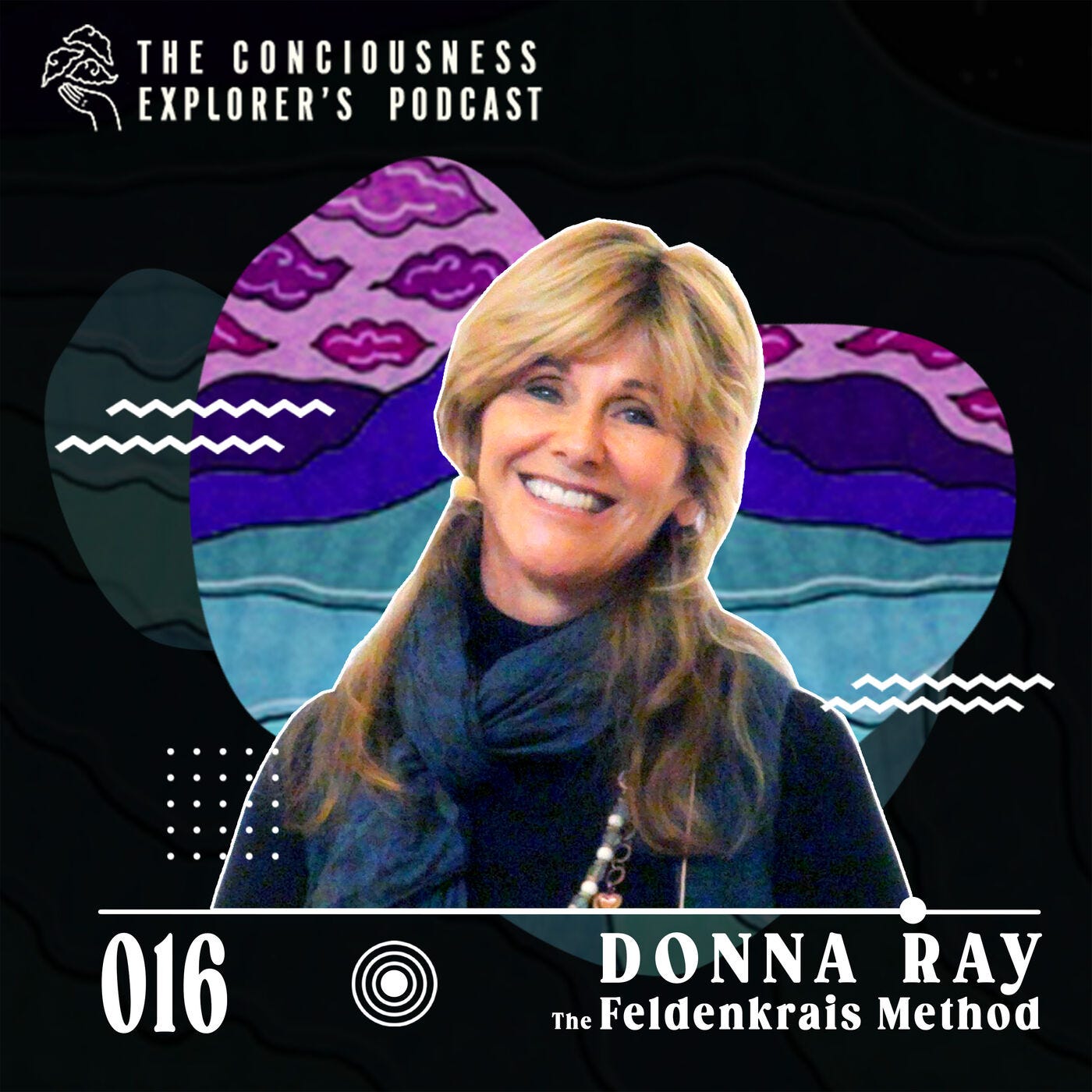
Jeff Warren and Tasha Schumann speak with Donna Ray, an internationally recognized Feldenkrais trainer and psychotherapist who has been practicing since 1985. Donna explains the...
Bryson Newell interviews Ryan Nagy, a Feldenkrais teacher from Houston who has been studying and teaching the method since the early 2000s. Ryan describes his origin story of di...
Jackson Huff interviews Alan Questel, a Feldenkrais trainer and author, about his books on kindness and self-image. Alan discusses the difference between self-worth and self-ima...
Alex Valgud interviews Angela McMillan, a Feldenkrais practitioner from Australia who came to the method through breakdancing over 20 years ago. Angela describes how her Feldenk...

Shann VanderLeek interviews David Zemach-Bersin, one of the world's leading Feldenkrais experts with over 50 years of experience, who trained directly with Dr. Moshe Feldenkrais...

In this live episode recorded at SF Sketchfest, Ross and Carrie from the investigative podcast "Oh No, Ross and Carrie" share their experience trying the Feldenkrais Method. Kno...

Todd Hargrove, a rolfer and Feldenkrais practitioner who transitioned from a legal career, discusses his book "Playing with Movement" and argues for a more exploratory, playful ...